Astronomers Find Evidence That a 50-Year-Old Quasar Rule May Not Hold Across the Universe
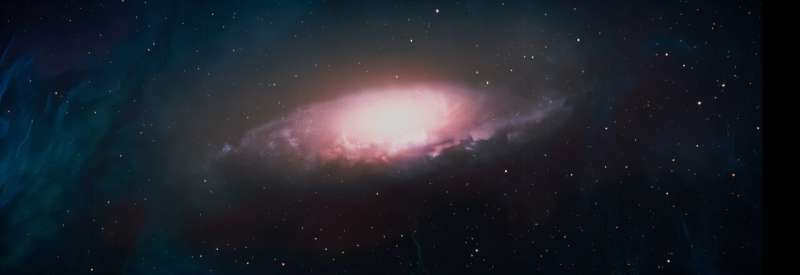
Astronomers may be on the verge of rewriting a long-standing rule about how some of the brightest objects in the universe behave. A new international study suggests that a key relationship used to understand quasars—extremely luminous objects powered by supermassive black holes—may not be as universal as scientists once believed. If confirmed, this discovery could reshape how researchers study black holes, measure cosmic distances, and interpret the evolution of the universe itself.
The research, led by scientists at the National Observatory of Athens, presents compelling evidence that the structure of matter surrounding supermassive black holes has changed over billions of years. This directly challenges a principle that has guided quasar research for nearly five decades.
What Makes Quasars So Extraordinary?
Quasars were first identified in the 1960s, and they immediately stood out as some of the most energetic objects ever observed. At their core lies a supermassive black hole, millions to billions of times more massive than the Sun. As surrounding matter is pulled inward by intense gravity, it forms a rapidly spinning accretion disk.
The extreme friction within this disk heats the material to extraordinary temperatures, producing enormous amounts of ultraviolet (UV) radiation. In fact, a single quasar can emit 100 to 1,000 times more light than an entire galaxy containing hundreds of billions of stars. This intense glow often completely outshines the quasar’s host galaxy, making quasars visible across vast cosmic distances.
Because of this brightness, quasars act as powerful beacons that allow astronomers to study the early universe, sometimes looking back more than 10 billion years in time.
The Accretion Disk and the Corona Connection
For decades, astronomers have believed that quasars generate their most energetic radiation through a close partnership between the accretion disk and a surrounding region known as the corona. The corona is thought to be made of extremely hot, highly energetic particles located very close to the black hole.
As UV photons from the accretion disk pass through the corona, they collide with these energetic particles. These interactions boost the photons to much higher energies, producing powerful X-ray emissions that modern space telescopes can detect.
This process links UV and X-ray light in a very direct way—and that link became one of the most important observational rules in quasar astronomy.
A 50-Year-Old Relationship Under Scrutiny
Nearly 50 years ago, astronomers discovered a tight correlation between the ultraviolet brightness and X-ray intensity of quasars. In simple terms, brighter UV emission almost always meant stronger X-ray output. This relationship provided deep insight into the geometry and physical conditions near supermassive black holes.
Over time, researchers came to treat this correlation as universal, assuming it applied equally to quasars throughout the universe, regardless of when they existed. This assumption has played a crucial role in theoretical models and even in cosmological measurements.
The new study, however, suggests that this assumption may not be correct.
What the New Research Reveals
By analyzing a massive and unprecedented dataset, the research team found that the UV–X-ray relationship changes with cosmic time. Specifically, quasars observed when the universe was roughly half its current age show a significantly different correlation compared to quasars in the nearby, more recent universe.
This implies that the physical processes linking the accretion disk and corona may have evolved over the past 6.5 billion years. In other words, the structure of matter around supermassive black holes may not be fixed but instead changes as the universe ages.
The result was tested using multiple independent methods, and the trend appears persistent rather than accidental.
The Role of eROSITA and XMM-Newton
A major strength of this study lies in the data used. The team combined new observations from the eROSITA X-ray telescope with archival data from the XMM-Newton observatory, both operated by the European Space Agency.
eROSITA’s wide and uniform all-sky coverage proved especially valuable. While many quasars in the survey were detected with only a small number of X-ray photons, the sheer size of the dataset allowed researchers to study quasar populations on a scale never before possible.
To handle the complexity of this data, the team applied a robust Bayesian statistical framework, allowing subtle evolutionary trends to emerge that would otherwise remain hidden.
Why This Matters for Cosmology
The implications of this discovery extend far beyond quasar physics. The UV–X-ray relationship is used in some methods that treat quasars as standard candles, tools that help measure the geometry and expansion of the universe.
If this relationship changes over time, it could introduce biases into measurements related to dark matter, dark energy, and cosmic expansion. The findings highlight the need for caution and suggest that assumptions about unchanging black hole structures must be carefully re-evaluated.
Could Selection Effects Be at Play?
While the results are compelling, the researchers acknowledge that further work is needed. One open question is whether the observed evolution reflects a genuine physical change or whether it could be influenced by selection effects, such as which quasars are easiest to detect at different distances.
Future observations will be crucial in resolving this. The full set of eROSITA all-sky scans will soon enable astronomers to study even fainter and more distant quasars, offering a clearer picture of how these objects behave across cosmic history.
Extra Context: Why Quasar Evolution Is a Big Deal
Understanding how quasars evolve matters because supermassive black holes play a central role in galaxy formation and evolution. Their radiation and powerful outflows can regulate star formation, shape galactic structures, and influence their surroundings on enormous scales.
If the behavior of quasars has changed over time, it could help explain differences between early galaxies and those we observe today. It may also offer clues about how black holes grow and how extreme environments shape the physics of matter under conditions that cannot be replicated on Earth.
Looking Ahead
This study represents a significant step forward, both scientifically and methodologically. By combining wide-field surveys with sophisticated statistical tools, astronomers are now able to test long-standing assumptions with unprecedented precision.
As more data becomes available and next-generation X-ray and multiwavelength surveys come online, researchers hope to determine whether the evolving UV–X-ray relationship is a fundamental feature of black hole growth—or a sign that there is still much we do not understand about the universe’s most luminous objects.
Research paper:
https://academic.oup.com/mnras/article/2025/0/staf1905/7931711