Before We Build on the Moon, We Have to Master the Commute
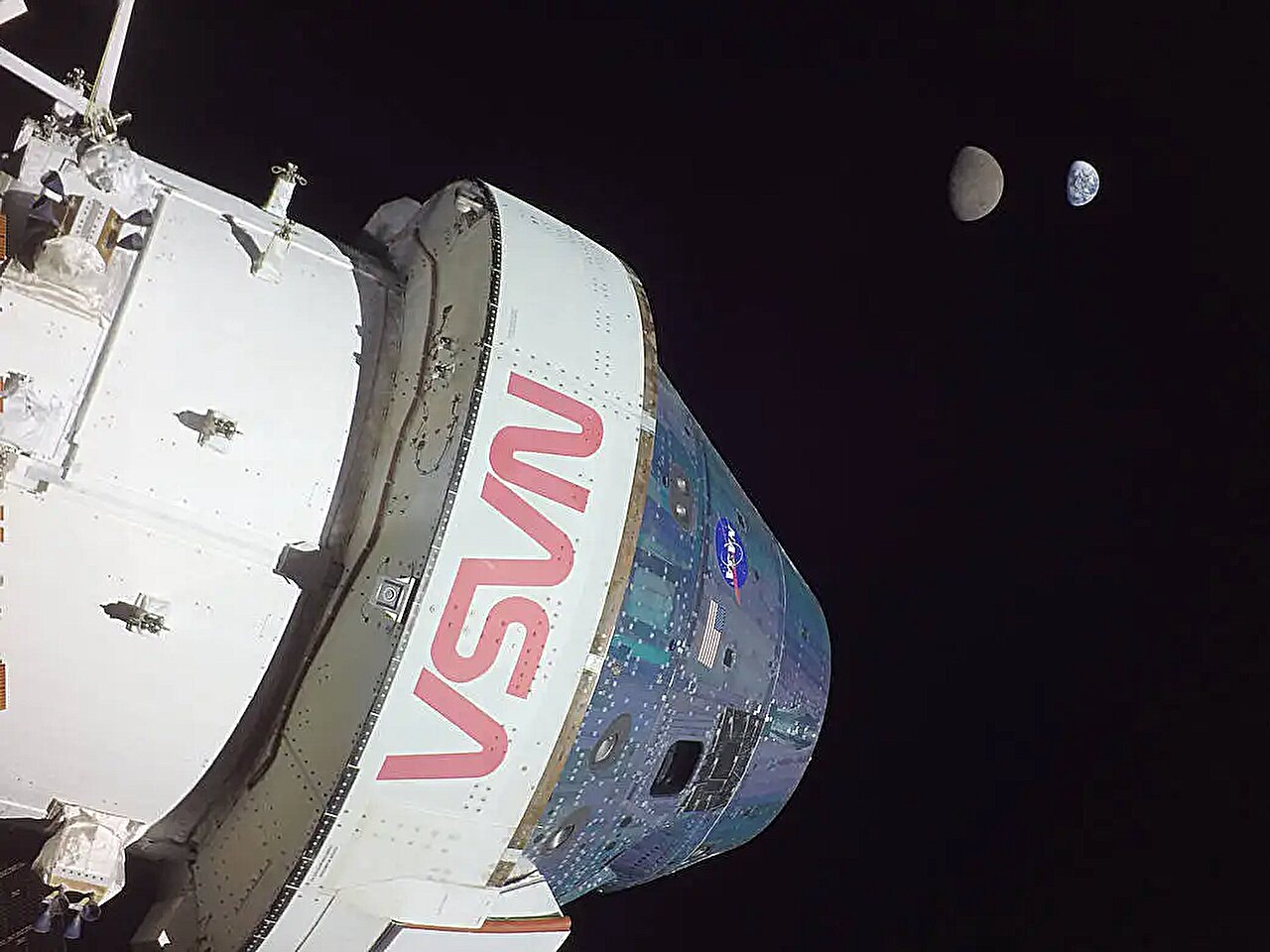
Before humanity can seriously talk about building long-term infrastructure on the Moon, there’s a much less glamorous but absolutely critical problem to solve: how to reliably travel and stay in orbit between Earth and the Moon. This region of space, known as cis-lunar space, turns out to be far more chaotic and mathematically difficult than it might appear at first glance.
Even seasoned rocket scientists prefer to avoid complex orbital math whenever possible. When spacecraft trajectories involve not just Earth, but also the Moon and the Sun pulling in different directions, things quickly become unpredictable. That unpredictability is exactly what a team of scientists at Lawrence Livermore National Laboratory (LLNL) set out to tackle—and they did it at an almost absurd scale.
A Million Orbits, Simulated in Detail
Researchers at LLNL have released an open-source dataset and software package containing simulations of 1,000,000 different cis-lunar orbits. These simulations model what could happen to satellites operating in the space between Earth and the Moon, an area that will become increasingly important as lunar missions ramp up.
The research was published as a preprint on arXiv, making both the data and methods freely accessible to scientists, engineers, and mission planners around the world.
What makes this effort particularly impressive is its scope. Instead of focusing only on a handful of carefully selected orbital paths, the researchers ran one million high-fidelity trajectory simulations, each accounting for a wide range of gravitational and non-gravitational forces. The goal wasn’t just to find good orbits, but to map out what works, what fails, and why.
Stability Is Rare in Cis-Lunar Space
One of the most striking findings from the dataset is how unstable cis-lunar space really is. Out of the one million simulated orbits, only about 9.7% remained stable over the three-year evaluation period used by the researchers.
The remaining trajectories met less friendly ends. Some spacecraft spiraled into the Moon. Others burned up in Earth’s atmosphere. Many were flung completely out of the Earth–Moon system, ejected by gravitational interactions that spiraled out of control.
This instability highlights why simply “parking” a spacecraft between Earth and the Moon is far from trivial—and why future lunar infrastructure will depend on extremely careful orbital planning.
The Three-Body Problem in Action
At the heart of this chaos lies a famous challenge in physics known as the Three-Body Problem. It describes systems where three objects—such as Earth, the Moon, and a spacecraft—are all pulling on each other gravitationally.
Unlike simpler two-body systems, three-body systems are chaotic, meaning that tiny changes in starting conditions can lead to massive differences over time. A small navigation error, a solar storm, or even slight variations in radiation pressure can dramatically alter a spacecraft’s path.
This chaos makes it nearly impossible to rely on simple equations. Instead, engineers need massive numerical simulations—exactly the kind produced in this LLNL project.
Why This Dataset Exists
The motivation behind the dataset goes beyond academic curiosity. As more organizations plan missions near the Moon, they need reliable ways to test navigation software, validate orbital planning tools, and compare mission designs.
The LLNL team describes their dataset as a kind of “gold standard” benchmark. If a navigation or orbit-planning algorithm can’t handle the scenarios in this dataset, it’s unlikely to perform well in the real cis-lunar environment.
This becomes especially important as governments and private companies move toward permanent lunar bases, space stations, and logistical hubs operating between Earth and the Moon.
How the Simulations Were Built
To ensure consistency, the researchers defined a very specific set of initial conditions. All simulations start with the positions of the Sun, Earth, and Moon fixed to their real locations on January 1, 1980. This gives anyone using the dataset a clear and unambiguous reference point.
From there, each orbit was propagated forward using a highly detailed physics model over a six-year simulation window. The model included:
- Gravitational forces from Earth, the Moon, the spacecraft, and the Sun
- The Sun treated as a point mass, simplifying calculations without losing accuracy
- Earth–Moon resonances, capturing subtle interactions between the two bodies
- Solar radiation pressure, which slowly pushes spacecraft away from the Sun
- Thermal radiation pressure from Earth, another small but important force
These added forces may seem minor, but over months or years, they can completely reshape an orbit—especially in a chaotic system like cis-lunar space.
Islands of Stability Do Exist
Despite the overwhelming instability, the simulations revealed distinct clusters of long-term stable orbits. One expected area of stability appeared around the Lagrange points, particularly L4 and L5, which sit ahead of and behind the Moon in its orbit around Earth.
These points act as natural gravitational balance zones and are already being considered as ideal locations for infrastructure such as NASA’s Lunar Gateway or similar platforms.
More surprising was another stable region located in a broad orbital band roughly five times farther out than geosynchronous orbit. In this zone, spacecraft appear to be far enough from Earth’s gravity to avoid constant disruption, yet distant enough from the Moon to remain relatively undisturbed.
These findings could shape where future space stations, fuel depots, or observation platforms are placed.
Why Cis-Lunar Space Matters So Much
Cis-lunar space is more than just a pathway to the Moon. It’s likely to become a strategic, scientific, and economic zone. National space agencies, commercial operators, and even military organizations are paying close attention to how assets behave there.
Reliable orbits will be essential for:
- Communication relays
- Navigation and tracking systems
- Cargo transfer vehicles
- Human-tended stations
- Space situational awareness
As human activity expands beyond low Earth orbit, understanding this region could make the difference between sustainable operations and constant mission failures.
Beyond the Dataset: Why This Changes Lunar Planning
What makes this work especially valuable is that it saves future mission designers from reinventing the wheel. Instead of struggling through years of mathematical trial and error, they can refer to this massive simulation effort as a reference framework.
As lunar ambitions grow, this dataset will likely become a standard part of mission planning doctrine. It won’t eliminate the chaos of cis-lunar space—but it makes that chaos measurable, testable, and far more manageable.
Mastering the commute, it turns out, may be the most important step before building anything permanent on the Moon.
Research Reference:
Travis Yeager et al., An Open Benchmark of One Million High-Fidelity Cislunar Trajectories, arXiv (2025)
https://arxiv.org/abs/2512.11064