ESA’s Comet Interceptor Could Become the First Mission to Visit an Interstellar Comet
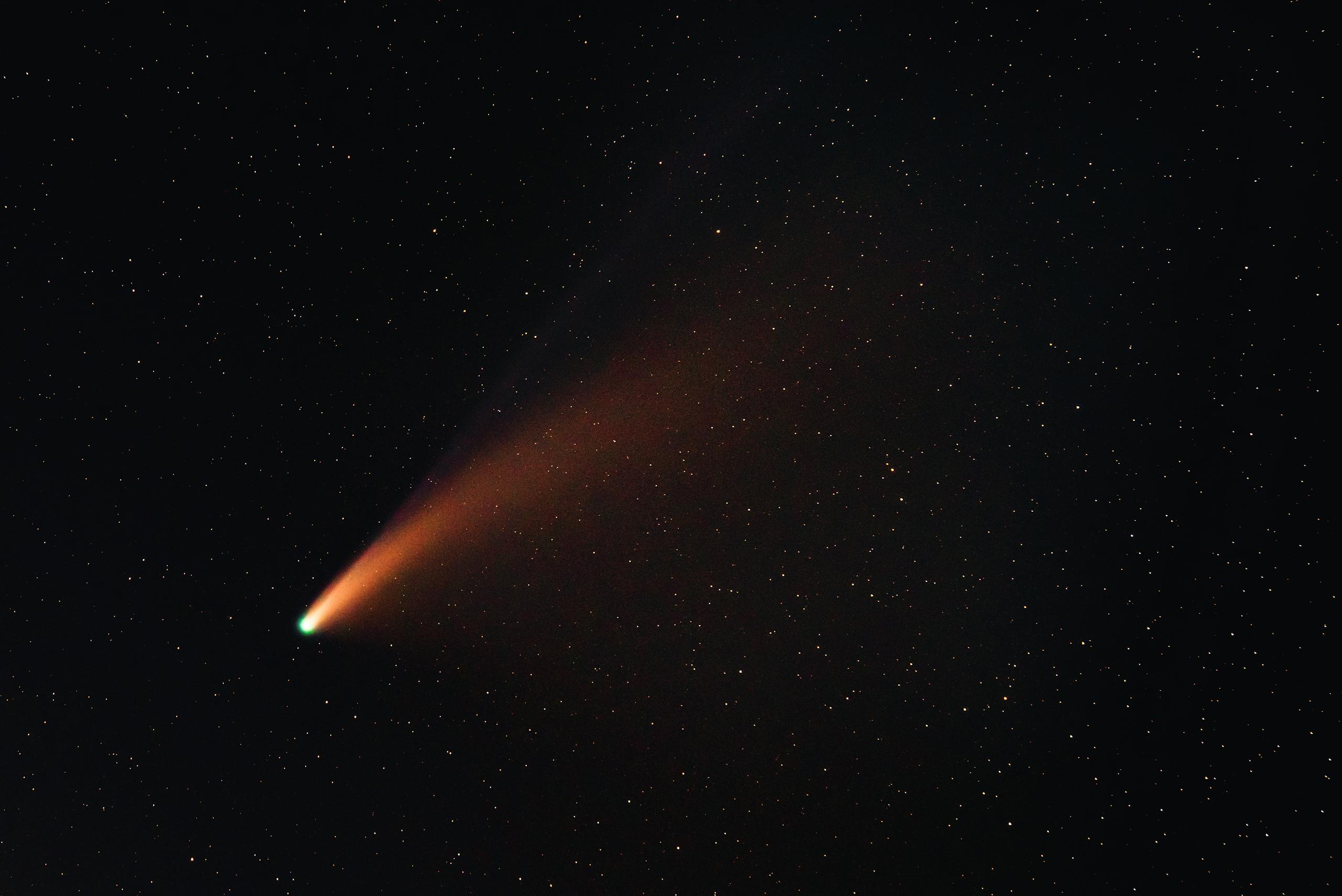
The idea of visiting a comet from another star system sounds like science fiction, but a newly published scientific study suggests it may be far closer to reality than we once thought. According to a recent white paper, the European Space Agency’s Comet Interceptor mission, scheduled for launch in 2029, could serve as a practical blueprint for humanity’s first close-up encounter with an interstellar comet.
At the heart of this proposal is a simple but powerful concept: instead of scrambling to design and launch a spacecraft after an interstellar object is discovered, we should have a mission already waiting in space, ready to move at short notice. That is exactly what Comet Interceptor is designed to do.
What Makes Comet Interceptor Different From Previous Comet Missions
Most past comet missions followed a familiar pattern. Scientists first identified a target, then spent years designing a spacecraft and plotting a course to intercept it. This worked well for missions like Stardust, Deep Impact, and ESA’s landmark Rosetta mission, which famously orbited comet 67P/Churyumov–Gerasimenko and discovered complex organic molecules, including the amino acid glycine.
Comet Interceptor breaks from that tradition in a major way. It will be launched before its target is known. Once in space, the spacecraft will wait at a gravitationally stable location near the Sun–Earth L2 point, monitoring the skies for a suitable object.
The mission is designed to intercept a long-period comet—a comet that originates from the distant outer regions of the solar system and may be making its first-ever pass through the inner solar system. These comets are considered especially valuable because they preserve ancient material that has remained largely unchanged since the solar system formed.
This same design, the researchers argue, also makes Comet Interceptor unusually well suited to visiting an interstellar object, or ISO.
Why Interstellar Comets Are So Hard to Study
Interstellar objects are visitors from outside our solar system, moving on hyperbolic trajectories that send them speeding past the Sun before they disappear forever into interstellar space. They offer a rare opportunity to study material that formed around other stars, but they present enormous challenges.
The biggest problem is timing. Interstellar objects are usually detected late, when they are already moving rapidly through the inner solar system. There is often no practical lead time to build and launch a spacecraft to intercept them.
Proposed missions that attempt to chase known interstellar objects typically require untested propulsion systems, extreme gravity assists, or journeys that would place spacecraft hundreds of astronomical units from Earth, making communication and operations highly uncertain.
The authors of the new study conclude that these chase-style missions are impractical with current technology.
The “Wait in Space” Solution
The solution, according to the researchers, is to reverse the problem entirely. Instead of chasing an interstellar object after it is discovered, a spacecraft should already be fully built, launched, and waiting in space.
This is where Comet Interceptor becomes crucial. Because it is designed to respond rapidly to newly discovered targets, it could theoretically intercept an interstellar comet during the short window when it passes through the inner solar system.
The study explains that even if the existing Comet Interceptor mission never encounters an interstellar object itself, it can still act as a proof of concept. It demonstrates that a low-cost, pre-positioned spacecraft can be a realistic and scientifically powerful approach for future ISO missions.
What Scientists Hope to Learn From an Interstellar Comet
Interstellar comets are thought to be leftover building blocks of planet formation from other star systems. During the chaotic early stages of planetary formation, massive planets can migrate inward and outward, gravitationally scattering icy bodies and ejecting many of them into interstellar space.
Objects like 2I/Borisov and the more recently identified 3I/ATLAS are believed to be examples of this process.
By studying an interstellar comet up close, scientists could compare its composition, structure, and chemistry with comets formed in our own solar system. This could reveal whether planet formation follows similar patterns across the galaxy, or whether our solar system is truly unusual.
Exoplanet discoveries already suggest that our system may be an outlier. Many planetary systems contain hot Jupiters or sub-Neptune-sized planets, types of worlds that are missing here. Interstellar objects may help explain why these differences exist.
Instruments Needed for an Interstellar Mission
Most of the instruments planned for Comet Interceptor would work well for an interstellar comet encounter. These include high-resolution cameras, dust analyzers, and instruments for studying gas emissions.
However, the researchers highlight one critical addition: a neutral mass spectrometer. Interstellar comets may contain chemical compounds that differ significantly from those seen in solar system comets. A dedicated instrument to analyze neutral gases would be essential for understanding their true composition and origin.
Detailed imaging would also play a key role. By studying surface features such as layering, craters, and erosion, scientists could infer the environmental conditions in the comet’s original star system.
The Role of the Vera Rubin Observatory
One reason scientists are increasingly optimistic about interstellar comet missions is the upcoming Vera C. Rubin Observatory and its Legacy Survey of Space and Time.
Once operational, this observatory is expected to dramatically increase the discovery rate of interstellar objects. Current estimates suggest it could detect at least 10 interstellar objects, and possibly many more.
This data will help scientists better understand how common interstellar comets are and how often a reachable one might pass through the inner solar system. That information is crucial for planning future missions and justifying their cost.
Why This Matters for the Search for Life
The study of comets has already transformed our understanding of life’s potential origins. ESA’s Rosetta mission detected amino acids, complex organic molecules, and phosphorus, a key ingredient in DNA, on comet 67P.
If similar or even more complex molecules were found on a comet from another star system, it would suggest that the chemical ingredients for life may be widespread throughout the galaxy.
While humanity may never visit another star system directly, interstellar comets offer a rare chance to bring the galaxy to us, at least briefly.
A Blueprint for the Future
The researchers acknowledge that the odds of the current Comet Interceptor mission encountering an interstellar comet are extremely slim, as the timing and trajectory would have to align perfectly. Even so, the mission represents a crucial step forward.
By proving that a spacecraft can wait in space and respond rapidly to new discoveries, Comet Interceptor lays the groundwork for future missions specifically designed to study interstellar visitors.
Interest in such missions is high, both scientifically and publicly. The possibility of directly sampling material from another star system captures the imagination and promises insights that could reshape our understanding of planet formation, chemistry, and the potential for life beyond Earth.
Research paper: https://arxiv.org/abs/2512.00492