How Stars Forge Heavy Elements in New and Unexpected Ways Through the i-Process
The formation of elements inside stars is one of the most fascinating topics in modern physics, and a new wave of research is shining light on a process that has long been overlooked: the intermediate neutron-capture process, better known as the i-process. This process fills a crucial gap between two well-established ways in which stars create heavy elements — the s-process and the r-process — and it is helping scientists explain puzzling observations from unusual stars across the galaxy.
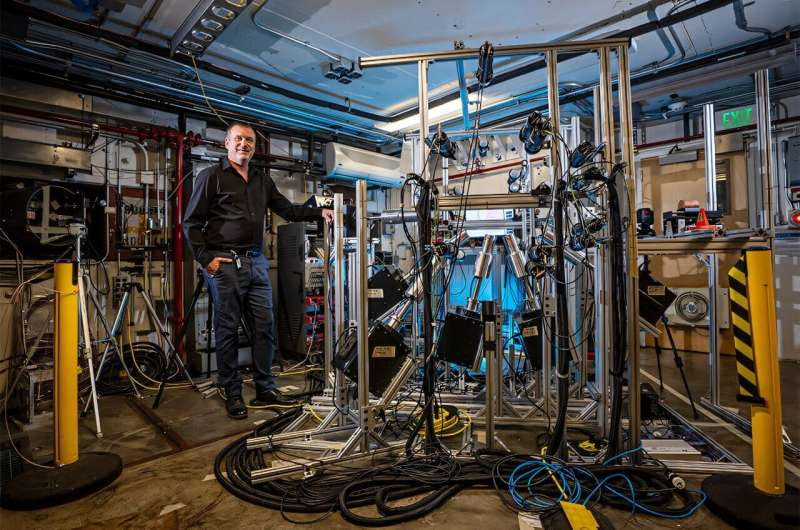
A new article in Nature Reviews Physics, led by experimental physicist Mathis Wiedeking of Lawrence Berkeley National Laboratory, brings together decades of experiments, theoretical modeling, and astrophysical observations to show how the i-process is reshaping our understanding of element formation. Below is a detailed breakdown of what the i-process is, why it matters, the challenges in studying it, and what researchers hope to uncover in the near future.
What We Already Know About How Elements Form
Elements heavier than iron are primarily made in neutron-capture processes, which involve a stable nucleus absorbing neutrons until it becomes unstable and undergoes beta decay. This decay converts a neutron into a proton, shifting the nucleus to a heavier element.
Scientists have long understood two major versions of this mechanism:
- The s-process (slow neutron capture)
This occurs in environments with low neutron densities — around tens of millions to hundreds of billions of neutrons per cubic centimeter. It unfolds over thousands of years and can build elements up to bismuth. - The r-process (rapid neutron capture)
This requires extreme neutron densities — greater than 10²¹ neutrons per cubic centimeter — usually found in violent cosmic events like supernovae or neutron-star mergers. The process completes in under a second and can produce the heaviest elements in the periodic table, including uranium and plutonium.
For decades, these two processes were thought to explain nearly everything about heavy-element formation. But certain stars were found to contain unusual ratios of heavy elements that didn’t match either the s- or r-process — pointing toward an entirely different mechanism.
The Rediscovery of the i-Process
The i-process was proposed in 1977, but it faded into obscurity for decades because scientists lacked observational evidence and the computational tools needed to explore it deeply. Everything changed over the past ten years.
New ground-based and space telescopes began observing stars with exceptionally strange chemical signatures — especially carbon-enhanced metal-poor (CEMP) stars. These stars contain a mix of heavy elements that simply couldn’t be explained by the slow or rapid neutron-capture routes.
These anomalies revived interest in the i-process, which is characterized by:
- Neutron densities between those of the s- and r-process
- Timescales that sit in the middle ground
- A path through the nuclear chart that involves many unstable nuclei
The result is a nucleosynthesis pathway capable of producing abundance patterns that match the mysterious signals detected in certain stars.
How Scientists Work Together to Understand the i-Process
Understanding the i-process requires a tight collaboration between several fields:
- Astronomers collect starlight and use absorption spectroscopy to determine which elements are present in distant stars.
- Theoretical astrophysicists and nuclear modelers simulate how different nuclear reactions should behave in stellar environments.
- Experimental nuclear physicists provide the measured data that these models rely on, including reaction rates and nuclear properties.
The process is iterative. Theorists identify nuclear reactions with major uncertainties. Experimentalists then measure those reactions, allowing for improved models — which are then compared against real stellar data.
As Wiedeking explains, this constant back-and-forth is essential for refining our understanding of how the cosmos forges heavy elements.
Why Measuring i-Process Reactions Is So Difficult
One of the most important quantities in any neutron-capture process is the neutron-capture cross-section — the probability that a nucleus absorbs a neutron. These cross-sections are essential for modeling how elements grow inside stars.
However, a major challenge is that many nuclei involved in the i-process are unstable. Direct measurements of neutron capture on unstable isotopes are extremely difficult because:
- Unstable materials cannot be easily produced or stored.
- Traditional neutron-beam experiments require stable targets.
- Many relevant isotopes have very short half-lives.
Because of this, researchers rely heavily on indirect experimental methods using particle accelerators and sophisticated detectors. These methods recreate the same nuclear properties needed for astrophysical models, even if direct neutron-capture measurement is impossible.
Where These Measurements Happen
The experiments behind i-process data come from major facilities around the world, including:
- The 88-Inch Cyclotron at Lawrence Berkeley National Laboratory
- The Facility for Rare Isotope Beams (FRIB)
- Argonne National Laboratory
- International laboratories with specialized gamma-ray and particle-detection systems
Researchers design experiments that produce nuclear reactions whose outcomes can be reconstructed in detail. By accounting for all energy and particle outputs, scientists can extract the precise nuclear properties needed for accurate i-process models.
The Big Open Questions About the i-Process
Even with major progress, several uncertainties remain:
- Can the i-process fully explain the heavy-element anomalies found in certain stars?
- Where exactly does the i-process stop?
The s-process ends at bismuth, but models suggest the i-process may push into the actinide region. - How common are i-process events in the universe?
- How do specific nuclear reactions influence final element abundances?
Because the field only became active again in the last decade, researchers are still building the foundation needed to answer these questions confidently.
How i-Process Research Helps Beyond Astrophysics
The benefits of studying the i-process extend well beyond understanding stars.
The same neutron-capture reactions involved in the i-process are relevant to:
- Next-generation nuclear reactor design
Improved nuclear data can enhance safety and efficiency. - Production of new medical isotopes
Understanding which isotopes can be efficiently synthesized helps guide development. - National security and non-proliferation efforts
Accurate nuclear data strengthens detection and monitoring technologies. - Engineering applications that rely on precise nuclear properties.
So the science of stellar element formation also feeds technology here on Earth.
What Researchers Expect in the Next 5–10 Years
Wiedeking believes that the next decade will be transformational for i-process science. Across the world, dozens of data sets from past accelerator experiments are still being analyzed, while many new experiments are already scheduled.
Researchers expect to:
- Significantly reduce uncertainties in nuclear data for i-process modeling
- Determine whether the i-process can really explain the observed stellar anomalies
- Clarify how far the i-process can push through the nuclear chart
- Establish the i-process on solid footing, similar to the well-studied s-process
If these goals are met, scientists will finally have a clear picture of where many of the heavy elements around us — from gold to bismuth to possibly even actinides — originally came from.
Link to the Research Paper
Unlocking i-process nucleosynthesis by bridging stellar and nuclear physics
https://doi.org/10.1038/s42254-025-00885-7