JWST Spots the Oldest Known Supernova From Just 730 Million Years After the Big Bang
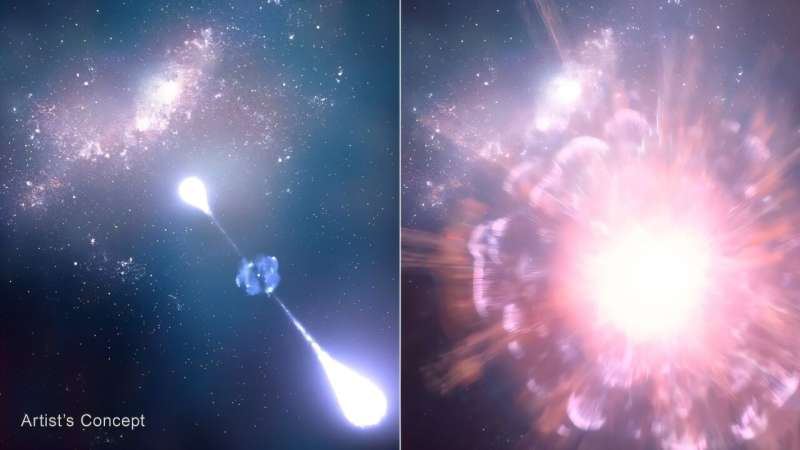
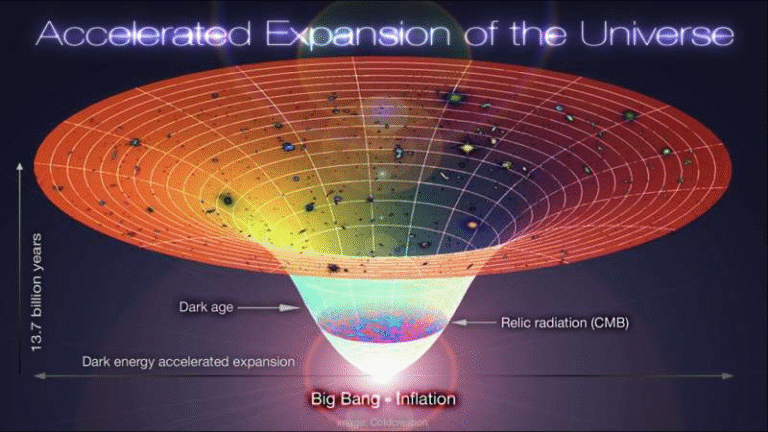
The James Webb Space Telescope (JWST) has done it again. Astronomers have confirmed the most distant and earliest supernova ever directly observed, dating back to a time when the universe was only about 730 million years old—roughly 5% of its current age. This extraordinary detection pushes the boundaries of what we thought was observationally possible and offers a rare glimpse into how the first generations of stars lived and died.
What makes this discovery even more remarkable is that the supernova was linked to a long gamma-ray burst (LGRB) detected in March 2025, allowing scientists to study an individual star from the Era of Reionization, one of the most mysterious periods in cosmic history.
A Supernova Tied to a Powerful Gamma-Ray Burst
The event at the center of this discovery is known as GRB 250314A. Gamma-ray bursts are the most energetic explosions known in the universe, and long-duration ones are strongly associated with the collapse of massive stars. When this GRB was detected, astronomers suspected it might be special—but they didn’t yet know just how ancient it was.
Follow-up observations revealed that GRB 250314A occurred at a redshift of approximately 7.3, placing it deep in the early universe. This makes it one of only a handful of gamma-ray bursts ever detected within the first billion years after the Big Bang, a period for which direct stellar observations are extremely rare.
Two scientific papers published in Astronomy & Astrophysics detail the findings. One focuses on the JWST detection of the supernova itself, while the other examines the GRB and its broader cosmological implications. Together, they provide compelling evidence that JWST successfully observed the faint light of a supernova explosion triggered by the collapse of a massive early star.
Why JWST Was Essential for This Discovery
Supernovae are not among JWST’s primary science targets, but its exceptional sensitivity in infrared wavelengths makes it uniquely suited for studying the early universe. At such extreme distances, visible light is stretched into the infrared due to the expansion of space, meaning older telescopes simply cannot see these events clearly—or at all.
In this case, astronomers carefully timed their observations. Because light from such a distant supernova is cosmologically time-dilated, the explosion brightens and fades much more slowly than nearby supernovae. Instead of peaking over weeks, this one took several months.
Researchers waited about 3.5 months after the gamma-ray burst faded, which is when models predicted the supernova would be at its brightest in the infrared. JWST’s observations matched those predictions closely, strongly supporting the conclusion that the detected light came from a supernova rather than just its host galaxy.
This makes GRB 250314A’s supernova the earliest confirmed stellar explosion ever directly observed.
How the Discovery Unfolded Step by Step
The sequence of events behind this discovery involved multiple observatories across the world and in space:
- The SVOM satellite, a joint mission between China and France, first detected GRB 250314A on March 14, 2025.
- NASA’s Neil Gehrels Swift Observatory quickly followed up, pinpointing the source of the X-ray emission.
- Ground-based telescopes, including the Nordic Optical Telescope in the Canary Islands and the Very Large Telescope (VLT) in Chile, gathered additional data and helped confirm the event’s extreme distance.
- Finally, JWST conducted targeted infrared observations, identifying the faint glow of the supernova itself.
This coordinated effort highlights how modern astronomy increasingly relies on global and multi-wavelength collaboration to study rare cosmic events.
What Makes This Supernova So Unique
The discovery stands out for several reasons:
- It is the most distant supernova ever detected, surpassing JWST’s previous record-holder observed about 1.8 billion years after the Big Bang.
- It occurred during the Era of Reionization, when early stars and galaxies were transforming the universe from opaque to transparent.
- It provides direct evidence that massive stars were forming, evolving, and exploding very early in cosmic history.
Perhaps most surprisingly, the supernova appears remarkably similar to modern core-collapse supernovae.
Comparing Ancient and Modern Stellar Explosions
Astronomers expected major differences between ancient and present-day supernovae. Early stars likely formed from low-metallicity gas, lived shorter lives, and may have been more massive on average. The intergalactic medium at the time was also denser and more opaque, which could have affected how explosions unfolded.
Yet JWST’s data suggest that this ancient supernova closely resembles those seen in the nearby universe today. While subtle differences may still emerge with deeper observations, the overall similarity hints that the basic physics of massive star collapse was already in place less than a billion years after the Big Bang.
This finding has important implications for models of stellar evolution, chemical enrichment, and galaxy formation in the early universe.
A Glimpse at the Host Galaxy
JWST also detected the host galaxy of the supernova, though it appears as little more than a faint smudge of reddened light spanning only a few pixels. This is typical for galaxies at such extreme distances, and it makes separating galaxy light from supernova light particularly challenging.
There is still some uncertainty about how much of the observed signal comes from the supernova itself versus the underlying galaxy. However, the strong agreement between predicted and observed brightness patterns supports the supernova interpretation.
Future observations, including a second epoch of JWST imaging, are expected to resolve this uncertainty by better constraining the galaxy’s contribution.
Why Gamma-Ray Bursts Matter for Early Universe Studies
Long gamma-ray bursts are invaluable tools for studying the distant universe because they can be detected even when their host galaxies are too faint to observe directly. Their extreme brightness allows astronomers to pinpoint star-forming regions at times when galaxies were still assembling.
Because LGRBs are tied to individual massive stars, they act as direct tracers of star formation across cosmic time. GRB 250314A demonstrates just how powerful this approach can be when combined with JWST’s infrared capabilities.
What Comes Next
Encouraged by this success, researchers have been awarded additional JWST observing time to search for more ancient supernovae associated with gamma-ray bursts. The goal is to capture the warm afterglow of these explosions, which can reveal detailed information about early galaxies, their chemical composition, and their environments.
Scientists also emphasize the need for future space missions capable of autonomously detecting, localizing, and performing spectroscopy on high-redshift GRBs. Such missions could dramatically accelerate discoveries like this one and deepen our understanding of the universe’s earliest stars.
Why This Discovery Matters
This observation confirms that JWST can do something once thought impossible: directly detect individual stars and stellar deaths from the universe’s first billion years. It strengthens the link between gamma-ray bursts and supernovae at extreme distances and shows that massive stars were already shaping the cosmos in familiar ways at a very early stage.
In short, this single explosion offers a powerful reminder that even in the universe’s infancy, the same fundamental processes we observe today were already at work—just much farther away and much earlier in time.
Research Paper Reference:
https://www.aanda.org/articles/aa/full_html/2025/08/aa56581-25/aa56581-25.html