K-DRIFT Pathfinder Shows How a Compact Telescope Can Reveal the Faintest Structures of Galaxies
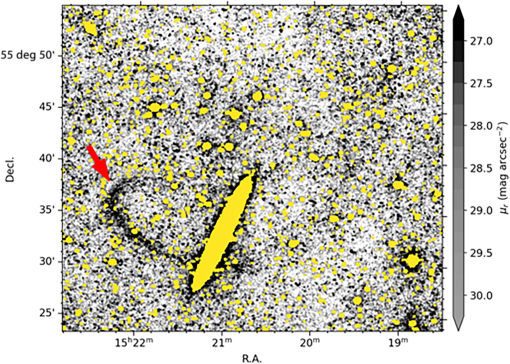
Conventional telescopes have long struggled with one particular challenge in astronomy: observing low-surface-brightness (LSB) structures. These structures are incredibly faint features surrounding galaxies, often dimmer than the natural glow of the night sky itself. Yet they are some of the most important clues astronomers have for understanding how galaxies form, collide, merge, and evolve over billions of years.
A newly developed telescope system called the K-DRIFT pathfinder is designed specifically to tackle this challenge. Developed by researchers at the Korea Astronomy and Space Science Institute (KASI), the K-DRIFT pathfinder demonstrates that a compact, carefully engineered optical system can deliver the precision needed to study the faintest galactic features that traditional telescope designs often miss.
Why Low-Surface-Brightness Structures Matter
According to modern cosmology, most galaxies are surrounded by extended, diffuse halos of light. These halos include tidal streams, stellar shells, and faint outer disks formed through past galactic interactions such as mergers and gravitational encounters.
Because these structures are extremely faint, they are easily overwhelmed by stray light, optical scattering, sky brightness gradients, and imperfections in telescope optics. Observing them requires more than just a large mirror—it requires an optical system that is optimized to suppress unwanted light and preserve faint signals.
Deep LSB imaging places strict demands on telescope design. The system must provide a wide and unobscured field of view, collect light efficiently, minimize optical aberrations, and reduce scattering from both the mirrors and mechanical structures. These requirements are exactly what motivated the development of K-DRIFT.
Introducing the K-DRIFT Pathfinder
K-DRIFT stands for KASI Deep Rolling Imaging Fast Telescope. The pathfinder version is a testbed instrument created to validate a novel optical concept before scaling it further.
At its core, the K-DRIFT pathfinder uses a linear-astigmatism-free three-mirror system (LAF-TMS). This design is fundamentally different from conventional on-axis telescopes, which often suffer from central obstructions and diffraction effects that scatter light into the image.
The K-DRIFT optical system is an off-axis, unobscured design, meaning that light travels through the telescope without being blocked by secondary mirrors or support structures. This alone significantly reduces stray light and improves contrast—both critical for LSB observations.
A Closer Look at the Optical Design
The telescope features a 300-millimeter aperture confocal off-axis system built around three freeform mirrors. Each mirror plays a specific role in shaping and correcting the incoming light:
- M1 (Primary Mirror): A freeform elliptical concave mirror
- M2 (Secondary Mirror): A freeform elliptical convex mirror
- M3 (Tertiary Mirror): A freeform elliptical concave mirror
The secondary mirror shares a focal point with both the primary and tertiary mirrors. This confocal arrangement helps suppress stray light and reduce scattering throughout the optical path.
One of the most notable aspects of the design is that the tilt angles of the three mirrors are carefully optimized to eliminate linear astigmatism, a common problem in off-axis telescope systems. By using three freeform mirrors rather than conventional rotationally symmetric optics, the design also minimizes higher-order aberrations that would otherwise blur faint structures.
For detection, the K-DRIFT pathfinder uses a CMOS camera, chosen for its suitability in deep imaging applications.
Materials and Mechanical Engineering Choices
Optical performance does not depend on mirror shape alone. Mechanical stability and thermal behavior are just as important. To address this, the mirrors in K-DRIFT were fabricated from Zerodur, a glass-ceramic material known for its exceptional thermal stability and resistance to deformation under temperature changes.
The mirrors are mounted inside an aluminum housing using invar flexures. Invar has an extremely low coefficient of thermal expansion, which helps reduce mechanical stress and mirror surface distortion as temperatures change. This combination minimizes unwanted deformations that could scatter light or degrade image quality.
The integration and alignment of the mirrors were carried out step by step using a coordinate-measuring machine, allowing precise placement and orientation of each optical element. To further reduce stray light, a secondary baffle was installed in front of the detector.
On-Sky Testing at Bohyunsan Observatory
To evaluate real-world performance, the K-DRIFT pathfinder was installed at the Bohyunsan Optical Astronomy Observatory (BOAO) in South Korea. On-sky testing took place between June 2021 and April 2022, covering a wide range of seasonal temperature conditions.
The telescope demonstrated stable imaging performance across these environmental changes, confirming the effectiveness of its mechanical and thermal design. However, early results showed that the system did not initially meet its resolution targets.
Image quality was assessed using the full width at half maximum (FWHM) of the point spread function (PSF), a standard metric in astronomy. The initial PSF FWHM measured around 3.8 pixels, which was higher than desired for deep LSB imaging.
Diagnosing and Fixing Performance Issues
Rather than accepting these limitations, the research team conducted detailed optical simulations and error analyses. They identified three primary sources contributing to the reduced performance:
- Mirror fabrication errors
- Opto-mechanical errors in mirror mounting
- Optical misalignment during assembly
Based on these findings, the team replaced the secondary mirror (M2) and refined the alignment process during the final housing assembly. These improvements led to a dramatic enhancement in image quality.
After corrections, the PSF FWHM was reduced from 3.8 pixels to 1.8 pixels, a significant improvement that brought the system much closer to its design goals.
Why This Matters for Astronomy
The success of the K-DRIFT pathfinder shows that compact telescope systems can be purpose-built to excel at specific scientific tasks. Rather than competing with massive observatories, K-DRIFT focuses on a niche that is critically important but often underserved: deep imaging of faint galactic structures.
Such telescopes can complement large survey instruments by targeting specific regions of the sky with optimized contrast and sensitivity. They are also potentially more cost-effective and easier to deploy at multiple sites.
Understanding Low-Surface-Brightness Astronomy
LSB astronomy is a growing field because it directly probes the assembly history of galaxies. Faint halos and tidal streams preserve records of interactions that may have occurred billions of years ago. Studying them helps astronomers test models of dark matter distribution, hierarchical galaxy formation, and the long-term effects of gravitational interactions.
Instruments like K-DRIFT are especially valuable because they address the optical limitations that have traditionally masked these structures, rather than relying solely on larger apertures.
Looking Ahead
The K-DRIFT pathfinder represents a crucial step toward future deep-imaging systems optimized for LSB science. Its success validates the use of freeform mirror technology, off-axis optical designs, and carefully engineered mechanical structures for precision astronomy.
As designs like K-DRIFT continue to evolve, astronomers will gain clearer views of the faint outskirts of galaxies—regions that quietly hold the hidden history of cosmic evolution.
Research paper:
https://doi.org/10.1117/1.JATIS.11.4.048002