Moss Spores Survive Nine Months Outside the International Space Station and Return to Earth Ready to Grow
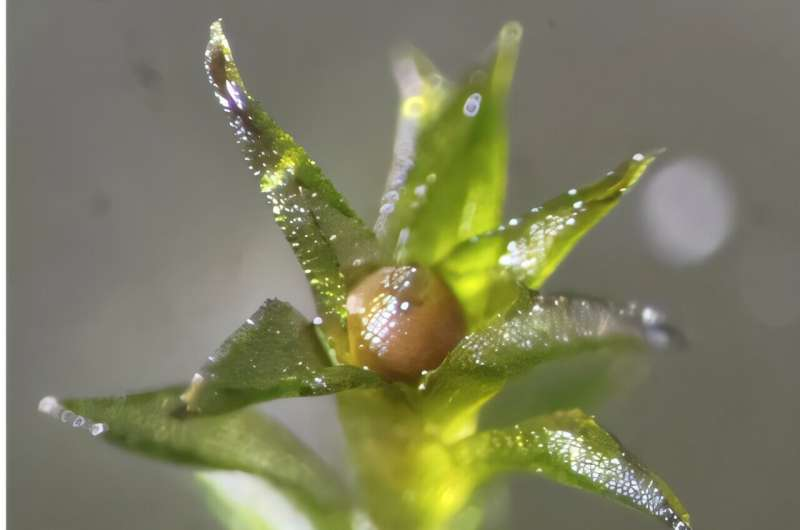
The idea that a tiny plant from Earth could survive unprotected in space sounds impossible, but a new study has shown that moss spores can handle the harshest environment imaginable. Researchers have now demonstrated that these hardy cells endured nine months attached to the exterior of the International Space Station (ISS)—exposed directly to vacuum, cosmic radiation, extreme temperatures, and microgravity—and still returned home capable of germinating normally.
This finding comes from a study published on November 20, 2025, in the journal iScience, and it marks the first time a land plant has been proven to survive long-term space exposure in its natural form.
This experiment used the species Physcomitrium patens, often called spreading earthmoss. It’s a simple, well-studied moss frequently used in plant biology because it has clear growth stages and is easy to cultivate. Mosses as a group are known for thriving in extreme environments on Earth—everything from Himalayan peaks to Death Valley deserts—so researchers wondered whether their resilience might extend beyond our planet.
How the Experiment Started
The inspiration for this study came from observing just how tough mosses are in nature. This led researchers to ask a simple but bold question: could moss survive space itself? To explore that idea, a team examined three structures from the moss to see which one had the best odds of lasting outside Earth:
- Protonemata, the juvenile thread-like growth stage
- Brood cells, stress-induced stem-cell-like units
- Sporophytes, the capsules that hold and protect spores
Before sending anything to space, the team subjected all three structures to simulated space-like stressors on Earth. These included very high doses of UV radiation, vacuum, and extremes such as –196°C cold for over a week and 55°C heat for a month. The goal was to determine which structure had the best chance of surviving once mounted on the ISS.
The results of these tests were clear: sporophytes were dramatically more resilient than the other stages. Juvenile moss died quickly under UV radiation and extreme temperatures. Brood cells performed better, but the spores inside the sporophytes showed about 1,000 times more tolerance to UV radiation than either of the other structures. This is important because UV radiation is one of the biggest hazards outside Earth’s atmosphere.
Researchers believe that the protective walls of the sporophyte capsule play a crucial role. The structure isn’t just physical; it contains chemical compounds that help absorb damaging radiation and prevent harm to the genetic material inside. This trait is likely an ancient adaptation that allowed mosses and other early plants—known collectively as bryophytes—to transition from water to land roughly 500 million years ago and survive many mass extinction events.
Sending Moss to Space
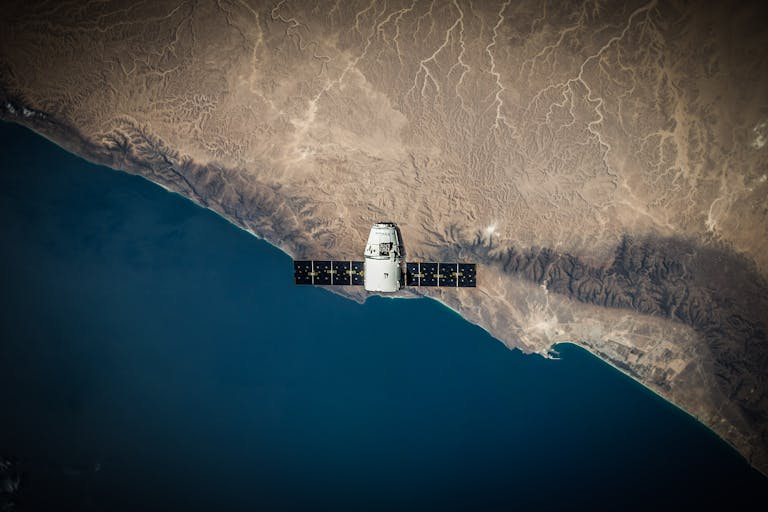
With the survival advantage of sporophytes confirmed, the team prepared real samples for space. In March 2022, hundreds of these tiny capsules were launched to the ISS aboard the Cygnus NG-17 spacecraft.
Once at the ISS, astronauts attached the moss samples to an external exposure facility where the spores faced:
- Continuous vacuum
- Full-spectrum cosmic radiation
- Microgravity
- Extreme temperature fluctuations experienced in low Earth orbit
The moss stayed outside the station for a total of 283 days, roughly nine months. In January 2023, the samples returned to Earth on the SpaceX CRS-16 resupply mission.
Survival and Results Back on Earth
Based on what is known about space hazards, the scientists expected near-total failure. Instead, they were surprised to discover that more than 80% of the spores survived the journey. Even more remarkably, once placed in normal laboratory conditions, almost 89% of those surviving spores germinated and grew into healthy moss.
Tests also looked at the spores’ chlorophyll content. All major pigments appeared normal except for a modest 20% decrease in chlorophyll a, a compound sensitive to visible light. This reduction didn’t affect the spores’ ability to grow normally, indicating that most of their biological machinery stayed intact.
Modeling Long-Term Survival in Space
Curious about how long these resilient spores could endure beyond Earth, the team created a mathematical model based on the damage observed after the real experiment. According to their estimates, spores encased inside their protective sporophytes might survive up to 5,600 days—about 15 years—in similar space conditions. The researchers caution that this is a rough estimate and that more data from longer missions would be needed for accuracy, but it points to a surprising longevity.
Why This Matters for Space Exploration
The successful survival of moss spores in space has several implications:
- It shows that life from Earth is more durable than previously assumed.
- It provides insights into the potential for developing plant-based agricultural systems on the Moon, Mars, or artificial habitats.
- Mosses, being small, simple, and resilient, could help in early-stage ecosystem creation by providing oxygen, initiating soil formation, or acting as biological test subjects for extraterrestrial environments.
This research may serve as a stepping-stone toward building self-sustaining ecosystems beyond Earth. If moss spores can survive such harsh exposure, they could become useful pioneers in future off-world habitats. The experiment also adds to our understanding of how life might spread between planets naturally, feeding into hypotheses about panspermia—the idea that life or its building blocks can travel across space on natural objects such as asteroids.
Additional Information About Moss and Their Resilience
Mosses belong to one of the oldest plant lineages on Earth. They lack complex systems like vascular tissues but compensate with incredible durability. Here are some additional facts that help explain why this experiment makes sense scientifically:
- Many moss species can completely dry out and later rehydrate without damage, a trait known as desiccation tolerance.
- Mosses often contain natural UV-absorbing compounds that act like sunscreen.
- Their spores are built to endure extreme conditions on Earth, including freezing, drought, and high-altitude radiation.
- Mosses played a key role in the early colonization of land, helping form the first primitive soils that allowed other plants to evolve.
Because of these features, mosses make excellent test organisms in space biology. They are simple enough to analyze easily yet complex enough to offer insights into how more advanced plants might perform beyond Earth.
What Comes Next for This Field of Study
The researchers behind the study hope to continue testing how mosses respond to long-term exposure, different space environments, and even extraterrestrial soils. Their work opens potential pathways for experiments on the Moon or Mars, especially as space agencies and private companies explore sustainable life support systems for future missions.
Future studies might explore questions such as:
- How do hydrated mosses perform compared to dried spores?
- Can mosses play a role in bioregenerative life support in lunar or Martian habitats?
- What genetic or biochemical mechanisms give these spores such extraordinary resilience?
As humanity looks toward building habitats far from Earth, even small organisms like moss could become extremely valuable.
Research Paper:
Extreme Environmental Tolerance and Space Survivability of the Moss Physcomitrium patens
https://www.cell.com/iscience/fulltext/S2589-0042(25)02088-7