NASA and JAXA’s XRISM Mission Reveals Rare Elements Hidden Inside a Supernova Remnant
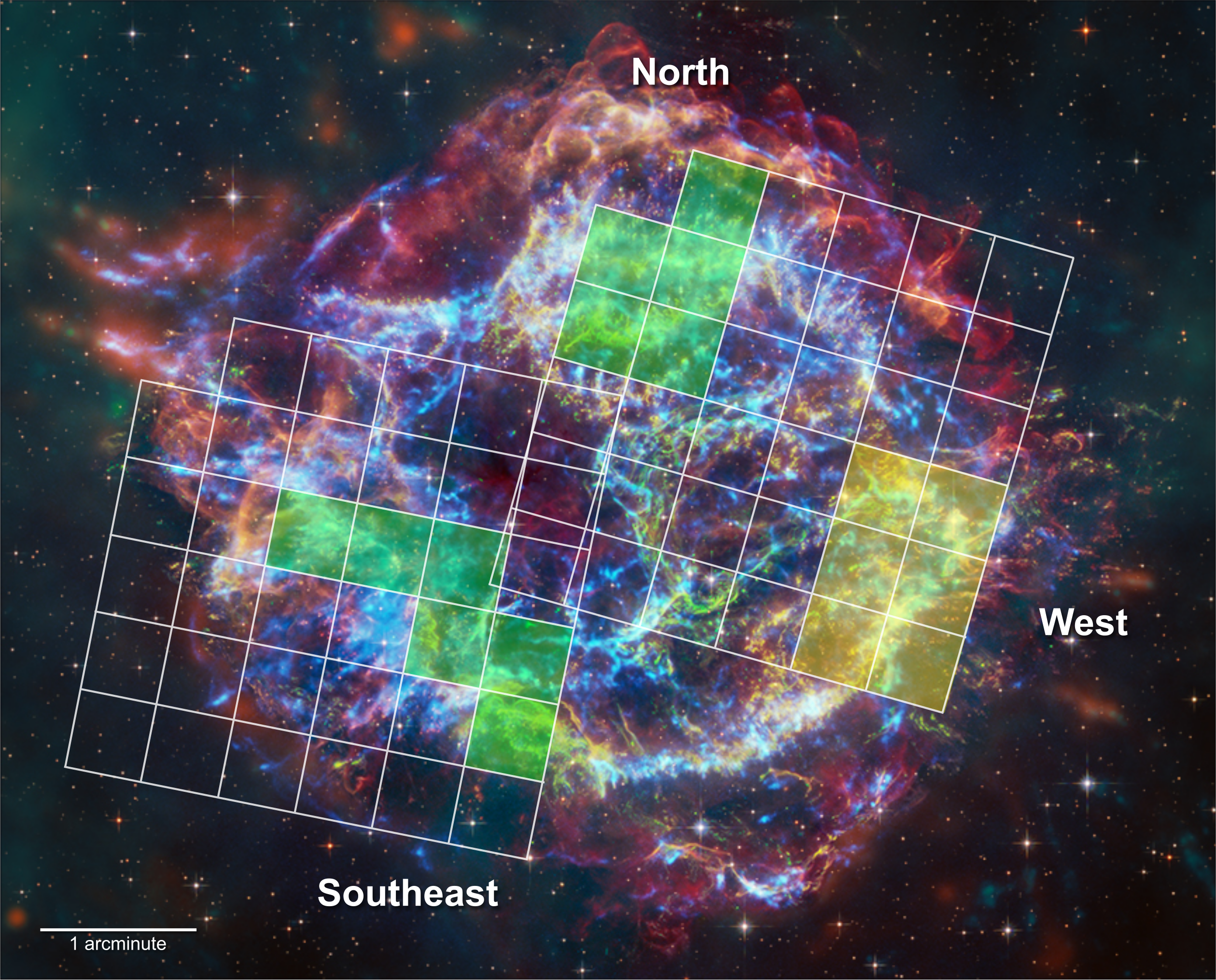
NASA and Japan’s space agency JAXA have delivered a fascinating new result from space that deepens our understanding of how stars create the elements that eventually make planets—and life—possible. Using the XRISM (X-ray Imaging and Spectroscopy Mission) spacecraft, scientists have made the first clear X-ray detection of chlorine and potassium inside the remains of a long-dead star. The discovery was made in the famous Cassiopeia A supernova remnant, one of the most studied stellar explosions in our galaxy.
This finding is more than just a technical milestone. It fills in missing pieces of how stars manufacture rare elements and scatter them across space, helping scientists refine models of stellar evolution and supernova explosions.
A Closer Look at Cassiopeia A
Cassiopeia A, often shortened to Cas A, is the expanding cloud of debris left behind after a massive star exploded roughly 340 years ago. Located about 11,000 light-years away in the northern constellation Cassiopeia, Cas A spans nearly 10 light-years across and continues to glow brightly in X-rays, optical light, and infrared wavelengths.
At its center lies a superdense neutron star, the collapsed core of the original star. Over the years, observatories like NASA’s Chandra X-ray Observatory have mapped Cas A in incredible detail, revealing elements such as iron, silicon, sulfur, oxygen, and neon. These are relatively common products of stellar fusion and supernova explosions.
However, some elements are much harder to detect—especially those that exist in smaller quantities or produce weaker signals. This is where XRISM enters the picture.
How XRISM and the Resolve Instrument Made the Discovery
XRISM is a Japan-led mission with major contributions from NASA and ESA (European Space Agency). One of its key instruments is Resolve, a high-resolution X-ray spectrometer that uses just 36 pixels to capture extraordinarily detailed spectral data. Despite its small detector, Resolve can distinguish subtle differences in X-ray energies that older instruments often blurred together.
In December 2023, scientists used Resolve to observe Cassiopeia A during two separate pointings. These observations allowed the team to isolate faint X-ray signatures that clearly correspond to chlorine and potassium—marking the first unambiguous X-ray detection of these elements in a supernova remnant.
The instrument also detected a possible signal from phosphorus, an element previously identified in Cas A using infrared observations. Together, these findings reveal a richer and more complex chemical makeup than previously confirmed.
Why Chlorine and Potassium Matter
Chlorine and potassium are examples of rarer elements that play important roles in chemistry and biology on Earth. Potassium, for instance, is essential for cell function, nerve signals, and muscle movement. Chlorine is a key component in salts and many chemical processes.
From an astrophysical perspective, these elements are harder to study because scientists have far less observational data about where and how they form inside stars. While models suggest they are created during specific stages of nuclear fusion or during the explosion itself, direct evidence has been scarce—until now.
What surprised researchers most was not just the detection, but the unexpectedly high ratios of chlorine and potassium found in the remnant. These amounts were significantly higher than predicted by standard models of stellar explosions.
What the Element Distribution Reveals About the Explosion
The XRISM data didn’t just show that chlorine and potassium exist in Cas A—it also revealed where they are concentrated. When scientists mapped the Resolve observations onto detailed images from Chandra and other telescopes, they found that these elements are mainly clustered in the southeastern and northern regions of the remnant.
There is weaker evidence of potassium in the western part of Cas A as well. This uneven distribution suggests that the star was not perfectly symmetrical before it exploded. Instead, there were likely large-scale disturbances and mixing inside the star prior to the supernova.
Such internal upheaval could have disrupted the neat, onion-like layers of nuclear fusion typically expected in massive stars. This mixing may have created the right conditions for chlorine and potassium to form in greater quantities than usual.
Earlier Chandra studies had already hinted at asymmetries in Cas A, and the XRISM results strengthen that idea with new chemical evidence.
What This Means for Supernova Science
Supernova remnants act like cosmic crime scenes, preserving clues about how stars lived and died long after the explosion. By measuring elemental abundances and their locations, scientists can work backward to understand the physics of the blast and the star’s final moments.
The ability to measure rare elements with strong statistical confidence is a major step forward. XRISM’s high sensitivity allows astronomers to test and refine theories about nuclear fusion, stellar mixing, and explosive nucleosynthesis—processes that shape the chemical evolution of galaxies.
The findings also demonstrate the value of combining data from multiple missions. XRISM’s spectral precision complements the imaging power of Chandra and the infrared capabilities of other space telescopes, giving scientists a more complete picture of supernova remnants.
How Stars Create and Spread the Elements
Nearly all elements heavier than hydrogen and helium are forged inside stars. During most of a star’s life, heat and pressure fuse lighter elements into heavier ones, building layered structures deep within the star. When the star runs out of fuel, gravity takes over, triggering a collapse and an explosive rebound—a supernova.
During this violent event, new nuclear reactions occur, and elements are hurled into space at incredible speeds. Over time, these materials mix into interstellar clouds, eventually becoming part of new stars, planets, and even living organisms.
Discoveries like this one highlight how closely connected stellar deaths are to the ingredients needed for life.
The Bigger Picture for XRISM
XRISM was designed to answer questions exactly like this. Its mission includes studying galaxy clusters, black holes, neutron stars, and exploded stars, all through the lens of high-resolution X-ray spectroscopy.
The success of the Cassiopeia A observations shows that XRISM is already delivering on its promise. Future observations of other supernova remnants will help scientists determine whether the chlorine and potassium enrichment seen in Cas A is unusual—or part of a broader pattern in massive star explosions.
Either way, the mission is opening a new window into the chemical history of the universe.
Research Reference
Chlorine and potassium enrichment in the Cassiopeia A supernova remnant, Nature Astronomy (2025)
https://www.nature.com/articles/s41550-025-02714-4