NASA and SpaceX Launch Sentinel-6B to Expand Global Sea-Level and Ocean Monitoring
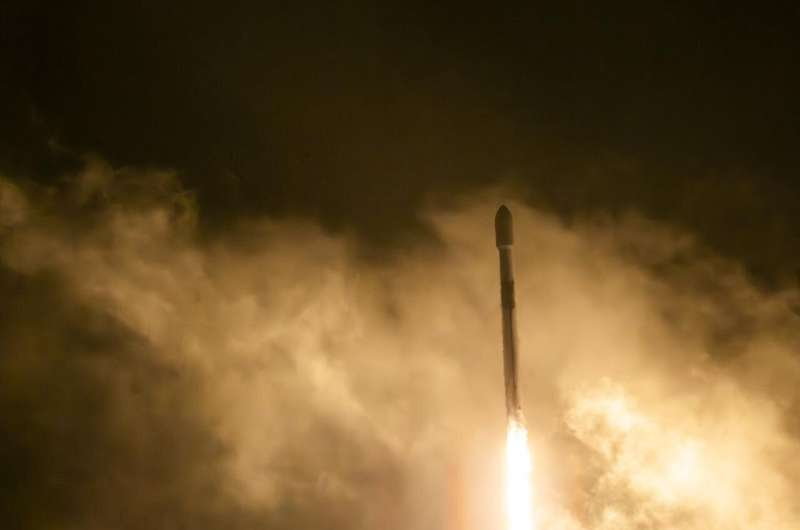
The latest chapter in international Earth-monitoring efforts has officially begun with the launch of Sentinel-6B, a new US–European satellite designed to sharpen our understanding of Earth’s oceans, atmosphere, and changing climate. The spacecraft lifted off aboard a SpaceX Falcon 9 rocket from Launch Complex 4 East at Vandenberg Space Force Base in California at 9:21 p.m. PST on November 16, marking a major milestone in a project that brings together NASA, ESA, EUMETSAT, NOAA, and the European Union under the umbrella of the Copernicus programme.
Contact with the satellite was established about 1 hour and 30 minutes after launch, at 10:54 p.m. PST, when it connected with a ground station in northern Canada. Early systems checks showed everything functioning normally, setting the stage for the satellite’s precise and data-heavy mission.
A Satellite Built for Accuracy and Reliability
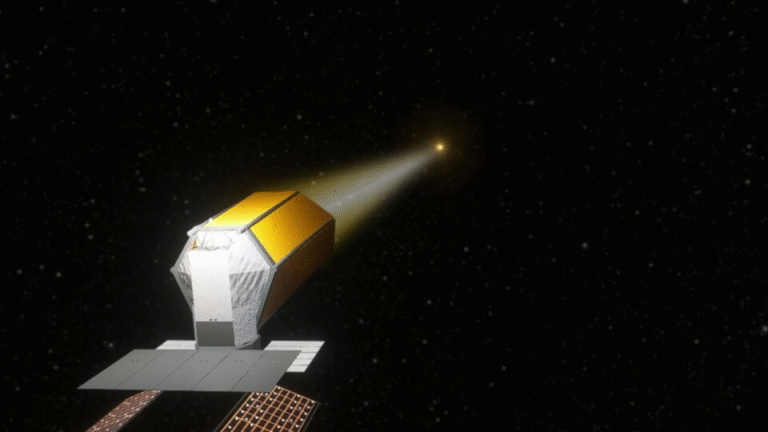
Sentinel-6B is roughly the size of a full-size pickup truck, a surprisingly compact package considering the powerful ocean-monitoring tools packed inside. The satellite will operate in low Earth orbit, approximately 830 miles (1,336 kilometers) above the surface, circling the planet around 13 times per day. Its goal is straightforward: provide the most accurate and continuous data on sea-surface height, wind speeds, wave heights, atmospheric temperature, and humidity.
Just like its predecessor, Sentinel-6 Michael Freilich, the new satellite is designed to refine and extend a nearly 40-year record of radar altimetry, which began in the 1990s with missions like TOPEX/Poseidon and later the Jason series. This continuity is crucial because measuring changes in sea level—especially tiny variations down to fractions of an inch—requires long-term, stable, cross-calibrated datasets.
To ensure this stability, Sentinel-6B will initially fly about 30 seconds behind Sentinel-6 Michael Freilich. The two satellites will operate in tandem long enough to compare and calibrate their measurements. Once calibration is complete, the older satellite will shift into a different orbit, and Sentinel-6B will become the new official reference satellite for global sea-level monitoring.
Why Sea-Surface Height Matters
Even small variations in sea level can reveal critical information about Earth’s systems. Sea levels rise and fall locally and globally depending on currents, temperature, atmospheric pressure, and long-term climate trends. Sentinel-6B’s radar altimeter and additional instruments will map these variations across about 90% of Earth’s oceans.
This data is essential for several reasons:
- Tidal and flood prediction: Sea-level measurements underpin forecasts used to protect coastal infrastructure, including energy facilities, real-estate developments, and ports.
- Climate monitoring: Because warmer water expands, regions where the sea surface sits higher than usual often indicate rising temperatures. Mapping these regions helps scientists identify warming trends and monitor how oceans absorb heat.
- Hurricane forecasting: Hurricanes intensify over warm water. By combining Sentinel-6B’s sea-surface height data with atmospheric information, meteorologists can better predict storm behavior.
- Ocean circulation studies: Strong currents like the Gulf Stream are physically taller than surrounding waters due to temperature differences. Measuring these changes helps researchers understand circulation patterns, marine hazards, and large-scale climate interactions.
The satellite’s Advanced Microwave Radiometer, Global Navigation Satellite System–Radio Occultation instrument, and laser retroreflector array—among other tools—collect precise measurements that contribute to weather models, climate assessments, and long-term trend analyses.
The Value of International Collaboration
Sentinel-6B reflects a deep, long-standing partnership between major space and meteorological agencies. Participating organizations include NASA, ESA, EUMETSAT, NOAA, and the European Union, with technical contributions from the French space agency CNES.
NASA’s Jet Propulsion Laboratory (JPL), a division of Caltech, provided three of the satellite’s science instruments and also supports ground operations, instrument monitoring, and data processing. Meanwhile, EUMETSAT will handle routine satellite control and data dissemination for European users, with NOAA performing similar roles on the U.S. side.
This collaboration ensures consistent, reliable global datasets that are freely accessible to scientists, governments, and industries worldwide.
A Look at the Sentinel-6/Jason-CS Mission
Sentinel-6B and its twin satellite, Sentinel-6 Michael Freilich, make up the Copernicus Sentinel-6/Jason-CS (Continuity of Service) mission. The goal is to ensure a smooth transition from the Jason satellite series to the Copernicus programme while maintaining measurement quality.
Key features of the mission include:
- Standardized instruments across both satellites for seamless data continuity.
- Global ocean coverage with high-accuracy altimetry.
- Independent and redundant systems to minimize data interruptions.
- Integration with weather and climate models to support both scientific research and operational forecasting.
Together, the twin satellites carry forward a legacy of Earth-observation missions that have tracked sea-level rise—now increasing at more than 3 millimeters per year on average—and provided vital insights into how Earth’s climate is changing.
What Happens Next
Now that Sentinel-6B is in orbit and communicating with ground stations, engineers will gradually transition the satellite into its operational orbit. After the calibration phase with Sentinel-6 Michael Freilich, the new satellite will assume full responsibility for the global reference measurements that scientists depend on for sea-level research.
With a planned mission lifetime of about 5.5 years, Sentinel-6B will continue to supply high-precision data that benefits everyone from climate researchers to shipping companies to emergency planners.
Additional Insight: Why Space-Based Altimetry Is the Gold Standard
Sea-level rise is one of the most important indicators of climate change. Land-based tide gauges provide valuable long-term records but only at specific coastal points. Satellites like Sentinel-6B, however, deliver uniform, global coverage.
Space-based radar altimetry works by emitting microwave pulses toward Earth’s surface and measuring the time it takes for the signal to bounce back. This allows instruments to determine sea-surface height with high accuracy. When combined with:
- Microwave radiometers (for correcting atmospheric water vapor effects),
- GNSS-based positioning (for pinpointing the satellite’s orbit),
- Laser retroreflectors (for precision calibration),
scientists get data that’s consistent and comparable across decades.
This is why missions like Sentinel-6 are considered essential infrastructure for global climate science.
Additional Insight: How Sea-Level Data Supports Everyday Decisions
The information collected by Sentinel-6B doesn’t just sit in research papers—it directly influences real-world decisions:
- Coastal cities use sea-level projections for zoning, flood defenses, and emergency planning.
- Shipping companies monitor wave heights and ocean conditions for route optimization.
- Fisheries track ocean temperatures and currents to understand ecosystem changes.
- Military and national defense organizations use ocean data for navigation and maritime awareness.
With billions of people living near coastlines, this kind of data is becoming increasingly important.