NASA-Discovered Bacteria Can Shut Down Its Metabolism to Survive the Cleanest Places on Earth

Scientists studying microbes found in spacecraft assembly facilities have uncovered something genuinely surprising: a bacterium discovered by NASA can deliberately enter an extreme dormant state, essentially shutting itself down to survive environments designed to kill almost all life. This finding is changing how researchers think about microbial survival, spacecraft cleanliness, and even the limits of life beyond Earth.
The bacterium in question is called Tersicoccus phoenicis, a rare microbe first identified in some of the cleanest rooms on the planet—spaces where spacecraft are built before being sent into space. These clean rooms exist to prevent even microscopic contamination, ensuring that missions searching for life elsewhere do not accidentally carry Earth microbes with them. Yet, against all odds, this bacterium not only survives there but appears to thrive by doing something unusual: playing dead.
A Microbe Found Where Almost Nothing Lives
Tersicoccus phoenicis was first discovered in clean rooms operated by NASA and the European Space Agency (ESA). These facilities are subject to extreme sterilization procedures, including chemical treatments, controlled airflow, and strict human access protocols. The goal is simple—keep them as close to sterile as possible.
What makes this bacterium so fascinating is that clean rooms naturally select for only the toughest organisms. Nutrients are scarce, surfaces are regularly disinfected, and conditions are hostile to life. Yet Tersicoccus phoenicis manages to persist, raising an obvious question: how does it survive when almost nothing else can?
Dormancy Without Spores: The Big Surprise
In a study published in Microbiology Spectrum, researchers found that Tersicoccus phoenicis can enter an ultra-low metabolic state. In this condition, the bacterium dramatically reduces its biological activity, conserving energy and resources to an extreme degree. This is what scientists refer to as dormancy.
Dormancy itself is not new in microbiology, but what makes this case unusual is that Tersicoccus phoenicis does not form spores. Many bacteria that survive harsh conditions rely on spores—highly resistant structures that protect genetic material until conditions improve. This bacterium achieves comparable resilience without spores, relying solely on metabolic shutdown.
This finding suggests that bacteria may have underappreciated survival strategies that scientists have not fully characterized yet. If a non-spore-forming organism can survive clean rooms this way, there may be other microbes with similar capabilities that we simply haven’t detected.
Why Dormant Bacteria Are Hard to Detect
One of the most important implications of this research is detection. Standard sterilization checks often rely on culturing microbes—essentially giving them nutrients and seeing what grows. But dormant bacteria don’t behave like active ones. They can remain inactive even when conditions improve, making them nearly invisible to routine testing methods.
This means Tersicoccus phoenicis can slip through cleanliness checks not because it resists sterilization outright, but because it becomes biologically quiet. From a monitoring perspective, it looks dead even when it isn’t.
What This Means for Spacecraft and Planetary Protection
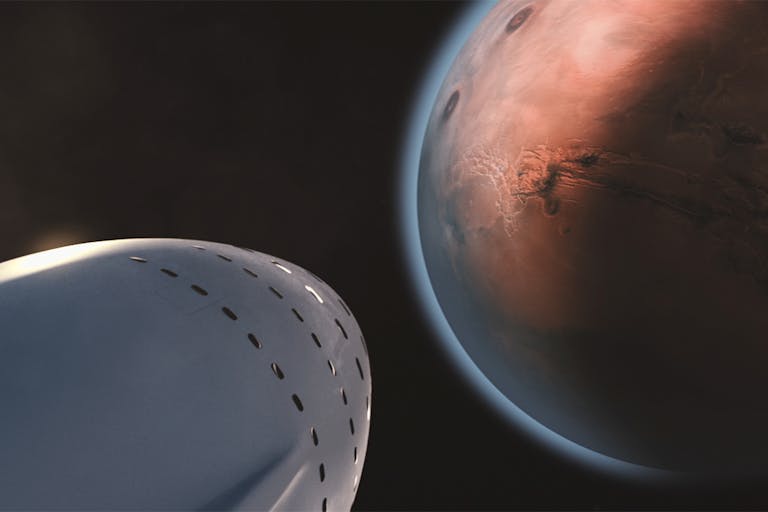
Preventing microbial contamination matters deeply for space missions. If Earth microbes hitch a ride to another planet, they could interfere with experiments searching for extraterrestrial life. Worse, scientists might mistake Earth bacteria for alien organisms.
The discovery that a bacterium can survive spacecraft clean rooms through dormancy suggests that current planetary protection protocols may have blind spots. While the researchers stress that this does not mean Earth microbes could easily survive on planets like Mars, it does raise concerns about sheltered environments.
Anything directly exposed to the harsh surface of Mars is unlikely to survive. However, dormant microbes could potentially persist in protected micro-niches, such as subsurface cracks, porous soil, or areas shielded from radiation. This possibility makes contamination prevention even more important.
A Closer Look at the Bacterium Itself
Tersicoccus phoenicis belongs to the group Actinobacteria, a large and diverse bacterial phylum that includes many soil-dwelling organisms. It is spherical in shape and has been detected repeatedly in clean room environments, suggesting it is particularly well adapted to nutrient-poor, highly controlled conditions.
Its resilience appears to come from its ability to intentionally suspend metabolism, rather than relying on physical defenses like spores. This ability allows it to wait out harsh conditions until circumstances become more favorable.
Broader Implications Beyond Space Science
The implications of this research extend well beyond space missions. Dormant bacteria pose challenges in hospitals, pharmaceutical manufacturing, and food processing, where sterility is critical. If microbes can evade detection by entering dormancy, they may survive cleaning procedures without being noticed.
Understanding dormancy could also help scientists better manage bacterial persistence in medical contexts, including chronic infections where pathogens remain inactive for long periods before reactivating.
How Scientists Studied Dormancy
In laboratory experiments, researchers observed how Tersicoccus phoenicis responded to nutrient starvation. Instead of dying, the bacteria transitioned into dormancy. When exposed to certain biochemical signals—specifically proteins known to stimulate growth in dormant bacteria—the microbes could be revived, confirming that they were alive all along.
This ability to switch between dormancy and activity highlights a level of biological control that challenges previous assumptions about microbial survival.
What This Discovery Changes
This research forces scientists to rethink what it means for an environment to be “clean.” It also raises important questions about how many other microbes may be surviving undetected in extreme environments by simply turning themselves off.
For planetary science, the findings emphasize the need for more advanced detection methods that can identify dormant life. For microbiology, they open new avenues for studying metabolic control, survival strategies, and bacterial resilience.
Looking Ahead
While this discovery does not suggest that life from Earth is likely to colonize other planets, it does highlight how resourceful and adaptable bacteria can be. Even in places designed to eliminate them, some microbes find ways to persist.
As scientists continue to refine sterilization techniques and explore new worlds, understanding dormancy may become just as important as understanding growth. Sometimes, the most successful organisms aren’t the ones that fight the hardest—but the ones that know when to wait.
Research paper: https://journals.asm.org/doi/10.1128/spectrum.01692-25