NASA’s HiRISE Camera Reaches a Huge Milestone With Its 100,000th Image of Mars
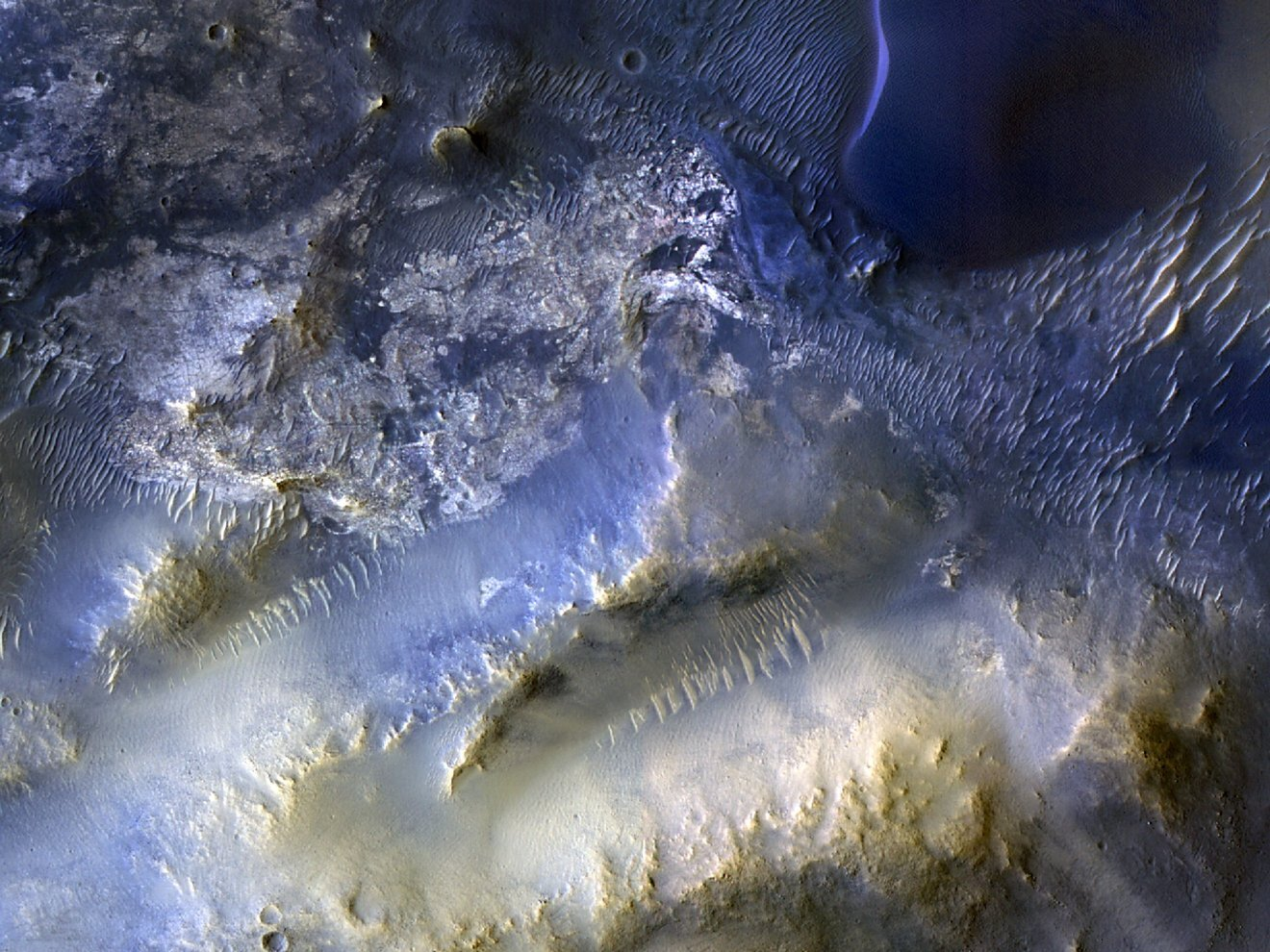
NASA’s long-running exploration of Mars has quietly crossed an extraordinary milestone. After nearly 20 years orbiting the Red Planet, the Mars Reconnaissance Orbiter (MRO) has captured its 100,000th high-resolution image using one of the most powerful planetary cameras ever built: HiRISE, short for High Resolution Imaging Science Experiment. This achievement highlights not just the endurance of the spacecraft, but also how much our understanding of Mars has evolved thanks to sustained observation from orbit.
The landmark image was taken on October 7, 2025, and it focuses on a geologically rich area known as Syrtis Major. This region lies about 50 miles (80 kilometers) southeast of Jezero Crater, the location currently being explored by NASA’s Perseverance rover. The image shows a complex landscape of mesas, plains, and wind-sculpted sand dunes, offering scientists new clues about how Martian surface features form and change over time.
What Makes HiRISE So Important
HiRISE is the camera that gives scientists their sharpest look at Mars from orbit. Capable of resolving objects as small as about one foot (30 centimeters) across, it allows researchers to study features that were once completely invisible from space. Over the years, HiRISE has photographed impact craters, dune fields, lava flows, ice deposits, landslides, and potential landing sites with remarkable clarity.
These images play a crucial role in both science and mission planning. By carefully analyzing surface details, scientists can better understand Mars’ geological history, its climate evolution, and whether conditions in the past may have supported liquid water. Engineers also rely on HiRISE data to identify safe landing zones for spacecraft and rovers, making it a key tool for future robotic and human missions to Mars.
The 100,000th Image and Why It Matters
The milestone image from Syrtis Major is far more than symbolic. Scientists are using it to investigate the origin and movement of windblown sand in the region. Syrtis Major is known for its interaction between rocky terrain and loose sediment, and the way sand becomes trapped between mesas eventually leads to the formation of dunes.
By studying these patterns, researchers can learn how Martian winds shape the surface, how often dunes migrate, and how quickly landscapes change. HiRISE has previously shown dunes slowly marching across plains and avalanches cascading down steep slopes, proving that Mars is not a static world but an active, evolving planet.
A Mission That Keeps Delivering
The Mars Reconnaissance Orbiter was launched in 2005 and entered orbit around Mars in 2006. Designed for a primary mission of just a few years, it has far exceeded expectations. In addition to HiRISE, MRO carries several other scientific instruments that study Mars’ atmosphere, mineral composition, and subsurface structure.
One of MRO’s most valuable roles is acting as a communications relay. It regularly passes data between surface missions, such as rovers, and Earth, dramatically increasing the amount of information scientists can receive. Over its lifetime, MRO has returned hundreds of terabits of data, making it one of the most productive planetary spacecraft ever flown.
Public Participation Through HiWish
One particularly interesting detail about the 100,000th image is how its subject was chosen. The target was recommended by a high school student through the HiWish program, a public initiative that allows anyone to suggest locations on Mars for HiRISE to image. Scientists then review these suggestions and select targets that align with research goals and spacecraft capabilities.
This approach has helped make Mars exploration more accessible and engaging. It also reflects a broader philosophy behind the HiRISE mission: rapid data releases and openness. Images are often made public quickly, allowing scientists around the world—and curious members of the public—to explore Mars almost as soon as new data arrives.
Turning Images Into 3D Landscapes
HiRISE imagery is also used to create three-dimensional models of the Martian surface. By combining multiple images taken from different angles, researchers at the University of Arizona, which operates the camera, can generate detailed digital terrain models. These models allow for virtual flyovers of Mars, helping scientists better visualize landforms and slopes while also providing stunning educational tools for the public.
These 3D products are especially valuable when planning rover routes or assessing the stability of terrain in potential landing zones.
Why Long-Term Observation Matters
One of the greatest strengths of HiRISE is its longevity. By imaging the same locations repeatedly over many years, scientists can track seasonal and long-term changes on Mars. This includes monitoring dust storms, frost patterns, dune migration, and slope activity.
Such observations help researchers understand how Mars’ current environment works and how it differs from Earth’s. Even without active plate tectonics or flowing rivers today, Mars continues to be shaped by wind, temperature changes, and gravity.
Extra Context: Why Syrtis Major Is Special
Syrtis Major has fascinated scientists for decades. It is a vast volcanic plateau that was one of the first dark features observed on Mars through telescopes. Today, orbital data suggest it contains a mix of ancient volcanic rock and altered minerals, hinting at interactions with water billions of years ago.
Its proximity to Jezero Crater makes it especially interesting, as both regions offer clues about Mars’ early habitability. Studying Syrtis Major alongside rover findings from Jezero helps scientists build a more complete picture of this part of the planet.
Looking Ahead
Reaching 100,000 images is not an endpoint. As long as MRO remains healthy, HiRISE will continue to document Mars in extraordinary detail. Each new image adds another piece to the puzzle, helping scientists refine models of the planet’s past, present, and future.
This milestone is a reminder that patient, long-term exploration can be just as powerful as headline-grabbing discoveries. One carefully captured image at a time, HiRISE has transformed Mars from a distant red dot into a world we can study almost as intimately as our own.
Research Reference:
https://www.sciencedirect.com/science/article/pii/S0032063310001218