NASA’s Perseverance Mars Rover Is Ready to Travel Many More Miles and Unlock New Discoveries
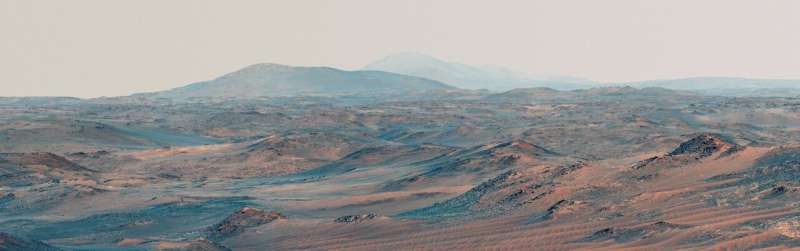
After nearly five years on Mars, NASA’s Perseverance rover is proving that it was built for endurance. The robotic explorer has already traveled close to 25 miles (40 kilometers) across the Red Planet and, according to NASA engineers, it is in excellent condition to keep going for many years and many more miles. Recent testing, scientific discoveries, and new research papers show that Perseverance is not only surviving Mars—it is thriving there.
Perseverance’s Journey So Far on Mars
Perseverance landed inside Jezero Crater in February 2021, a region chosen because it once hosted an ancient lake and river system. Since then, the rover has steadily climbed hills, crossed rocky plains, and navigated sandy terrain while collecting some of the most scientifically valuable samples ever gathered on another planet.
As of late 2025, Perseverance has driven almost 25 miles, a remarkable achievement considering the harsh Martian environment. For comparison, each drive must account for sharp rocks, loose sand, steep slopes, and extreme temperature swings. Every meter covered is carefully planned and monitored by engineers at NASA’s Jet Propulsion Laboratory (JPL) in Southern California.
Engineering Tests Show the Rover Is Built for the Long Haul
To ensure Perseverance can continue its mission, NASA has been conducting extensive ground-based testing of the rover’s hardware using identical components on Earth. These tests focus on the rover’s six-wheel drive system, including the rotary actuators that turn the wheels and the braking mechanisms that help it navigate slopes safely.
During the summer of 2025, engineers confirmed that the wheel actuators are capable of performing reliably for at least another 37 miles (60 kilometers) of driving. Additional brake testing is ongoing, but early results are encouraging. Over the past two years, nearly all of Perseverance’s subsystems have undergone similar evaluations.
The conclusion from these tests is clear: Perseverance’s systems should remain operational until at least 2031, far beyond its original mission timeline. This gives scientists confidence that the rover can continue exploring new regions and collecting more samples well into the next decade.
A Record-Breaking Drive on the Martian Surface
One highlight from 2025 was Perseverance’s longest single drive to date. On June 19, 2025, the rover covered 1,350.7 feet (411.7 meters) in one Martian day. Using data from its navigation cameras, engineers later reconstructed the drive in a 3D virtual environment, inserting virtual frames approximately every 4 inches (0.1 meters) along the route.
This milestone demonstrated not only the rover’s mechanical durability but also the power of its onboard software, which allows it to make smart decisions while driving across unpredictable terrain.
Smarter Driving With Enhanced Autonomous Navigation
One of Perseverance’s most important upgrades over earlier Mars rovers is its Enhanced Autonomous Navigation, commonly known as ENav. This system allows the rover to scan up to 50 feet (15 meters) ahead for hazards and select a safe path without waiting for instructions from Earth.
Earlier rovers could avoid obstacles, but only at short distances and often at slower speeds. ENav evaluates terrain elevation, analyzes trade-offs between different routes, and checks areas that human operators have marked as safe or off-limits. It even assesses conditions for each wheel independently.
Thanks to this system, more than 90 percent of Perseverance’s total driving distance has been completed autonomously. This efficiency allows the rover to cover more ground in less time and reach scientifically interesting locations faster than ever before.
Exploring the Margin Unit of Jezero Crater
While driving across Jezero Crater, Perseverance spent significant time studying a geologic region known as the Margin Unit, located along the inner edge of the crater. Between September 2023 and November 2024, the rover climbed 1,312 feet (400 meters) through this area, carefully examining rock layers and collecting three core samples.
The Margin Unit is especially important because it contains large amounts of the mineral olivine, which forms at high temperatures deep inside planets. Olivine crystals act as natural timekeepers, preserving information about the conditions under which they formed.
Scientists believe the olivine in this region originated from a magma intrusion, where molten rock pushed into underground layers and later cooled into igneous rock. Over time, erosion exposed these rocks at the surface, allowing them to interact with water from Jezero’s ancient lake and with carbon dioxide from Mars’ early atmosphere.
Why Olivine and Carbonates Matter
When olivine-rich rocks interact with water and carbon dioxide, they can form carbonate minerals. These minerals are extremely valuable to scientists because they can preserve evidence of past water activity, atmospheric conditions, and potentially even signs of ancient life.
As Perseverance climbed higher through the Margin Unit, scientists noticed a clear pattern. At lower elevations, the olivine showed strong signs of water alteration, suggesting it was once submerged. Higher up, the rocks displayed textures linked to magma chambers, with fewer signs of water interaction.
This transition provides a detailed record of how Mars’ interior, surface water, and atmosphere interacted over time—exactly the kind of information scientists hoped to find when choosing Jezero Crater as the landing site.
A Sample Hinting at Ancient Microbial Life
One of Perseverance’s most talked-about findings came in September 2025, when NASA announced that a rock sample nicknamed Cheyava Falls contained chemical features that could represent a possible fingerprint of past microbial life. While this does not confirm that life once existed on Mars, it is one of the strongest indicators found so far.
Further analysis will be required, especially once samples are eventually returned to Earth, but discoveries like this highlight why Perseverance’s continued operation is so important.
Heading Toward a New Region: Lac de Charmes
With its work in the Margin Unit largely complete, Perseverance is now traveling toward a new region called Lac de Charmes. This area is expected to contain additional olivine-rich rocks, giving scientists a chance to compare samples from different parts of Jezero Crater.
These comparisons will help researchers understand how widespread certain geological processes were and how environmental conditions varied across the crater over time.
How Perseverance Fits Into Mars Exploration
Perseverance is a key part of NASA’s long-term plan to explore Mars. Beyond searching for signs of ancient life, the rover is also collecting and sealing rock cores for the future Mars Sample Return mission, a joint effort between NASA and the European Space Agency.
The rover also tests technologies critical for future human exploration, including advanced autonomy and precision landing techniques. As humans look toward returning to the Moon and eventually traveling to Mars, systems like ENav will become increasingly important.
Looking Ahead
With confirmed hardware durability, powerful autonomous navigation, and a growing collection of scientifically rich samples, Perseverance is positioned to remain one of NASA’s most productive planetary missions. Every additional mile driven increases the chances of uncovering new clues about Mars’ past—and its potential to have once supported life.
Research papers referenced:
Enhanced Autonomous Navigation on the Perseverance Mars Rover – IEEE Transactions on Field Robotics (2025): https://doi.org/10.1109/TFR.2025.3636366
Carbonated ultramafic igneous rocks in Jezero crater, Mars – Science (2025): https://doi.org/10.1126/science.adu8264