NASA’s SunRISE SmallSats Ace Crucial Tests and Move Steadily Closer to Launch
NASA’s SunRISE (Sun Radio Interferometer Space Experiment) mission has cleared an important milestone, with all six of its small satellites successfully completing an intense round of pre-launch testing. These tests bring the mission significantly closer to its planned launch later this year and confirm that the spacecraft are ready to face the harsh realities of spaceflight and operation in orbit.
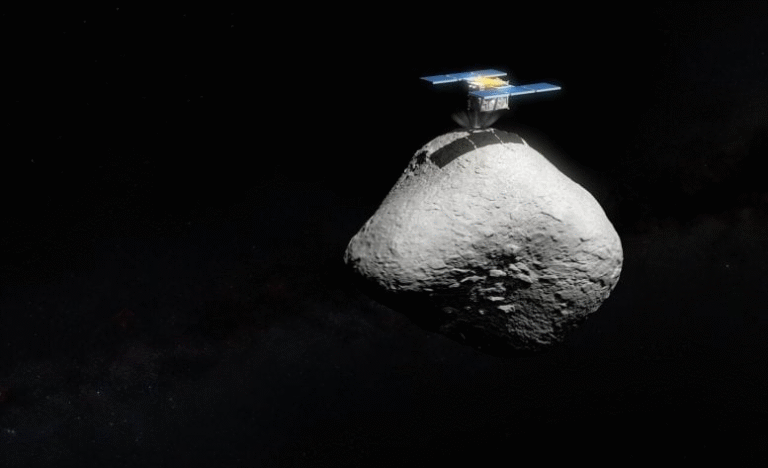
SunRISE is a heliophysics mission designed to study the Sun in a way that has never been done before. Instead of relying on a single large spacecraft, the mission uses six tiny satellites, each roughly the size of a toaster oven. Once deployed in space, these spacecraft will work together as a single, giant radio instrument to observe solar radio bursts originating deep within the Sun’s outer atmosphere, known as the corona.
Rigorous testing to ensure mission readiness
The six SunRISE spacecraft were designed and built at Utah State University’s Space Dynamics Laboratory (SDL) in Logan, Utah. Before NASA can approve a mission for launch, every spacecraft must demonstrate that it can survive launch stresses and operate reliably in the space environment. For SunRISE, this meant a comprehensive testing campaign covering multiple critical areas.
One of the key steps was thermal vacuum testing, which simulates the extreme temperatures and near-vacuum conditions the spacecraft will experience in orbit. Space is an unforgiving environment, with temperatures swinging dramatically as a satellite moves in and out of sunlight. These tests confirmed that SunRISE’s systems can function properly under those conditions.
Another major phase was electromagnetic compatibility testing. Each satellite carries sensitive science instruments designed to detect faint radio signals from the Sun. Engineers needed to ensure that the spacecraft’s own electronics would not interfere with those measurements. The testing verified that all onboard systems can operate together without causing harmful interference.
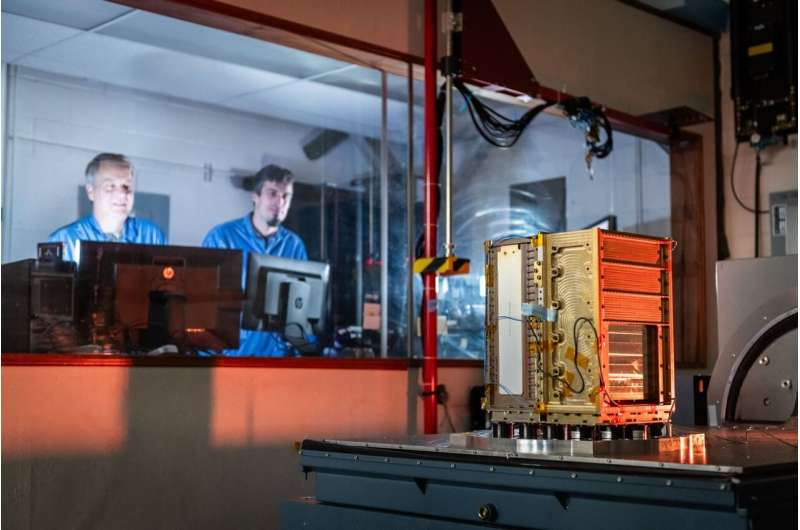
The final and most physically demanding step was vibration testing, which simulates the intense shaking and forces experienced during launch. To make these tests as realistic as possible, each spacecraft was loaded with propellant to match its expected launch mass. The satellites were then shaken along all three axes using a vibration profile tailored to their specific launch vehicle.
After completing vibration tests, engineers performed detailed functional checks before and after the simulations. All six spacecraft passed these checks without issues, confirming that no components were damaged or loosened during testing.
Launch plans and orbital destination
SunRISE is scheduled to launch from Cape Canaveral Space Force Station in Florida as a rideshare payload aboard a United Launch Alliance Vulcan Centaur rocket. The mission is sponsored by the U.S. Space Force’s Space Systems Command, which is providing the launch opportunity.
Following launch, the six satellites will be delivered to an orbit slightly above geosynchronous Earth orbit, at an altitude of about 22,000 miles (35,000 kilometers). This high orbit places the spacecraft above Earth’s ionosphere, which normally blocks low-frequency radio waves from reaching ground-based observatories.
Once in orbit, each spacecraft will deploy four telescoping antenna booms, each roughly 10 feet (2.5 meters) long. The antennas form an X-shaped configuration, enabling the satellites to detect radio emissions from the Sun with high sensitivity.
The spacecraft will fly in a carefully controlled formation, spaced up to 10 miles (16 kilometers) apart. By communicating with each other and with Earth via NASA’s Deep Space Network, their individual observations will be combined using a technique called radio interferometry. This approach effectively turns the six small satellites into a single, much larger radio telescope.
Why solar radio bursts matter
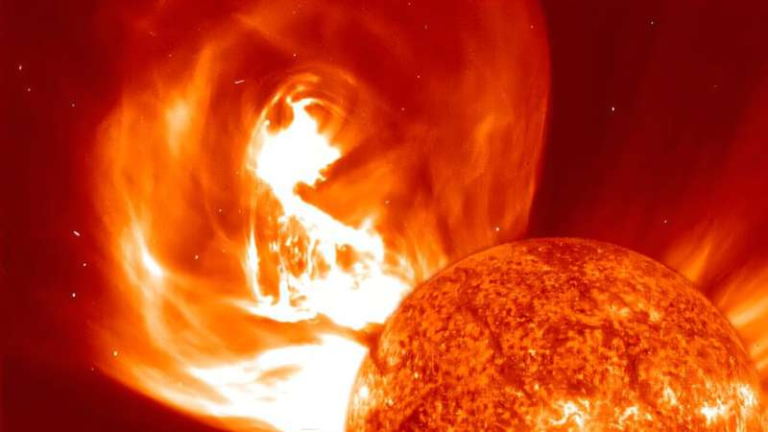
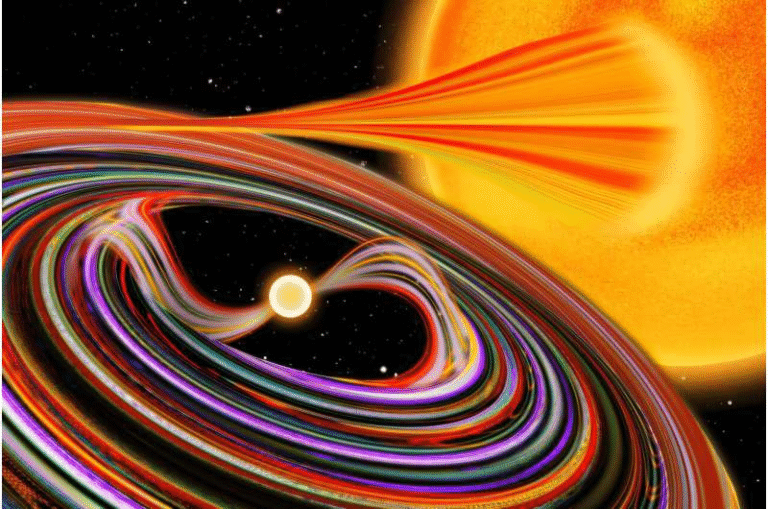
The primary scientific target of the SunRISE mission is solar radio bursts, which are intense bursts of radio waves produced during solar energetic particle events. These events occur when vast amounts of energy stored in the Sun’s magnetic field are suddenly released, accelerating particles to extremely high speeds.
In extreme cases, these energetic particles can pose serious risks. They can damage satellites, interfere with communications and navigation systems, and expose astronauts to dangerous levels of radiation. By tracking the radio waves generated during these events, SunRISE will help scientists better understand when and where they originate.
One of SunRISE’s unique capabilities is its ability to map the Sun’s magnetic field from the outer corona into interplanetary space. This information is crucial for understanding how space weather forms and propagates throughout the solar system, ultimately affecting Earth and human technology.
How SunRISE fits into NASA’s solar fleet
SunRISE is not working alone. The mission is designed to complement other NASA heliophysics missions, including the Parker Solar Probe, Solar Orbiter, and the Solar TErrestrial RElations Observatory (STEREO). While missions like Parker Solar Probe fly close to the Sun to directly sample particles and fields, SunRISE observes the Sun remotely using radio waves.
This combination of close-up measurements and remote sensing gives scientists a more complete picture of solar activity. SunRISE’s focus on low-frequency radio emissions fills a critical observational gap that cannot be addressed from Earth’s surface.
A closer look at small satellites in space science
SunRISE also highlights the growing role of SmallSats in space exploration. Traditionally, large science missions required massive, expensive spacecraft. Advances in miniaturization, electronics, and formation flying now allow smaller spacecraft to perform complex scientific tasks once reserved for much larger missions.
Using multiple SmallSats offers several advantages. It provides redundancy, reduces costs, and enables new types of measurements, such as interferometry across large distances. SunRISE demonstrates how coordinated fleets of small spacecraft can deliver high-value science while keeping missions flexible and efficient.
The science of radio interferometry
At the heart of SunRISE is radio interferometry, a technique widely used in astronomy. By combining signals from multiple antennas separated by large distances, scientists can achieve the resolution of a much larger telescope. On Earth, this technique is limited by the planet’s atmosphere and radio interference. In space, those limitations largely disappear.
SunRISE takes advantage of this environment by spreading its antennas across several miles in orbit. The result is a powerful tool for pinpointing the sources of solar radio bursts and studying the Sun’s magnetic environment in unprecedented detail.
Looking ahead
With all six spacecraft successfully completing their testing campaign, SunRISE is now firmly on track for launch. Once operational, the mission will provide new insights into how solar activity affects the space environment around Earth and beyond. It also serves as a powerful example of how small, coordinated spacecraft can deliver big scientific returns.
As solar activity continues to influence modern technology and human exploration of space, missions like SunRISE play a vital role in improving our understanding and preparedness. The successful testing of these SmallSats marks an exciting step forward for both solar science and innovative space mission design.
Research reference:
https://science.nasa.gov/mission/sunrise/