New Evidence of Ancient Underground Water Suggests Mars Stayed Habitable Longer Than We Thought
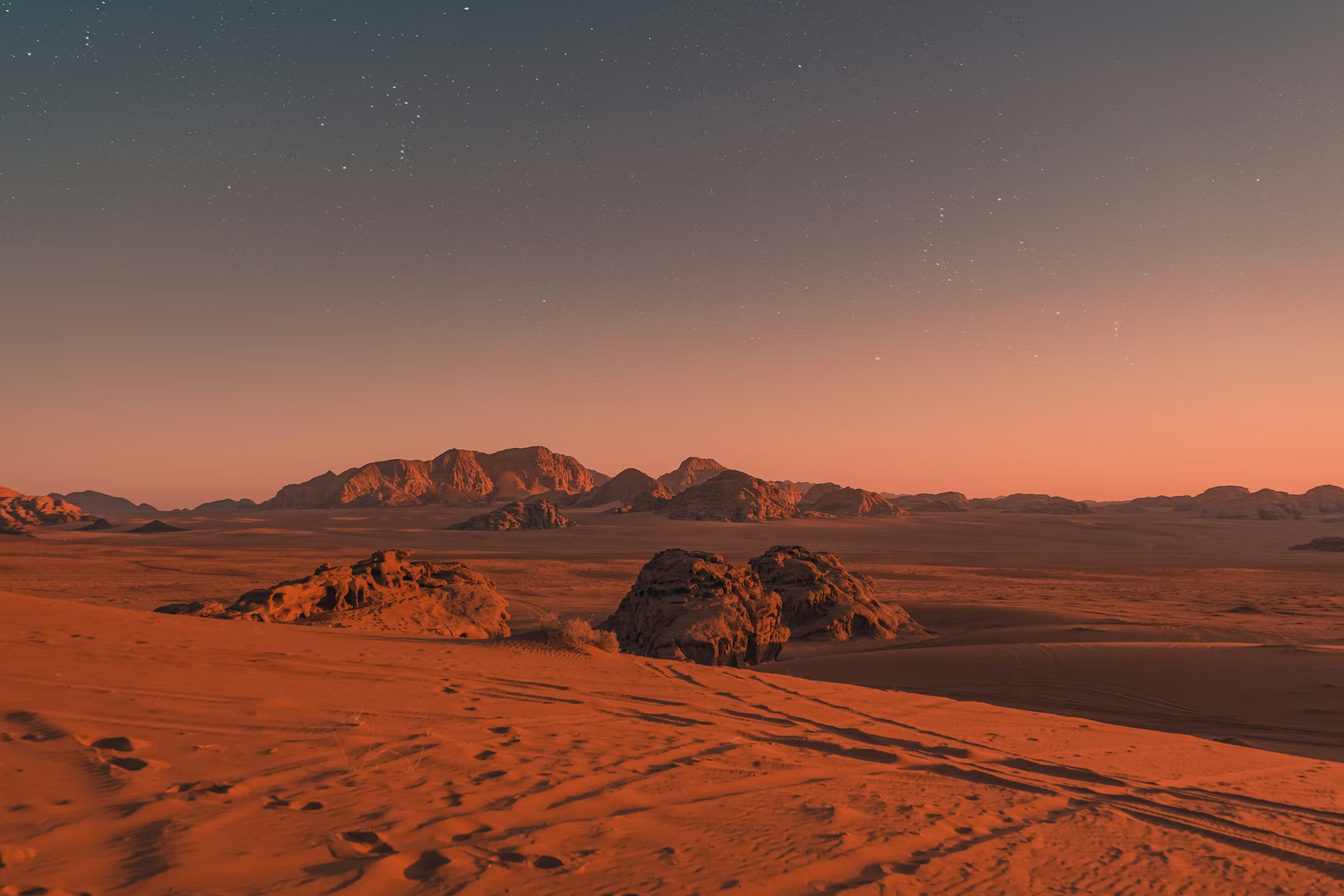
Scientists have uncovered new clues that underground water once flowed beneath the surface of Mars, and this discovery could reshape how we think about the planet’s ability to support life in the distant past. A research team from New York University Abu Dhabi (NYUAD) has found that ancient sand dunes inside Gale Crater—the region explored by NASA’s Curiosity rover—did not simply harden into rock due to wind and time. Instead, they were gradually cemented by water moving through the subsurface billions of years ago. This finding is important because it suggests that even after Mars lost its lakes and rivers, the planet may have continued to host small but meaningful amounts of underground water. In turn, that means Mars might have remained habitable for much longer than many scientists previously believed.
The new study was published in the Journal of Geophysical Research: Planets and was led by Dimitra Atri, the Principal Investigator of the NYUAD Space Exploration Laboratory, working alongside research assistant Vignesh Krishnamoorthy. Their research examined Curiosity rover data and then compared those observations with rock formations found in the deserts of the United Arab Emirates. The UAE desert rocks formed under similar dry–wet conditions on Earth, making them useful analogues for understanding what ancient Mars may have experienced.
By studying both Martian data and Earth comparisons, the team concluded that water from a nearby Martian mountain once seeped slowly downward through small cracks in Gale Crater’s dune sands. This movement soaked the dunes from below and left behind minerals such as gypsum—a mineral also found in Earth’s desert environments. Gypsum is notable because it can protect and preserve organic material, trapping it inside the mineral structure. That means these cemented dunes could hold remnants of ancient organic matter, making them promising targets for future Mars missions that hope to uncover signs of long-lost life.
One of the biggest takeaways from this research is that Mars may not have undergone an abrupt transformation from a wet planet to an entirely dry one. Instead, there may have been a prolonged period during which underground water continued to flow in small amounts. Underground environments are significant because they are protected from harsh surface radiation and extreme temperature fluctuations. Even on modern Mars, the surface is incredibly tough on any biological material, but deeper layers can remain more stable over long periods of time. The study suggests that micro-habitats beneath the surface could have persisted long after surface conditions became inhospitable.
The researchers emphasize that their findings add a new layer of complexity to our understanding of Martian evolution. While Curiosity has already revealed evidence of ancient lakes, rivers, and long-standing bodies of water in Gale Crater, this new study highlights that late-stage groundwater activity also played a role in shaping the region. Even after visible surface water disappeared, a hidden system of slow, underground water movement may have continued.
What Gale Crater Has Already Taught Us
Gale Crater has been one of the most scientifically productive locations on Mars because Curiosity has spent years studying its rocks and soil. Previous findings showed that the crater once hosted long-lived lakes that may have been stable for millions of years. These lakes left behind clay minerals, mudstone layers, and patterns that clearly point to liquid water in Mars’ early history.
But as Mars’ atmosphere thinned and the planet lost the ability to retain liquid water on the surface, many scientists believed that habitability ended around the same time. The new NYUAD study challenges that assumption by highlighting what happened after the surface dried out.
By examining the lithified dunes—sand dunes that hardened into sedimentary rock—the researchers were able to determine that water continued to flow through the ground even after the last lakes disappeared. This late activity was not as dramatic as the ancient lakes and rivers, but it may have been enough to create protected zones where microbial life could have survived if it had ever existed.
Why Gypsum and Similar Minerals Matter
Gypsum and other sulfate minerals are significant because they often form when water interacts with rock. On Earth, gypsum can trap organic molecules and shield them from damage. If something similar occurred on Mars, these minerals might hold some of the clearest evidence of any biological processes that once existed.
NASA has detected sulfur-bearing minerals across Mars for many years, but the origin and meaning of these minerals haven’t always been clear. The new study connects the minerals in Gale Crater to subsurface water, which provides a more detailed explanation of their formation.
These types of minerals also remain chemically stable for extremely long periods, which is a major advantage for preserving fragile organic compounds on a planet as old and harsh as Mars.
What This Means for the Search for Ancient Life
If Mars maintained underground water pathways long after the planet’s surface dried, then the timeline during which the planet could have supported life becomes much broader. In planetary science, even a few hundred million extra years of potential habitability is a big deal.
The study suggests that future missions should not focus solely on lakebeds, deltas, or visible sediment layers. Instead, cemented dunes and fracture networks could be just as valuable, if not more so, when searching for organic material or chemical traces of ancient life.
This idea is relevant not only for Curiosity but also for future missions that will rely on drilling or sample-return techniques. Samples taken from beneath the surface or from hardened mineral deposits might give scientists their best chance of detecting preserved biosignatures.
Why Earth Analogues Help Scientists Understand Mars
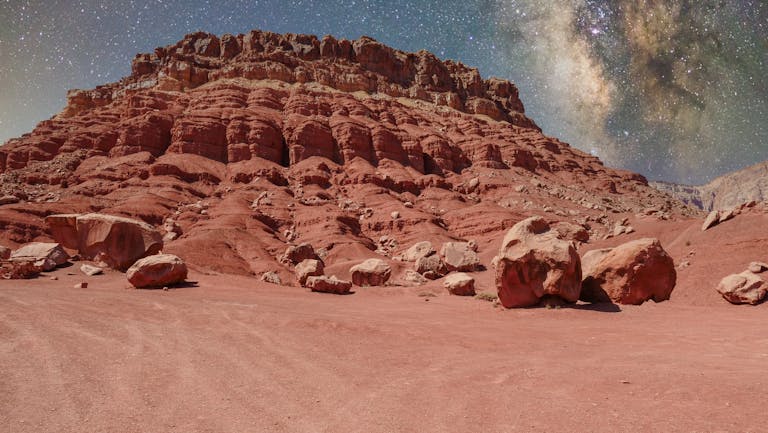
On Earth, deserts like those in the UAE experience extreme conditions—dryness, sudden wet periods, and strong winds—all of which can help cement dunes naturally over time. By studying how groundwater interacts with sand dunes here, scientists can better interpret what Curiosity observes on Mars.
Earth analogues have always played a major role in Mars exploration. Environments such as Antarctica’s Dry Valleys, Iceland’s volcanic plains, and the Atacama Desert all help researchers simulate and understand Martian processes. The UAE dunes now join these analogue locations as valuable tools for decoding Mars’ geological history.
The Broader Evolution of Water on Mars
Scientists generally agree on the following timeline for Martian water:
- Early Mars had abundant liquid water, thicker atmosphere, and possibly even oceans.
- Middle Mars saw the decline of surface water as the atmosphere thinned.
- Late Mars is believed to have been almost entirely dry—until studies like this show that underground water may have persisted.
This new study suggests stage 3 might have been more complex. Rather than a clean cutoff, Mars may have experienced a slow decline in habitability, with underground water lingering much longer than surface water.