New Solar Flare Research Shows Pulsations Are Driven by Repeated Magnetic Reconnection
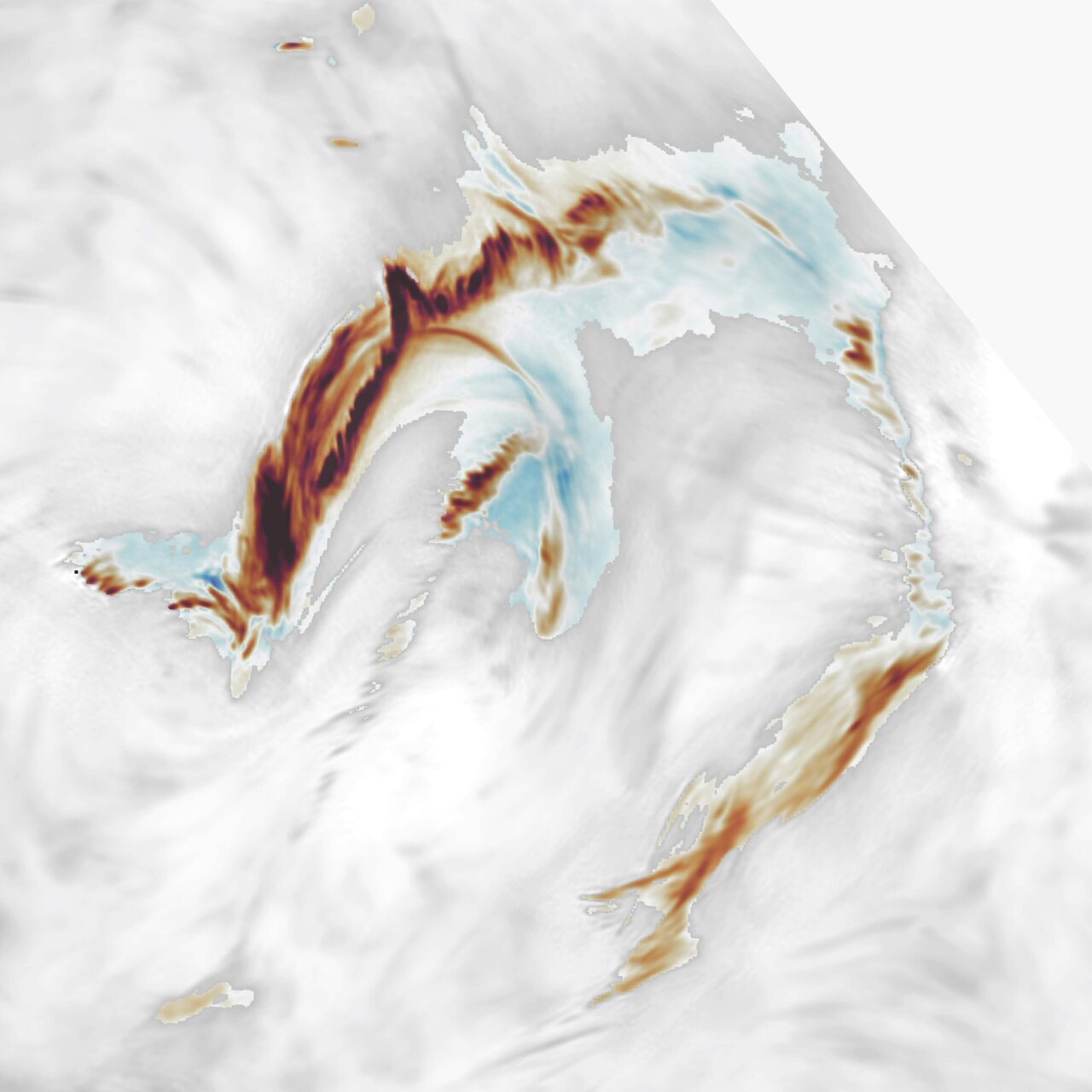
A new scientific study has taken a major step toward explaining one of the most puzzling features of solar flares: quasi-periodic pulsations, often shortened to QPPs. These rhythmic bursts of energy show up in about half of all large solar flares, yet for decades scientists have struggled to pin down exactly what causes them. The latest findings strongly suggest that these pulsations are directly linked to repeated, oscillatory magnetic reconnection, rather than being a side effect of waves moving through solar plasma.
The research was led by scientists at the Southwest Research Institute (SwRI) and published in the November 2025 issue of Nature Astronomy. By combining cutting-edge observations from both ground-based and space-based telescopes, the team was able to observe a solar flare in extraordinary detail and connect its pulsating behavior to the underlying magnetic processes powering the event.
What Are Solar Flares and Why Do They Matter?
Solar flares are sudden, intense bursts of energy released from the Sun’s atmosphere. They occur when enormous amounts of magnetic energy stored in the Sun’s magnetic field are suddenly released. These events can emit radiation across the entire electromagnetic spectrum, from radio waves to X-rays and gamma rays.
Beyond being visually and scientifically fascinating, solar flares matter because they can drive space weather. Strong flares can disrupt satellite communications, interfere with GPS signals, and in extreme cases, affect power grids on Earth. Understanding how flares release energy — and how that energy varies over time — is critical for improving space weather prediction.
The Mystery of Quasi-Periodic Pulsations
One of the most intriguing features of many solar flares is the presence of QPPs, which appear as repeating spikes or oscillations in emitted radiation. These pulsations can last for seconds or minutes and are seen across multiple wavelengths.
For years, scientists debated what causes these pulsations. Two main ideas dominated the discussion. One suggested that QPPs are driven by magnetohydrodynamic (MHD) waves, essentially oscillations traveling through hot plasma in magnetic structures. The other proposed that QPPs are linked to bursty or repetitive energy release, possibly tied to how magnetic reconnection unfolds during a flare.
Until now, observational evidence strong enough to clearly favor one explanation over the other has been limited.
A Solar Flare Under the Microscope
The SwRI-led team focused on a moderate-strength M4.7-class solar flare that occurred on May 3, 2023. What made this event especially valuable was the quality of the data collected.
The researchers used the Swedish 1-meter Solar Telescope, located in the Canary Islands, to capture ultra-high-resolution images of the flare’s structure. At the same time, they relied on NASA’s Interface Region Imaging Spectrograph (IRIS), a spacecraft in sun-synchronous orbit, to gather precise spectroscopic measurements of plasma motions in the Sun’s atmosphere.
By combining these two data sources, the team conducted a pixel-by-pixel spectroscopic analysis, allowing them to track how plasma flows changed across the flare region with exceptional spatial and temporal precision.
Clear Signs of Repeated Magnetic Reconnection
The observations revealed circular flare ribbons showing plasma moving both downward and upward, with distinct pulses repeating over time. Importantly, these downward plasma flows pulsed in sync across the entire ribbon, a strong indication that a global process was driving the oscillations.
The timing of these pulsations matched bursts of high-energy emission, including hard X-rays, which are associated with accelerated electrons. This alignment strongly suggests that the pulsations were tied to bursts of energy release, not passive wave motion.
Based on this evidence, the researchers concluded that oscillatory magnetic reconnection — where magnetic field lines repeatedly break and reconnect — is the most likely driver of the observed QPPs in this flare. Competing explanations involving plasma waves were effectively ruled out for this event.
Why Magnetic Reconnection Is So Important
Magnetic reconnection is a fundamental process in plasma physics. It occurs when magnetic field lines rearrange themselves, releasing stored magnetic energy as heat, motion, and energetic particles. On the Sun, reconnection is the engine behind solar flares, coronal mass ejections, and many other explosive phenomena.
What this study highlights is that reconnection does not always happen smoothly. Instead, it can occur in repeating, oscillatory bursts, each one injecting fresh energy into the flare. These bursts appear to directly produce the pulsations observed in flare emissions.
This finding has major implications for how scientists model solar flares, suggesting that time-dependent reconnection needs to be treated as a central feature rather than a secondary detail.
Implications for Space Weather and Beyond
Understanding QPPs is not just an academic exercise. Because these pulsations are linked to how energy is released and particles are accelerated, they offer valuable clues about flare intensity, duration, and potential impacts on Earth.
Better models of oscillatory reconnection could improve forecasts of solar activity and help scientists anticipate the most disruptive space weather events. The results may also apply far beyond our Sun. Magnetic reconnection plays a role in stellar flares on other stars, planetary magnetospheres, and even laboratory plasma experiments designed to study fusion energy.
What Comes Next for Solar Flare Research
The study underscores the importance of high-resolution, multi-instrument observations. By combining detailed imaging with precise spectroscopy, scientists can directly observe the physical processes driving solar activity rather than relying on indirect signatures alone.
Future research will likely focus on analyzing larger samples of solar flares, testing whether oscillatory reconnection consistently explains QPPs across different flare types and strengths. Advanced numerical simulations will also play a key role in exploring how reconnection becomes periodic and what controls its timing.
As new solar observatories come online and existing missions continue collecting data, researchers are now better equipped than ever to tackle these questions.
Why This Study Stands Out
What makes this research especially significant is that it provides direct spectroscopic evidence linking QPPs to magnetic reconnection dynamics. Rather than relying on broad correlations or theoretical arguments, the study captures the process in action, showing how energy release pulses through an entire flare region.
In doing so, it brings scientists closer to a unified understanding of how solar flares work — and why they sometimes pulse instead of burning steadily.
Research Paper:
https://www.nature.com/articles/s41550-025-02706-4