Phages and Bacteria Evolve in Unexpected Ways Aboard the International Space Station
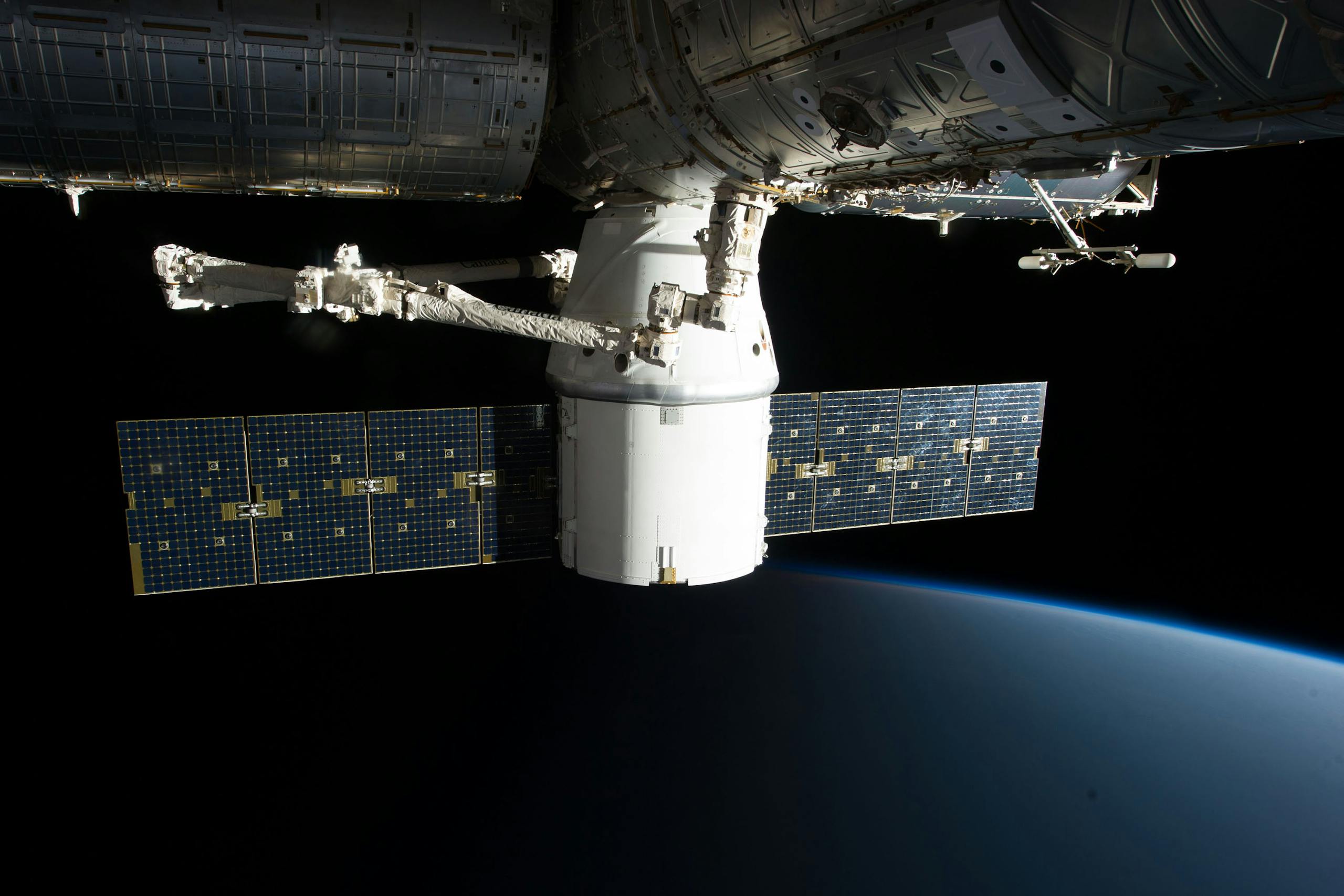
Life behaves differently in space, and a new study shows that this applies even at the microscopic level. Researchers have found that bacteriophages and bacteria undergo distinct genetic changes in microgravity, leading to altered infection dynamics and evolutionary paths aboard the International Space Station (ISS). The findings reveal how near-weightless conditions reshape virus–bacteria interactions and may even help scientists design better tools to fight drug-resistant infections on Earth.
How phages and bacteria normally interact on Earth
Bacteriophages, often called phages, are viruses that infect bacteria. They are among the most abundant biological entities on the planet and play a central role in shaping microbial ecosystems. On Earth, phages and bacteria are locked in what scientists describe as an evolutionary arms race. Bacteria evolve defenses to avoid infection, such as modifying surface receptors or activating immune-like systems, while phages counter these defenses by evolving new strategies to bind, enter, and replicate inside bacterial cells.
These interactions have been studied for decades under Earth’s gravity, where fluid mixing, cell movement, and collision rates between viruses and bacteria follow predictable physical rules. But in space, those rules change.
Why microgravity changes the rules
Microgravity affects both bacterial physiology and the physics of how particles move. Without gravity-driven convection, fluids mix more slowly, and microorganisms experience fewer random collisions. For bacteria, microgravity can alter gene expression, stress responses, and cell surface properties. For viruses, it changes how often they encounter host cells and how efficiently they attach.
Despite growing interest in space biology, very few studies have directly examined how phages and bacteria coevolve in microgravity. This knowledge gap is important, especially as humans plan longer space missions where microbial behavior could affect astronaut health and spacecraft environments.
The ISS experiment setup
To investigate this, researchers led by Phil Huss from the University of Wisconsin–Madison designed a controlled experiment involving Escherichia coli (E. coli) bacteria and a well-studied bacteriophage known as T7. Two identical sets of samples were prepared. One set was incubated aboard the International Space Station, while the other remained on Earth under normal gravity as a control.
Both groups were monitored over time to track infection dynamics and genetic changes. The researchers wanted to know whether phages could still infect bacteria in microgravity and, if so, whether the evolutionary outcomes would differ from those seen on Earth.
Infection still happens, but more slowly
The first major finding was reassuring but intriguing. T7 phages were still able to infect E. coli in microgravity, proving that basic viral infection processes can function in space. However, the infection did not unfold the same way.
In the ISS samples, there was a clear delay before infection took hold. Compared with Earth-based samples, phages in microgravity took longer to successfully infect bacterial cells. This slowdown is likely due to reduced collision rates between phages and bacteria in the near-weightless environment.
Once infection began, though, the phages replicated and spread through the bacterial population, confirming that microgravity alters the timing of infection rather than preventing it altogether.
Genetic mutations diverge in space
The most striking results emerged from whole-genome sequencing of both the phages and bacteria. The genetic mutations that accumulated in space were distinctly different from those observed in the Earth-based samples.
In microgravity, T7 phages accumulated specific mutations that appeared to improve their ability to bind to bacterial surface receptors or increase their overall infectivity. These mutations were not random; they suggested that phages were adapting to the unique challenges of finding and infecting hosts in a low-collision environment.
At the same time, E. coli bacteria aboard the ISS developed their own set of mutations. Many of these changes were associated with improved survival in microgravity and increased resistance to phage infection. This showed that the evolutionary arms race continued in space, but along a different genetic trajectory than on Earth.
Deep mutational scanning reveals deeper differences
To better understand how these mutations affected phage behavior, the researchers used a powerful technique called deep mutational scanning. This method allows scientists to systematically test how thousands of possible mutations in a specific protein influence its function.
The focus was on the T7 receptor binding protein, a key molecule that determines how the phage attaches to bacterial cells. The analysis revealed that the mutation landscape in microgravity was dramatically different from that seen under Earth conditions. Certain mutations that were rare or disadvantageous on Earth became more favorable in space.
This confirmed that microgravity reshapes evolutionary pressures, favoring genetic solutions that would not normally dominate in terrestrial environments.
Surprising benefits back on Earth
One of the most unexpected outcomes came when researchers tested these space-associated phage mutations back on Earth. Some of the phage variants that evolved in microgravity showed enhanced activity against E. coli strains that cause urinary tract infections in humans. Notably, these strains are often resistant to infection by standard T7 phages.
This means that studying phage evolution in space did not just reveal basic science insights. It also pointed to new ways of engineering phages that could be more effective against problematic, drug-resistant bacteria on Earth.
Why this matters for space exploration
Microbes will always accompany humans into space, whether on the ISS, future lunar bases, or missions to Mars. Understanding how bacteria and viruses behave in microgravity is essential for managing infection risks, biofilm formation, and microbiome stability in closed environments.
This study shows that space fundamentally alters microbial evolution, leading to slower infections but more diverse genetic outcomes. These changes could influence how pathogens behave during long-term missions and how microbial communities adapt to life beyond Earth.
Why this matters for medicine on Earth
Phage therapy is gaining renewed interest as antibiotic resistance becomes a global crisis. By revealing that microgravity can push phages along novel evolutionary paths, this research suggests a new and unconventional tool for phage engineering.
Space, in this sense, becomes a kind of evolutionary laboratory, where different physical conditions uncover biological solutions that are rare or inaccessible on Earth. These solutions can then be brought back and applied to real-world medical challenges.
A new view of evolution beyond gravity
The study highlights a simple but powerful idea: environment shapes evolution at every level, even for viruses and bacteria. In microgravity, infection slows, adaptation shifts, and entirely new genetic possibilities emerge.
As researchers continue to explore life in space, experiments like this show that the ISS is not just a platform for astronomy or human physiology, but also a place where fundamental biology can be reimagined.
Research paper:
https://journals.plos.org/plosbiology/article?id=10.1371/journal.pbio.3003568