Scientists Crack Ancient Salt Crystals to Reveal the Composition of 1.4-Billion-Year-Old Air
Scientists have managed to do something that sounds almost impossible: directly analyze air that was trapped inside Earth more than 1.4 billion years ago. By carefully studying ancient salt crystals from northern Ontario, researchers have extended our direct record of Earth’s atmosphere far deeper into the planet’s past than ever before. The findings shed new light on oxygen levels, carbon dioxide concentrations, and climate conditions during a long and mysterious chapter of Earth’s history known as the Mesoproterozoic era.
Ancient salt as a natural time capsule
The story begins in a shallow basin that once existed in what is now northern Ontario, Canada. Around 1.4 billion years ago, this region hosted a subtropical lake, similar in many ways to modern-day environments like Death Valley. As the climate warmed and the lake gradually evaporated, salt-rich water concentrated into brine, eventually crystallizing into halite, or rock salt.
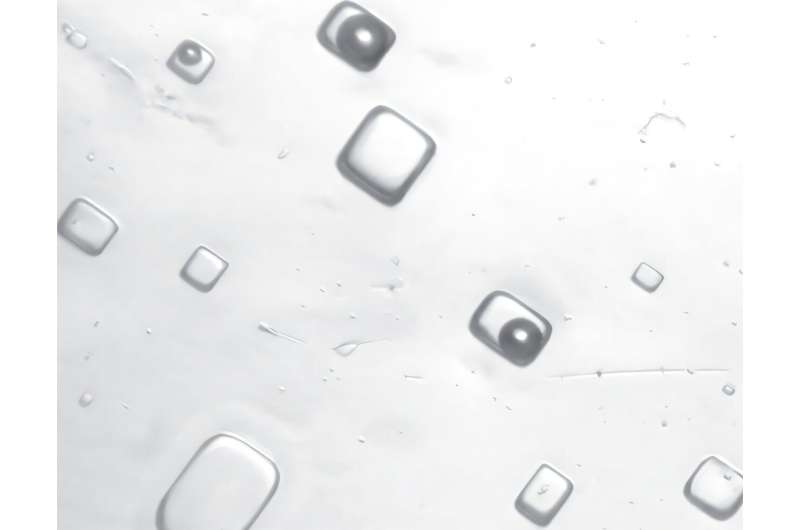
During this process, tiny pockets of liquid and gas became trapped inside the growing salt crystals. These microscopic features, called fluid inclusions, preserved both brine and small bubbles of ancient air. Once buried beneath layers of sediment, the halite crystals were effectively sealed off from the surrounding environment, protecting their contents from contamination for over a billion years.
Until recently, scientists knew these inclusions existed but struggled to extract reliable atmospheric data from them. That challenge has now been overcome.
A breakthrough in measuring ancient air
The research team was led by Justin Park, a graduate student at Rensselaer Polytechnic Institute (RPI), under the guidance of Professor Morgan Schaller. Their work focused on halite crystals that date back to the Mesoproterozoic era, a period spanning roughly 1.6 to 1.0 billion years ago.
The key difficulty lay in separating the behavior of gases dissolved in liquid brine from gases that existed in the air bubbles. Oxygen and carbon dioxide behave very differently in water than they do in air, making it extremely challenging to reconstruct the original atmospheric composition accurately.
To solve this, the researchers developed custom laboratory equipment and analytical techniques capable of accounting for how gases partition between air and liquid. This allowed them to correct previous uncertainties and directly measure the ancient atmosphere preserved inside the salt.
The results were published in the Proceedings of the National Academy of Sciences (PNAS) and represent the oldest direct measurements of Earth’s atmosphere ever obtained.
Surprising oxygen levels in the “boring billion”
One of the most striking findings involves oxygen. The analysis revealed that oxygen levels at the time were about 3.7% of modern atmospheric levels. While that may sound low compared to today’s 21%, it is much higher than many scientists expected for this period.
This amount of oxygen would theoretically have been sufficient to support complex multicellular life, even though animals and plants would not appear for another 800 million years. The finding challenges long-standing assumptions that extremely low oxygen levels were the main reason complex life evolved so slowly.
However, the researchers caution that the sample represents a snapshot in time, not a continuous record. It is possible that this higher oxygen concentration reflects a temporary oxygenation event rather than a stable, long-term condition.
Carbon dioxide and a surprisingly mild climate
The study also delivered unprecedented insights into carbon dioxide levels during the Mesoproterozoic era. Measurements showed that atmospheric carbon dioxide was roughly ten times higher than present-day levels.
This finding helps resolve a long-standing puzzle in Earth science. The Sun was significantly dimmer 1.4 billion years ago, a situation often referred to as the faint young Sun problem. With less solar energy reaching Earth, the planet should theoretically have been much colder. Yet geological evidence shows no widespread glaciation during this time.
High carbon dioxide levels provide a compelling explanation. As a powerful greenhouse gas, CO₂ would have trapped enough heat to maintain a relatively warm and stable climate, possibly comparable to modern conditions. Temperature estimates derived from the salt crystals themselves support this interpretation.
Rethinking the “boring billion”
Geologists sometimes refer to the Mesoproterozoic era as the “boring billion” because it appears to be a period of remarkable stability. Oxygen levels were thought to be low, climate conditions relatively steady, and evolutionary innovation limited.
This new research complicates that picture. Direct measurements suggest that oxygen and carbon dioxide levels may have fluctuated, at least episodically, creating environmental conditions more dynamic than previously assumed.
Understanding these fluctuations is crucial because this era sits between two major milestones in Earth’s history: the Great Oxidation Event earlier on, and the later rise of complex animal life. Having direct observational data helps scientists better understand how and when Earth became habitable for complex organisms.
The role of early algae
The timing of these atmospheric conditions is particularly interesting in light of biological evolution. Red algae, among the earliest known multicellular photosynthetic organisms, appeared around this same period. These organisms are still major contributors to global oxygen production today.
The relatively elevated oxygen levels observed in the halite inclusions may be linked to the increasing abundance and complexity of algal life. If algae were expanding and becoming more efficient at photosynthesis, they could have driven short-lived increases in atmospheric oxygen.
While this did not immediately lead to animal life, it may have helped lay the chemical groundwork for later evolutionary breakthroughs.
Why direct measurements matter
Before this study, estimates of ancient atmospheric composition relied largely on indirect proxies, such as isotope ratios in rocks or theoretical climate models. While useful, these methods involve significant assumptions.
What makes halite fluid inclusions so valuable is that they preserve actual samples of ancient air, not just chemical signatures influenced by later processes. This allows for far greater accuracy, especially when paired with advanced analytical techniques.
By extending direct atmospheric measurements back 1.4 billion years, the study fills a major gap in our understanding of Earth’s deep past.
What this means for Earth’s history
Taken together, the findings suggest that Earth during the Mesoproterozoic era was not as stagnant or inhospitable as once believed. Instead, it may have experienced periods of higher oxygen, elevated carbon dioxide, and a climate capable of supporting more biological complexity than the fossil record alone suggests.
This raises new questions about why complex life took so long to emerge and what additional factors—such as nutrient availability, ocean chemistry, or evolutionary constraints—may have played a role.
As researchers continue to refine these techniques and analyze other ancient salt deposits, we may soon gain an even clearer picture of how Earth’s atmosphere evolved and how life gradually transformed the planet.
Research paper:
https://www.pnas.org/doi/10.1073/pnas.2513030122