Seven Decades of Searching for Aliens Has Revealed the Building Blocks of Life but No Proof of Intelligent Beings
For more than 70 years, humans have been actively searching for life beyond Earth. What began in the 1950s as speculative radio listening and early space science has now evolved into a sophisticated, data-driven effort involving space probes, meteorite analysis, radio telescopes, artificial intelligence, and planetary exploration. A recent scientific review led by Seyed Sina Seyedpour Layalestani from Islamic Azad University in Iran brings together decades of findings to assess a simple but profound question: What have we actually discovered so far?
Published in the International Journal of Astrobiology, the study evaluates the strongest evidence linked to extraterrestrial life and separates confirmed science from speculation. The conclusion is both exciting and sobering. Scientists have found the chemical ingredients for life scattered across space, but no confirmed evidence that those ingredients ever assembled into living organisms elsewhere—let alone intelligent civilizations.
Ancient Meteorites Carry the Chemistry of Life
One of the most compelling lines of evidence comes from meteorites that fell to Earth long before modern space exploration existed.
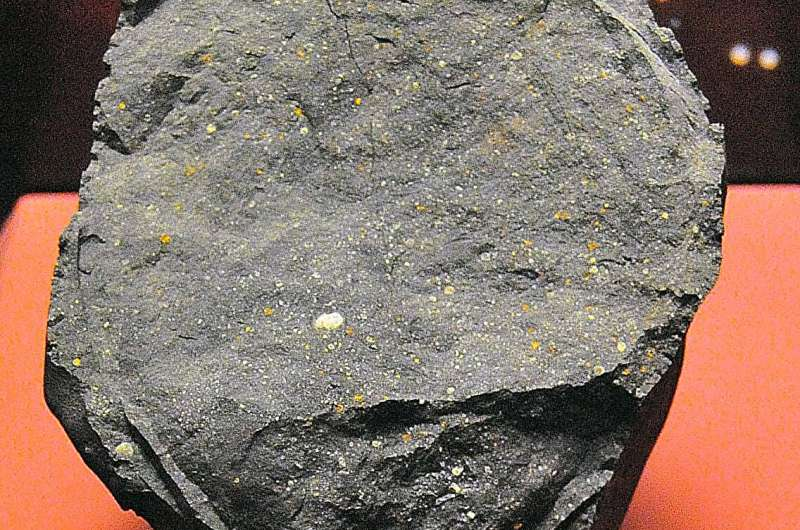
The most famous example is the Murchison meteorite, which crashed into Australia in 1969. Scientific dating shows it is about 7 billion years old, meaning it predates our solar system itself. Detailed chemical analysis revealed something remarkable: the presence of all five nucleobases that form DNA and RNA—adenine, guanine, cytosine, thymine, and uracil.
These molecules are the foundation of genetic material in every known form of life on Earth. Crucially, scientists confirmed that these compounds were extraterrestrial in origin, not contamination from Earth. This discovery challenges the long-held assumption that the essential chemistry of life formed only on our planet.
Another important space rock is the Orgueil meteorite, which exploded over France in 1864. This carbon-rich meteorite contains amino acids such as glycine and alanine—basic components of proteins. Even more controversial are microscopic structures found within it that resemble microfossils, similar in shape to magnetotactic bacteria found in Earth’s oceans.
For decades, many scientists dismissed these structures as mineral formations or contamination. However, more recent studies have strengthened the argument that these formations are genuinely extraterrestrial, though debate still continues over whether they represent biological life or complex chemistry that only mimics life.
Water and Habitability Across the Solar System
Meteorites are not the only sources of evidence. Robotic space missions have transformed our understanding of where life could exist.
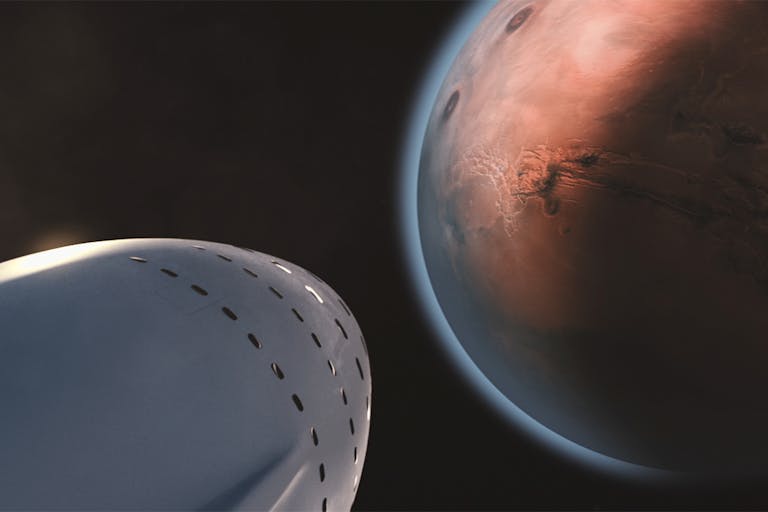
On Mars, multiple missions have confirmed the presence of water in different forms. Rovers have detected signs of ancient liquid water flows, while orbiters have mapped vast reserves of frozen water ice beneath the surface. The Phoenix lander famously confirmed water ice just three centimeters below the Martian soil, a surprisingly shallow depth.
Beyond Mars, discoveries have been even more dramatic. The Cassini spacecraft revealed that Saturn’s moon Enceladus hosts massive ice glaciers and subsurface oceans. Plumes of water vapor and organic compounds erupt from cracks in its icy surface, suggesting an environment with water, energy, and chemistry—three key requirements for life.
These findings show that habitable conditions are not rare in our solar system. Instead, they appear to be relatively common, at least at a basic chemical level.
Organic Molecules Are Everywhere in Space
Radio astronomy has added another major piece to the puzzle. Using powerful radio telescopes, scientists have detected more than 100 organic molecules floating within interstellar dust clouds. These include amino acids and components related to nucleic acids, forming far from any planet.
This widespread distribution of organic chemistry supports the panspermia hypothesis, which suggests that the building blocks of life may travel through space and potentially seed planets across the galaxy. While panspermia does not claim that life itself spreads between planets, it strengthens the idea that life’s raw materials are universal, not unique to Earth.
The Search for Intelligent Civilizations Comes Up Empty
While evidence for life’s ingredients is strong, the search for intelligent extraterrestrial civilizations has produced no confirmed results.
Decades of SETI (Search for Extraterrestrial Intelligence) projects have scanned the skies for artificial radio signals. Despite increasingly sensitive instruments and broader coverage, no signal has ever been verified as originating from intelligent non-human sources.
Similarly, UFO and UAP reports—while culturally popular—have largely been explained through conventional science. Many sightings are linked to ball lightning, plasma phenomena in the upper atmosphere, misidentified aircraft, or experimental technology.
Even highly publicized claims fail under scrutiny. The supposed alien bodies presented to Mexico’s Congress in 2023 were quickly identified by scientists as artificial constructs, not biological remains.
The takeaway is clear: there is no verified evidence of extraterrestrial intelligence at this time.
Why Proving Life Is So Difficult
The core challenge is not finding chemistry—it is proving biology.
The presence of DNA building blocks in meteorites does not automatically mean alien organisms once existed. Chemistry can become extremely complex without crossing the threshold into life. Distinguishing between abiotic organic chemistry and true biological processes is one of astrobiology’s hardest problems.
Artificial Intelligence Is Changing the Search
This is where artificial intelligence enters the picture. According to the study, AI is becoming an essential tool in modern astrobiology.
Machine learning systems can analyze meteorite chemistry to identify subtle patterns that distinguish biological signatures from non-biological ones. AI also plays a key role in filtering noise from radio telescope data, allowing researchers to focus on signals that deserve closer attention.
In exoplanet research, AI helps analyze atmospheric data to search for potential biosignatures—chemical combinations that could indicate life. Where human researchers might miss faint or complex correlations, AI excels at finding them.
What We Know So Far and What Remains Unknown
After seven decades of searching, scientists can confidently say one thing: the universe is rich in the ingredients of life. Water, organic molecules, and energy sources are widespread.
What remains unknown is whether those ingredients ever assembled into living organisms elsewhere, or evolved into intelligent civilizations capable of communication.
For now, the evidence points to a universe that is chemically alive but biologically unconfirmed. The question of whether we are alone remains unanswered—but it is now grounded in stronger science than ever before.
Research paper:
Evidence and traces of extraterrestrial life – International Journal of Astrobiology (2025)
https://doi.org/10.1017/s1473550425100050