SpaceX Pushes Forward With Nighttime Launches as New FAA Restrictions Reshape the Space Coast’s Busy Schedule
The Federal Aviation Administration has introduced new limits on when commercial space launches can take place, and those restrictions are already reshaping launch operations on the Space Coast. Because of the ongoing U.S. government shutdown and the strain it has placed on air traffic control staffing, the FAA now requires commercial launches to occur only between 10 p.m. and 6 a.m. This policy aims to reduce pressure on already stretched controllers who must manage both traditional air traffic and the protected airspace needed for rocket flights.
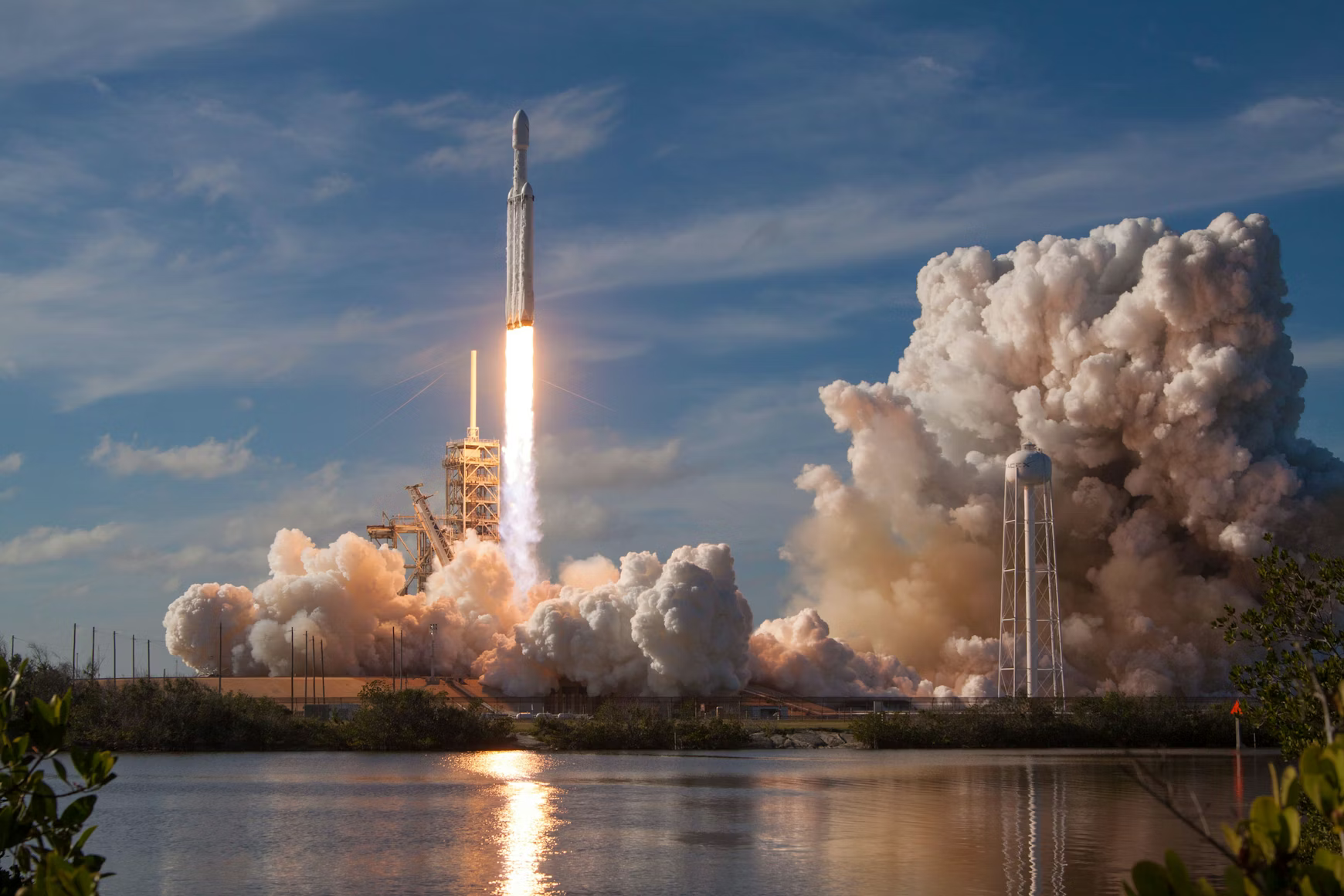
SpaceX, the most active U.S. launch provider by a wide margin, has quickly adjusted. Several of its upcoming missions have been shifted into late-night launch windows that comply with the new rules. One of the most notable is a planned Falcon 9 mission carrying 29 Starlink satellites, originally intended for an earlier daytime launch but now scheduled for 10:21 p.m. Eastern Time from Space Launch Complex 40 at Cape Canaveral Space Force Station.
This mission is particularly significant because it represents the third flight for its first-stage booster, which will attempt a recovery landing on the droneship Just Read the Instructions, stationed downrange in the Atlantic Ocean. Space Launch 45’s weather squadron currently forecasts 60% favorable conditions for liftoff, though the team notes concerns about upper-level wind shear as well as weather conditions at the booster’s landing zone. A 24-hour delay would improve the launch-site forecast to over 95% favorable, but the booster recovery weather remains an open question.
If successful, the launch will become the 94th orbital mission from the Space Coast this year, pushing the region past its record of 93 set in 2024. SpaceX alone has contributed all but five of those missions, with United Launch Alliance (ULA) conducting four and Blue Origin completing one. This reflects SpaceX’s immense operational pace, largely driven by its ongoing deployment of the Starlink satellite constellation.
The record-breaking momentum isn’t expected to slow. SpaceX completed another Starlink launch early Sunday, which tied last year’s total, and multiple additional missions are already lined up. All currently approved missions fall within nighttime launch windows in order to meet FAA requirements. Those restrictions will remain in force until the government shutdown ends.
Blue Origin also has a major mission on the horizon and may add to the launch tally as the 95th Space Coast launch of the year. The company secured a special exemption from the FAA to pursue a daytime launch of its New Glenn NG-2 mission, targeting a window between 2:50 p.m. and 4:17 p.m. This flight carries a pair of Mars-bound NASA satellites, making it a high-profile scientific mission that requires orbital timing incompatible with nighttime constraints. The FAA granted the exception after Blue Origin demonstrated that its trajectory and timing posed minimal conflict with strained air-traffic-control operations.
ULA and SpaceX also have multiple missions awaiting approval, but all currently scheduled launches outside Blue Origin’s exception fall into the 10 p.m.–6 a.m. window. This operational shift highlights the deep interconnection between the space industry and national airspace management. Launches require clearing large corridors of sky, coordinating with controllers, and avoiding commercial aircraft—tasks made significantly harder during a prolonged shutdown.
Understanding the FAA’s Launch Restrictions
To appreciate why nighttime restrictions were imposed, it helps to understand how launches interact with the broader aviation system. When a rocket lifts off, the FAA temporarily closes sections of airspace beneath and around the flight path. Air-traffic controllers must reroute commercial aircraft, monitor clearances, and stay in communication with multiple agencies, including the Space Force and the launch provider.
During a government shutdown, many FAA employees continue working without pay, but support staffing is reduced and overtime limits become crucial. High-traffic daytime hours place the greatest strain on controllers, so the FAA’s solution was to shift commercial launches to periods of lower air-traffic volume.
This nighttime-only policy is designed to prevent excessive workload and minimize disruptions to commercial aviation, which has also faced delays and rerouting during the shutdown.
Why SpaceX Can Adapt More Easily Than Others
SpaceX launches a large volume of Starlink missions, which offer exceptional scheduling flexibility. The Starlink constellation uses multiple orbital “shells,” and the company can choose from many possible trajectories based on what aligns with available launch windows.
This flexibility allows SpaceX to adjust to nighttime constraints without significantly impacting its deployment pace. Other companies don’t always have that luxury. Missions targeting interplanetary trajectories, specific high-energy orbits, or narrow timing windows often cannot simply move by several hours. That’s why Blue Origin needed a special FAA exception for the NG-2 mission.
The Space Coast’s Surging Launch Activity
The Florida Space Coast has seen explosive growth in orbital launch activity over the past five years. Thanks largely to SpaceX’s rapid-reuse Falcon 9 fleet, launch cadence has reached levels once unimaginable. In 2024, the region set a record with 93 orbital launches, and 2025 has now officially surpassed that figure.
A combination of factors is behind this surge:
- Reusable boosters, which shorten turnaround time
- Starlink, which provides a continuous stream of missions
- Increased activity from other providers like ULA and Blue Origin
- A steadily expanding network of commercial launch infrastructure
By the end of the year, the Space Coast could push well beyond 100 launches, even with nighttime constraints.
The Importance of Booster Landings
The mission’s booster recovery attempt is also worth noting. Landing on droneships like Just Read the Instructions enables hardware reuse, which is central to SpaceX’s ability to keep costs down and launch frequency up.
Recovery operations rely heavily on:
- Favorable sea states
- Calm wind conditions
- Adequate visibility and ship positioning
So while the launch-site weather may be acceptable, booster recovery weather can still delay or complicate missions. In this case, recovery weather remains the biggest question mark.
What Comes Next for Launch Providers
Until the government shutdown ends, the FAA’s restrictions will remain in place. This means:
- Launch providers will continue shifting schedules
- Some missions may be delayed
- Exceptions will be evaluated on a case-by-case basis
- Airspace management will prioritize commercial aviation during the day
For now, SpaceX appears well-positioned to maintain its launch rhythm. ULA, with fewer missions, can adapt but may face delays. Blue Origin’s unique payload timing has already prompted one special exception, and more may be needed if the shutdown drags on.