The Alien Hunter’s Shopping List Explains What Scientists Need Before the Habitable Worlds Observatory Goes to Work
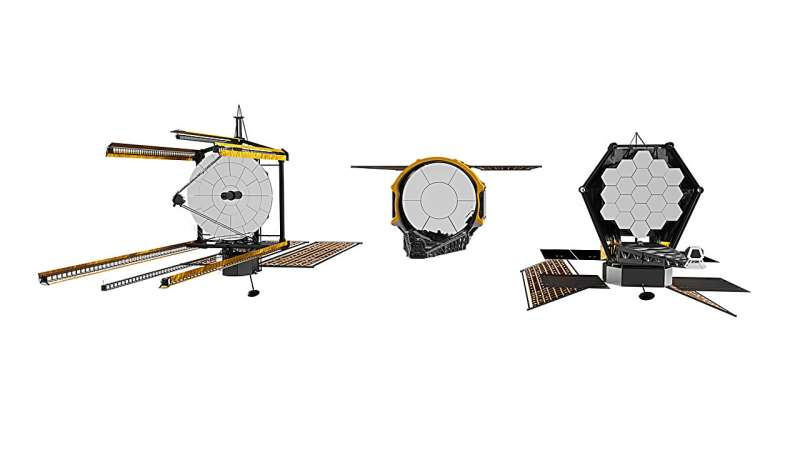
The upcoming Habitable Worlds Observatory (HWO) is often described as NASA’s most ambitious attempt yet to answer one of humanity’s oldest questions: Are we alone in the universe? Designed to directly image Earth-like exoplanets and search their atmospheres for signs of life, HWO promises extraordinary data. But a recent scientific white paper makes one thing very clear — powerful instruments alone are not enough.
Before HWO ever launches, scientists need a long checklist of supporting data, experiments, and models to make sense of whatever it sees. This idea is at the heart of a new paper led by Niki Parenteau, a NASA research biologist, and her colleagues. The paper lays out what is essentially an interpretation roadmap for future discoveries, identifying critical gaps in our current knowledge that must be filled if HWO is to succeed.
Why Interpreting Exoplanet Data Is So Hard
Finding a potentially habitable planet is only the first step. Once HWO collects light from a distant world, scientists must analyze subtle patterns in that light to determine what gases, surfaces, and processes are present. This is where things get complicated.
Many molecules that could hint at life — or even advanced technology — have never been studied in enough detail under alien conditions. Without that groundwork, a spectral signal might look exciting but remain impossible to interpret with confidence. The white paper argues that without preparation, HWO could collect stunning data that scientists simply cannot decode.
Computational Astrochemistry and Missing Molecular Data
One major category on the “shopping list” involves computational astrochemistry. This field focuses on understanding how molecules behave, interact, and absorb light in planetary atmospheres.
Many potentially interesting gases, including methyl halides and organosulfur compounds, lack basic detection thresholds. Scientists do not yet know how much of these gases would need to be present in an atmosphere before HWO could see them. Without that information, even a genuine biosignature could be missed or misidentified.
This problem extends to technosignatures as well — gases that might indicate industrial activity rather than biology. Without laboratory measurements and atmospheric models, distinguishing between natural and artificial origins becomes guesswork.
The Challenge of Visible and Near-Infrared Observations
HWO will operate primarily in the visible and near-infrared wavelengths, which introduces another set of challenges. While these wavelengths are ideal for directly imaging Earth-like planets, many gases are poorly characterized in this part of the spectrum.
Even familiar molecules such as methane and acetylene behave differently in non-Earth-like atmospheres. Changes in pressure, temperature, and atmospheric composition can significantly alter their spectral signatures. Right now, scientists lack enough experimental and theoretical data to reliably predict how these gases appear under alien conditions.
The paper also highlights a surprising gap in knowledge around industrial pollutants. Compounds like CFCs, once widely used on Earth and infamous for damaging the ozone layer, could be detectable signs of technology elsewhere — but only if scientists know what to look for.
Understanding Host Stars Is Just as Important as Planets
Another major section of the paper focuses on stellar characterization. A planet’s atmosphere and surface are deeply influenced by its star, making stellar data essential for interpreting any planetary signal.
To estimate the internal structure of rocky exoplanets, scientists need precise measurements of stellar elements such as iron, magnesium, silicon, and oxygen, ideally within 10 percent accuracy. These elements influence whether a planet has a molten core, plate tectonics, or a stable magnetic field — all factors linked to habitability.
The availability of CHNOPS elements — carbon, hydrogen, nitrogen, oxygen, phosphorus, and sulfur — is also critical. These elements form the backbone of known biology, and their presence in a stellar system affects the likelihood that life could emerge.
Stellar Age and System History Matter
The paper emphasizes the importance of knowing how old a star system is. Life takes time to develop, and younger systems may not have had sufficient time for complex biology to arise.
Accurate stellar age estimates also improve models of photochemical evolution, which describes how stellar radiation alters planetary atmospheres over billions of years. HWO will rely on these models to interpret atmospheric compositions seen from light-years away.
The Complication of Multi-Star Systems
One of the more sobering points raised in the paper is that more than half of HWO’s current target stars belong to multi-star systems. These systems create complex gravitational environments that scientists still struggle to model.
In such systems, planets can be pulled into unstable orbits, pushed too close to their stars, or flung into space entirely. The authors note that without better simulations, HWO could spend a significant portion of its observing time studying planets that were never truly viable habitats.
At the same time, if habitable planets do exist in these systems, understanding how they survive could teach us entirely new lessons about planetary formation and stability.
Surface Colors, Reflectance, and False Positives
Atmospheric gases are not the only clues HWO will examine. The color and reflectance of a planet’s surface can also hint at biological activity. On Earth, vegetation produces the well-known “red edge”, a sharp change in reflectance caused by chlorophyll.
However, the paper warns that many minerals and pigments could mimic similar spectral features. Cinnabar is just one example, but there are many others that could create false positives.
To address this, scientists propose building a large, comprehensive database of surface reflectance spectra, covering minerals, pigments, and even entire organisms. Such a database would allow astronomers to compare HWO observations against known materials and narrow down the most likely explanations.
Extra Context: Why HWO Is Such a Big Deal
HWO represents a major shift in exoplanet science. Unlike earlier missions that focused on detecting planets indirectly, HWO aims to directly image Earth-sized worlds around sun-like stars. This requires advanced optics, extreme contrast control, and unprecedented stability.
Beyond the search for life, HWO will also contribute to broader astrophysics, studying galaxy formation, stellar evolution, and cosmic chemistry. Its data will likely remain scientifically valuable for decades.
A Long Runway Before Launch
Fortunately, scientists have time. HWO is not expected to launch until the 2040s, giving researchers years to perform laboratory experiments, refine models, and close knowledge gaps identified in the paper.
Even then, some observations will almost certainly remain ambiguous. The authors acknowledge that interpreting alien worlds will always involve uncertainty. What matters is reducing that uncertainty as much as possible before the data arrive.
Looking Ahead
The white paper makes a strong case that the search for life does not begin with a telescope, but with preparation. By investing now in astrochemistry, stellar science, atmospheric modeling, and surface spectroscopy, scientists can ensure that when HWO finally opens its eye on distant worlds, we will be ready to understand what it sees.
In many ways, this “shopping list” is not just about one mission. It is about building the scientific foundation needed for humanity’s next great step in exploring the universe.
Research paper:
https://arxiv.org/abs/2601.06386