The Next Great Space Race Is About Building AI Data Centers in Orbit
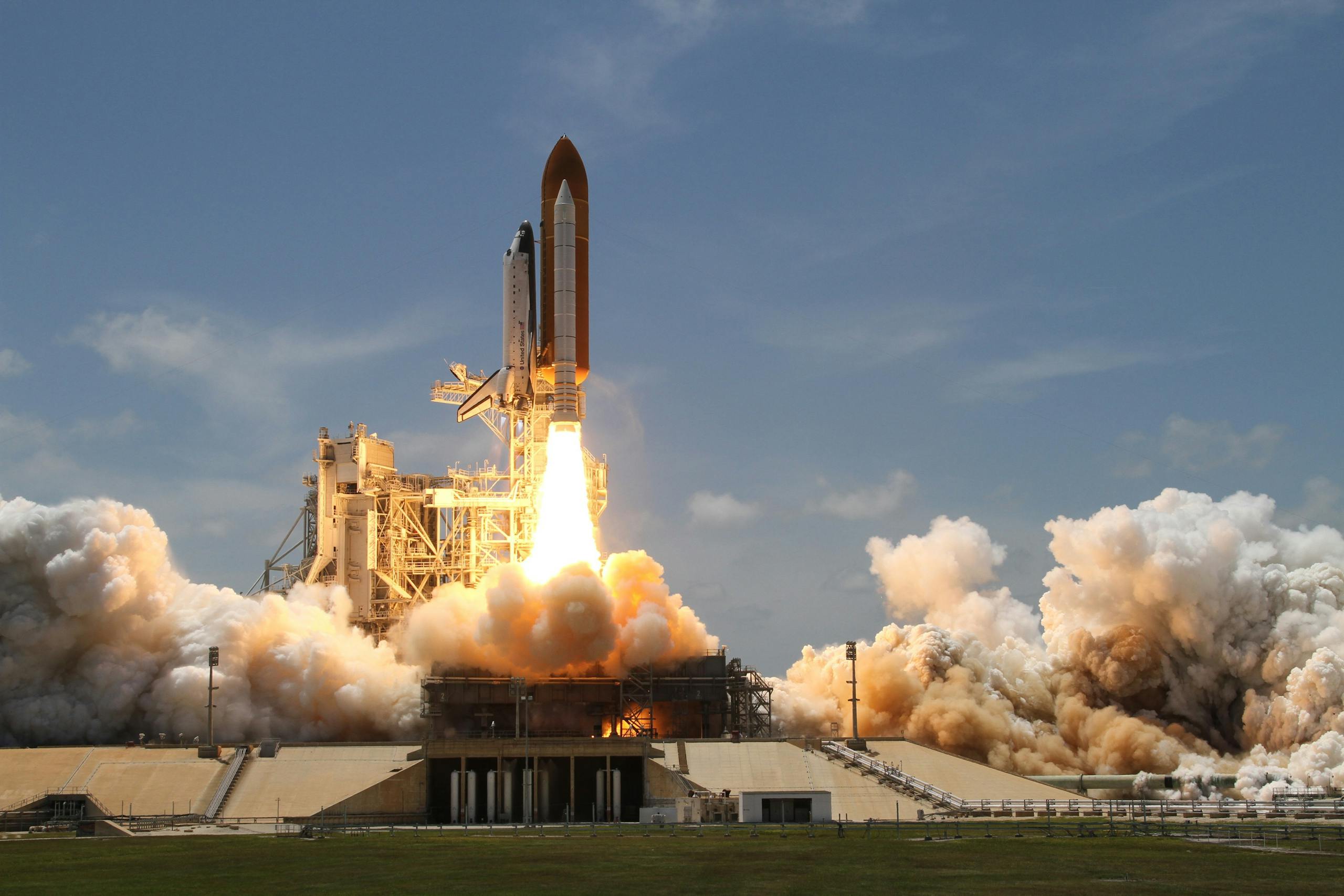
The idea of building data centers in space might sound like science fiction, but it is quickly becoming a serious topic of discussion among some of the world’s biggest technology and space companies. Google, SpaceX, and Blue Origin are reportedly exploring ways to move parts of AI computing infrastructure into orbit, driven by rising energy demands, environmental pressures on Earth, and rapid growth in artificial intelligence workloads. While experts agree that we are still years away from fully operational space-based data centers, early experiments and test missions are already taking shape.
At its core, the concept is simple: Earth-based AI data centers are becoming enormous consumers of electricity, land, and water. Space, by contrast, offers near-constant access to solar energy, limitless room for heat dissipation, and freedom from many of the physical constraints that exist on the ground. The challenge is turning that idea into something that actually works.
Why Tech Companies Are Even Considering Space Data Centers
AI models today require staggering amounts of compute power. According to the International Energy Agency (IEA), a typical AI-focused data center can consume as much electricity annually as 100,000 households. As AI models grow larger and more complex, that energy use is expected to rise sharply.
The IEA estimates that global electricity demand from data centers and AI could increase from 460 terawatt-hours in 2022 to more than 1,000 terawatt-hours by 2026, roughly equivalent to the total electricity consumption of Japan. This rapid growth has sparked concerns about grid capacity, carbon emissions, and local environmental strain.
Space offers an appealing alternative. Satellites equipped with solar panels could draw power directly from the sun without interruptions from night cycles or weather. Heat generated by AI chips could, in theory, be radiated into space instead of relying on massive water-based cooling systems. And unlike Earth, orbit is not limited by land availability or zoning restrictions.
The Pressure on Earth-Based Data Center Hubs
The strain caused by traditional data centers is already visible in certain regions. Loudoun County, Northern Virginia, often called Data Center Alley, hosts more than 250 operational data centers, making it the largest data center hub in the United States. While this concentration supports cloud computing and internet infrastructure, it also places pressure on local power grids, water supplies, and surrounding communities.
Reducing the number of large data centers on the ground could ease these pressures. That possibility is one of the reasons space-based computing has gained attention, even though it remains a long-term prospect.
What SpaceX and Blue Origin Are Reportedly Working On
Reports published in December by The Wall Street Journal suggest that both SpaceX and Blue Origin are actively exploring space data center technology.
Blue Origin is said to have a dedicated internal team focused on developing systems that could support AI data centers in orbit. Meanwhile, SpaceX is reportedly working on upgrading its rockets to better accommodate AI computing payloads, rather than just communications or observation satellites.
Neither company has publicly confirmed these plans, and both declined to comment on the reports. Still, both Elon Musk and Jeff Bezos have previously spoken about moving heavy industry and large-scale infrastructure into space, including computing.
Google’s Project Suncatcher and Early Experiments
Google is also part of this emerging space race. Through its moonshot initiative known as Project Suncatcher, the company announced plans to launch two test satellites in 2027 in partnership with Planet Labs, a U.S.-based satellite company.
These satellites will carry Google’s AI processing chips and are intended to test how AI workloads perform in orbit. The goal is not to build a full data center immediately, but to study power usage, performance stability, and system behavior over time in space conditions.
Smaller Companies Are Already Testing AI in Orbit
Large tech companies are not alone in this effort. Smaller startups are moving quickly, sometimes faster than their larger counterparts.
One notable example is StarCloud, an NVIDIA-backed startup. StarCloud recently launched a satellite equipped with an NVIDIA H100 GPU, one of the most powerful AI chips currently available. The satellite is already running a version of Google’s open large language model Gemma, marking one of the first real-world examples of AI workloads being executed in space.
These early missions are limited in scope, but they serve as proof that AI hardware can function beyond Earth’s atmosphere, at least for short durations.
Power, Cooling, and Radiation Are Major Obstacles
Despite the excitement, experts emphasize that space-based data centers face enormous technical hurdles.
One of the biggest challenges is power generation. While sunlight is abundant in space, capturing enough energy to run large AI systems is not trivial. Experts estimate that orbital data centers would require either solar panels stretching miles in length or constellations consisting of tens of thousands of smaller satellites working together.
Cooling is another major issue. On Earth, data centers rely heavily on water and air circulation to manage heat. In space, there is no atmosphere to carry heat away. Although temperatures can be extremely cold, heat generated by GPUs does not simply disappear. Instead, it must be radiated away using specialized systems, and even cooling a single GPU can be difficult.
Radiation poses a further risk. AI chips are not typically designed to withstand prolonged exposure to cosmic radiation, which can degrade performance or cause failures over time. Hardening hardware against radiation adds cost, complexity, and weight.
Incremental Progress, Not Instant Data Centers
Experts stress that companies are not planning to launch full-scale data centers anytime soon. Instead, the current focus is on testing individual components. These tests measure heat cycles, energy consumption, performance degradation, and system reliability during extended missions.
This step-by-step approach allows companies to refine designs before committing to massive infrastructure deployments. The competitive pressure is intense, however, and firms are investing heavily to gain early advantages in what could become a new frontier for AI computing.
Environmental Trade-Offs of Launching More Rockets
While space data centers could eventually reduce environmental harm on Earth, they may increase it in the short term. Building and maintaining orbital infrastructure requires more rocket launches, which have their own environmental consequences.
Launch sites such as Cape Canaveral Space Force Station are located in ecologically sensitive areas. Frequent launches have been shown to harm nearby ecosystems, kill fish in shallow waters, and deposit debris and pollutants. Rocket emissions also contribute to fossil fuel use and atmospheric effects.
Balancing these short-term impacts against potential long-term benefits remains an open question for policymakers and researchers.
Why This Matters for the Future of AI and Energy
The push toward space-based data centers reflects a broader reality: AI is forcing humanity to rethink how and where computing happens. As energy demand rises and environmental concerns grow, unconventional solutions are gaining attention.
Even if orbital data centers do not become widespread for decades, the research being done today could influence future satellite design, energy systems, and sustainable computing strategies on Earth. For now, space remains an experimental proving ground rather than a practical alternative.
The race is on, but the finish line is still far away.
Research reference:
International Energy Agency – Electricity 2024: Analysis and Forecasts to 2026
https://www.iea.org/reports/electricity-2024