Why Most Sub-Neptune Exoplanets Are Likely Magma Worlds, Not Ocean Worlds
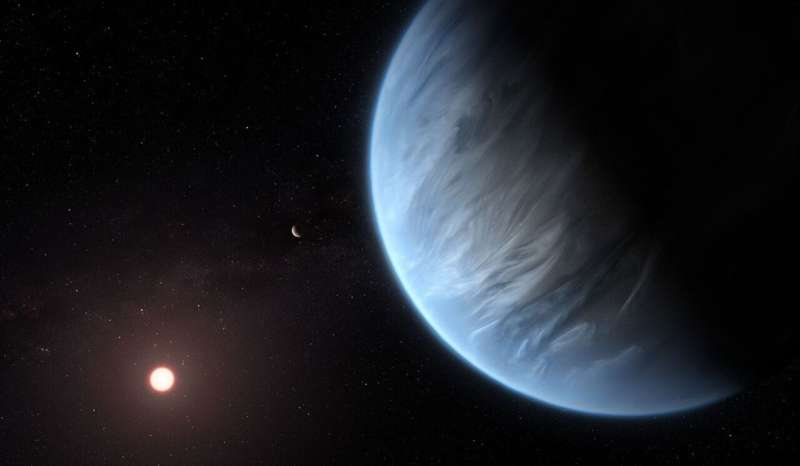
Astronomers have spent the last decade discovering thousands of planets beyond our solar system, and one surprising result keeps coming up: the most common type of planet we find doesn’t exist anywhere around the Sun. These worlds, known as sub-Neptunes, sit between Earth and Neptune in size and mass. They are everywhere in our galaxy, yet they remain deeply puzzling.
For years, some of these planets were promoted as exciting candidates for vast global oceans, earning labels like hycean worlds—planets thought to be covered in water beneath thick hydrogen atmospheres. But a new study suggests a much hotter, far less watery reality. According to recent research, most sub-Neptunes are probably molten lava worlds, with interiors dominated by magma oceans that have persisted for billions of years.
The Problem of Degeneracy in Exoplanet Science
A major challenge in exoplanet research is something astronomers call degeneracy. In simple terms, it means that the same observational data can be explained in more than one way. When scientists observe an exoplanet, they usually measure its radius, mass, and sometimes the chemical makeup of its atmosphere. Unfortunately, very different planetary interiors can produce nearly identical signals.
This has led to competing interpretations. A planet might appear consistent with a water-rich ocean world, but it could just as easily be explained as a rocky planet with a thick atmosphere and a molten interior. Degeneracy doesn’t mean anyone is wrong—it means the data alone isn’t enough to settle the debate.
In recent years, some interpretations leaned toward the more exciting option: water-covered worlds that might support life. The new study argues that this optimism may have overshadowed a more physically realistic explanation.
From Hycean Worlds to Magma Worlds
The hycean idea gained traction after observations of planets like K2-18b. This sub-Neptune showed atmospheric signs of methane and carbon dioxide, but very little ammonia. Earlier studies suggested this pattern pointed to a deep ocean, since liquid water readily dissolves ammonia.
However, there’s a crucial detail: molten rock also dissolves ammonia extremely well. That means the absence of ammonia is not unique evidence for water oceans. A planet with a global magma ocean beneath a hydrogen-rich atmosphere could produce the same chemical signals.
Recognizing this, researchers led by Robb Calder of the University of Cambridge set out to test whether magma worlds could realistically explain the growing catalog of sub-Neptune planets.
Modeling the Thermal Evolution of Sub-Neptunes
The team focused on planets sometimes referred to as gas dwarfs—rocky planets surrounded by thick atmospheres dominated by hydrogen and helium. Using a detailed planetary interior model known as PROTEUS, they simulated how these planets heat up, cool down, and evolve over time.
A key question guided their work: Do these planets cool enough to solidify their mantles, or do they remain molten for most of their lifetimes?
To answer this, the researchers developed a new framework called the Solidification Shoreline. This concept links two measurable factors:
- The effective temperature of the host star
- The instellation flux, or how much stellar energy reaches the planet
Together, these values determine whether a planet receives enough energy to keep its interior molten.
If a planet lies above the Solidification Shoreline, it retains a magma ocean. If it falls below, its mantle eventually solidifies.
A Striking Result: 98% Are Likely Molten
When the researchers applied this framework to thousands of known sub-Neptune exoplanets, the results were striking. About 98% of them fell above the Solidification Shoreline. In other words, nearly all of these planets are expected to maintain magma oceans throughout their lifetimes.
This finding suggests that magma worlds are not rare oddities. Instead, they may be the default state for sub-Neptune planets in our galaxy.
The team acknowledged that including additional data—such as the envelope mass fraction, which measures how much of a planet’s mass is contained in its atmosphere—could refine the results further. However, this information is not available for most known exoplanets, making the Solidification Shoreline a practical and widely applicable tool.
Why Magma Oceans Matter for Atmospheres
A molten interior doesn’t just affect a planet’s geology—it directly shapes its atmosphere. Magma oceans can absorb and release gases over time, influencing what astronomers detect when they observe these planets from afar.
This explains why atmospheric chemistry alone can be misleading. Gases like methane, carbon dioxide, and ammonia may reflect magma-atmosphere interactions, not the presence of liquid water oceans. This reinforces the idea that many claims about water-rich sub-Neptunes may be overinterpretations of incomplete data.
What This Means for the Search for Life
For astrobiologists, this conclusion is sobering. Sub-Neptunes were once considered promising targets because of their abundance and apparent water-friendly signatures. If most of them are magma worlds, then surface liquid water—at least as we understand it—may be extremely rare on these planets.
That doesn’t mean the search for life is over. It simply means researchers may need to focus more on Earth-sized rocky planets or moons with more stable, cooler environments. Understanding what sub-Neptunes truly are helps scientists avoid chasing false hopes and instead refine where to look next.
Why Sub-Neptunes Are So Hard to Understand
Sub-Neptunes have no direct analog in our solar system. Earth, Venus, and Mars are small rocky planets, while Neptune and Uranus are gas-rich ice giants. Sub-Neptunes fall awkwardly between these categories.
They likely formed hot, cooled unevenly, and retained thick atmospheres that trap heat efficiently. This combination makes it extremely difficult for them to ever fully solidify, especially when they orbit relatively close to their stars.
Looking Ahead
As telescopes like James Webb Space Telescope continue collecting more detailed atmospheric data, scientists hope to reduce degeneracy and better distinguish between magma worlds and genuine ocean worlds. For now, this new research provides a powerful reminder that exciting interpretations must always compete with physically grounded alternatives.
Rather than being cosmic water parks, most sub-Neptunes may be glowing, molten worlds—hostile, fascinating, and crucial to understanding how planets form and evolve across the galaxy.
Research paper:
https://arxiv.org/abs/2512.05816