MIT Researchers Develop a New Control System That Helps Soft Robots Stay Safe While Doing Real Work
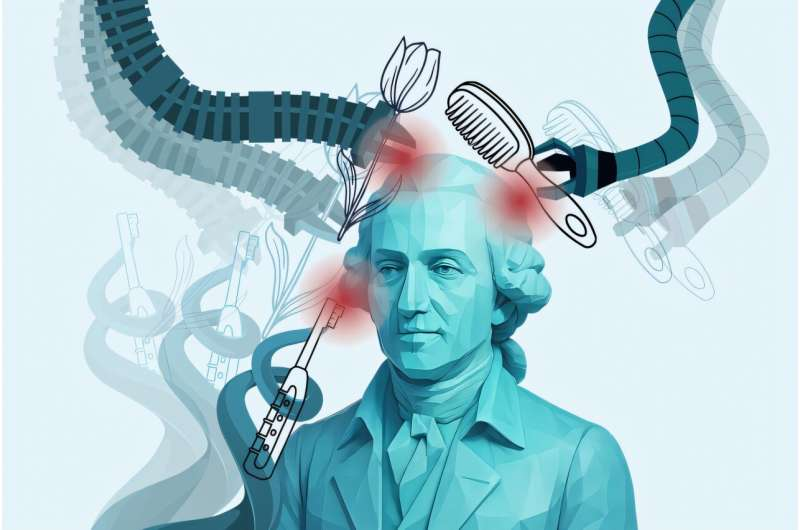
Soft robots have long been seen as the future of safe human–robot interaction. Their flexible, bendable bodies make them far less intimidating than rigid industrial machines, and they can handle delicate objects that traditional robots struggle with. But that same flexibility comes with a serious challenge: controlling soft robots safely and precisely is incredibly difficult. Now, researchers at MIT have developed a new control system that teaches soft robots to understand their own physical limits, allowing them to interact with people and objects without applying dangerous forces.
This new work comes from MIT’s Computer Science and Artificial Intelligence Laboratory (CSAIL) and the Laboratory for Information and Decision Systems (LIDS). The research focuses on what the team calls contact-aware safety, a method that allows soft robots to safely make contact with their environment while still performing useful tasks. Instead of simply avoiding obstacles or stopping entirely when contact occurs, these robots can sense, adapt, and respond in real time, all while staying within clearly defined safety boundaries.
Why Soft Robots Are Harder to Control Than They Look
Unlike rigid robots with joints and links that move in predictable ways, soft robots deform continuously along their bodies. A slight bend, twist, or stretch in one part of a soft robotic arm can cause unexpected forces elsewhere. This makes traditional control techniques—many of which assume rigid structures—less effective.
Soft robots are often praised for their embodied intelligence, meaning their materials and structure naturally absorb energy and reduce harm. However, as soft robots become stronger, faster, and more capable, passive compliance alone is no longer enough to guarantee safety. Without advanced control systems, even a soft robot can apply unsafe forces during contact.
The MIT team set out to close this gap by bringing formal safety methods—commonly used in rigid robotics—into the world of soft robotics.
The Core Idea Behind Contact-Aware Safety
At the heart of this research is a framework that combines advanced modeling, nonlinear control theory, and real-time optimization. The goal is simple in concept but complex in execution: ensure that a soft robot can achieve its task goals while never exceeding safe force limits, even during contact.
To do this, the researchers rely on two key mathematical tools:
- High-Order Control Barrier Functions (HOCBFs)
These define strict safety boundaries for the robot. They ensure that contact forces, deformations, and other physical variables stay within safe limits. Importantly, HOCBFs account for the robot’s full dynamics, including inertia, which helps the robot stop early enough to avoid unsafe interactions. - High-Order Control Lyapunov Functions (HOCLFs)
These guide the robot toward completing its tasks efficiently. While HOCBFs focus on safety, HOCLFs focus on performance, ensuring that the robot still moves smoothly and purposefully.
Together, these tools allow the robot to balance safety and task execution in real time, without requiring overly complex safety specifications from the user.
Teaching Soft Robots to Understand Their Own Bodies
A major strength of this work lies in how accurately the robot can predict its own behavior. The control system is built on a differentiable implementation of the Piecewise Cosserat-Segment (PCS) dynamics model, which describes how soft robotic structures bend, stretch, and accumulate forces.
This model allows the robot to anticipate how its body will deform when actuated or when it comes into contact with objects. Because the model is differentiable, it integrates smoothly with optimization-based control methods, enabling fast, real-time decision-making.
To complement this, the researchers introduced a new distance estimation method called the Differentiable Conservative Separating Axis Theorem (DCSAT). DCSAT estimates distances and penetration depths between the robot and nearby objects that can be approximated as chains of convex shapes. Unlike earlier approaches, DCSAT produces strictly conservative estimates, meaning it always errs on the side of safety while remaining computationally efficient.
Together, PCS and DCSAT give the robot a predictive sense of both its own body and its environment.
Experimental Results That Show Real-World Potential
The MIT team tested their control framework across a range of challenging scenarios designed to push the limits of soft robot safety and adaptability.
In one experiment, a soft robotic arm gently pressed against a compliant surface, maintaining a precise contact force without overshooting or oscillating. In another, the robot traced the curved surface of an object, continuously adjusting its grip to avoid slippage while respecting force limits.
The system was also tested in human–robot interaction scenarios, where the robot manipulated fragile objects alongside a human operator. When unexpected nudges or disturbances occurred, the robot reacted immediately, adapting its motion while remaining within safe boundaries.
These experiments demonstrated that the framework generalizes well across tasks and objectives, allowing soft robots to sense, adapt, and act safely in complex environments.
What This Means for Healthcare, Industry, and Homes
The implications of contact-aware safety extend far beyond the lab. In healthcare, soft robots equipped with this control system could assist in surgical procedures or patient care, offering precise manipulation while reducing the risk of injury.
In industrial settings, such robots could handle fragile goods without constant supervision, improving efficiency while maintaining safety. In domestic environments, soft robots could assist with household chores or caregiving tasks, safely interacting with children, elderly individuals, and pets.
By mathematically guaranteeing safety rather than relying solely on soft materials, this work brings soft robots one step closer to becoming reliable partners in everyday life.
How This Research Fits Into the Bigger Picture of Robotics
This work highlights an important shift in robotics research. As robots move out of controlled factory floors and into human-centered environments, safety can no longer be an afterthought. The MIT team’s approach shows how formal control methods, physics-based modeling, and real-time optimization can be blended into a single, practical system.
The researchers also emphasize that this framework is designed to be accessible to practitioners. While the underlying mathematics is complex, defining safety constraints and task objectives is relatively straightforward, making the system usable beyond academic settings.
Looking ahead, the team plans to extend their methods to three-dimensional soft robots and explore integration with learning-based approaches. Combining contact-aware safety with adaptive learning could enable soft robots to handle even more unpredictable and unstructured environments.
Learning More About Soft Robot Safety
Soft robotics continues to evolve rapidly, and this research marks a significant step forward in ensuring that flexibility and safety go hand in hand. As soft robots become more capable, systems like this will be essential for ensuring they remain safe, trustworthy, and effective in real-world applications.
For readers interested in the technical details, modeling approaches, and mathematical foundations behind this work, the full research paper provides an in-depth explanation of the framework and experimental results.
Research paper:
https://doi.org/10.1109/LRA.2025.3621965