Stanford Researchers Develop an Audio-Augmented Wearable That Uses Everyday Sounds to Improve Mindfulness and Focus
Researchers at Stanford University have developed a simple yet powerful wearable device that aims to improve mindfulness during everyday activities by amplifying subtle sounds produced by hand movements. The technology is designed to help people stay grounded in the present moment, with potential applications for individuals experiencing anxiety and ADHD.
The project comes from Stanford’s SHAPE Lab and the Virtual Human Interaction Lab, and the findings were published in Proceedings of the ACM on Interactive, Mobile, Wearable and Ubiquitous Technologies in 2025. Rather than relying on screens, notifications, or guided voice instructions, the device takes a very different approach: it uses real-time audio feedback from the physical world to pull attention away from digital distractions and back to the task at hand.
How the Audio-Augmented Wearable Works
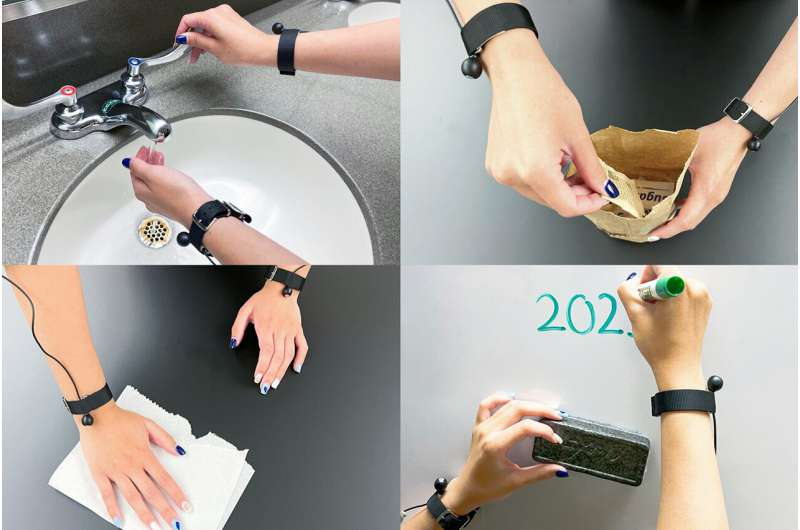
The wearable itself is intentionally minimal and unobtrusive. It consists of two wrist-mounted straps, each equipped with microphones that capture the sounds produced when a user’s hands interact with objects or surfaces. These sounds might include rubbing hands together, writing with a marker, handling fabric, pulling a packet from a paper bag, wiping a table, or turning on a faucet.
Once captured, the sounds are digitally amplified and enhanced, then played back to the user through earbuds or open-ear headphones in real time. The amplification does not distort the sound into something artificial. Instead, it brings normally overlooked audio cues into sharper focus, making users more aware of what they are physically doing in the moment.
Unlike many mindfulness technologies that depend on verbal prompts, guided meditation, or breathing instructions, this device uses a sensory-driven approach. The goal is not to tell users how to be mindful, but to help them naturally become mindful by drawing attention to the sensory richness of ordinary actions.
Why Sound Plays a Key Role in Mindfulness
The research team focused on sound because it is one of the most underutilized sensory channels in everyday awareness. While people are constantly exposed to visual information, subtle sounds produced by daily activities often fade into the background.
By amplifying these sounds, the device encourages users to slow down, pay attention, and engage more deeply with their environment. The enhanced audio cues act as anchors, keeping the mind from drifting toward phones, notifications, or internal distractions.
The researchers describe this as a way of transforming routine actions into moments of focused awareness, helping users reconnect with the physical world rather than escaping it.
Study Design and Experimental Findings
To evaluate the effectiveness of the wearable, the research team conducted a controlled in-lab study with 60 participants. The participants were asked to interact with a variety of everyday objects and materials under two conditions: one group used the audio-augmented wearable, while the control group performed the same tasks without any sound enhancement.
The researchers used a combination of standardized psychological measures and behavioral observations to assess the device’s impact. One of the main tools used was the Mindful Attention Awareness Scale – State, which measures how present and attentive a person feels in the moment.
The results showed clear differences between the two groups:
- Participants using the wearable reported statistically higher levels of mindfulness
- They spent more time interacting with objects, indicating deeper engagement
- They demonstrated more exploratory and trial-and-error behaviors, suggesting curiosity and sustained attention
- Their interactions were less rushed and more deliberate compared to participants without audio augmentation
In addition to quantitative data, the researchers conducted formative qualitative studies with experienced mindfulness coaches. Feedback from these sessions suggested that the device created a sense of safety, intimacy, and playful curiosity, allowing users to approach everyday tasks with a refreshed mindset.
Potential Benefits for Anxiety and ADHD
While the study primarily focused on mindfulness, the researchers see strong potential for applications in mental health and attention-related conditions.
People with anxiety often struggle with rumination and mental overactivity, while individuals with ADHD may find it difficult to sustain attention on mundane tasks. By making real-world sensory input more engaging, the wearable may help users anchor their attention externally, reducing mental noise and distraction.
The research team has emphasized that the device is not a medical treatment at this stage. However, they believe it could eventually complement therapeutic practices, mindfulness training programs, or behavioral interventions aimed at improving attention regulation and emotional grounding.
A Shift Away From Screen-Based Mindfulness Technology
One of the most notable aspects of this research is its departure from screen-centric design. Many modern mindfulness tools rely on smartphones, apps, or visual interfaces, which can ironically become another source of distraction.
This wearable operates quietly in the background, without demanding visual attention or constant interaction. By enhancing real-world perception instead of replacing it, the device aligns with a growing movement toward calm technology—tools designed to support human awareness without overwhelming it.
Long-Term Goals and Future Research Directions
The researchers are now exploring several next steps. These include long-term studies to determine whether the mindfulness benefits persist over time and whether users continue to engage with the device beyond novelty effects.
They are also interested in integrating the technology into existing mindfulness and wellness programs, as well as studying its relevance in clinical or therapeutic contexts. Future versions of the device may explore different sound processing techniques or customization options to better suit individual users.
Why This Research Matters
In a world dominated by constant notifications and digital interruptions, this work highlights a simple but powerful idea: the present moment already contains everything needed for mindfulness. By amplifying the sounds of everyday life, the Stanford researchers have demonstrated that technology does not always need to pull us away from reality—it can also help us rediscover it.
Rather than adding more information to our lives, this wearable encourages us to notice what is already there, turning ordinary moments into opportunities for awareness, focus, and connection.
Research Paper:
Audio Augmentation of Manual Interactions to Support Mindfulness – Proceedings of the ACM on Interactive, Mobile, Wearable and Ubiquitous Technologies (2025)
https://doi.org/10.1145/3770706