Best Mental Health Exercises
I’ll be honest—most of us don’t think about mental health until something feels off. Maybe it’s stress piling up, trouble sleeping, or that weird sense of burnout you can’t quite explain. I’ve been there too, and what I’ve learned is this: mental health isn’t something you fix once—it’s something you maintain daily. Just like going to the gym keeps your body strong, small mental exercises keep your mind steady and resilient.
The tricky part is that our modern lives aren’t exactly designed for calm. Constant notifications, endless scrolling, work pressure—it all adds up. But here’s the good news: you don’t need a complete life overhaul to feel better. Simple, consistent practices can genuinely shift how you think, feel, and respond to stress. And once you start noticing those changes, it becomes a lot easier to stick with them.
Mind-Body Practices for Immediate Calm
Deep Breathing Techniques
Let’s start with something deceptively simple: breathing. I used to roll my eyes at this one—like, I’m already breathing, what’s the big deal? But once I actually tried it during a stressful moment, it clicked. The way you breathe directly affects your nervous system.
When you’re anxious, your breathing gets shallow and fast. That signals your brain that something’s wrong, which makes you even more stressed. But when you slow it down intentionally, you’re basically telling your brain, “Hey, we’re safe.”
One technique I come back to a lot is box breathing. You inhale for four seconds, hold for four, exhale for four, and hold again for four. It sounds almost too basic, but try doing it before a big meeting or after a frustrating conversation. You’ll notice your heart rate drop and your thoughts become less scattered. It’s like hitting a reset button for your body in under a minute.
Mindfulness and Meditation
Now, mindfulness is one of those buzzwords that gets thrown around a lot, but at its core, it’s pretty straightforward: paying attention to the present moment without judging it.
That sounds easy until you actually try it. Sit quietly for two minutes and watch your thoughts—you’ll probably notice your mind jumping from one thing to another like a hyperactive puppy. And that’s exactly the point. The goal isn’t to stop your thoughts; it’s to notice them without getting pulled into them.
For example, let’s say you’re lying in bed and suddenly thinking about a mistake you made at work. Normally, that spirals into overthinking. But with mindfulness, you catch it early: “Okay, I’m having that thought again.” That small shift creates space between you and the thought.
I personally like doing short, guided meditations in the morning. Nothing fancy—just five minutes of focusing on my breath. Over time, I’ve noticed that I react less impulsively and feel more grounded during the day, even when things get chaotic.
Progressive Muscle Relaxation
This one surprised me the most because it’s so physical. Progressive muscle relaxation works on the idea that stress isn’t just in your mind—it lives in your body too.
Think about it: when you’re stressed, your shoulders tighten, your jaw clenches, maybe your neck feels stiff. You might not even notice it happening. This exercise helps you become aware of that tension and release it.
Here’s how it works: you go through different muscle groups, one at a time. You tense them for a few seconds, then slowly release. For example, clench your fists tightly, hold for five seconds, then let go. Move to your shoulders, your legs, and so on.
The first time I tried this, I realized how much tension I was carrying without realizing it—especially in my shoulders. After a full round, I felt noticeably lighter. It’s almost like your body exhales in a way your mind alone can’t achieve.
What I love about this practice is that it’s incredibly grounding. If your thoughts are racing, focusing on physical sensations pulls you out of your head and back into your body. And sometimes, that’s exactly what you need to calm down.
Daily Mental Health Habits You Can Start Today
If there’s one thing I’ve learned the hard way, it’s this: mental health isn’t built in big, dramatic moments—it’s built in the small, boring, daily stuff. The kind of things that feel almost too simple to matter… until you skip them for a week and suddenly feel off.
So instead of overwhelming yourself with big changes, start here.
- Journaling your thoughts for 5–10 minutes daily
I used to think journaling meant writing pages of deep thoughts. Turns out, it can be as simple as dumping whatever’s in your head onto paper. Some days I just write, “I feel overwhelmed and I don’t know why.” And weirdly, that alone helps. Getting thoughts out of your head reduces mental clutter and makes things feel more manageable. - Practicing gratitude (write 3 things you’re thankful for)
This one sounds cliché, I know. But it works because it shifts your focus. When I started doing this, I realized how often my brain defaulted to what’s wrong. Writing down even small things—like a good cup of coffee or a nice conversation—trains your brain to notice the good. It doesn’t ignore problems, but it balances your perspective. - Limiting social media consumption
I’m not going to tell you to quit social media completely—that’s unrealistic for most of us. But being intentional about it? That’s powerful. Try setting a time limit or avoiding it first thing in the morning. I noticed that when I stopped scrolling right after waking up, my mood felt more stable throughout the day. - Taking short walks in nature
This one is ridiculously underrated. You don’t need a hiking trail—just stepping outside for 10–15 minutes helps. There’s something about fresh air and movement that clears your head. I’ve gone on walks feeling stressed and come back thinking, “Okay, maybe things aren’t that bad.” It’s like a natural mood reset. - Staying hydrated and maintaining sleep hygiene
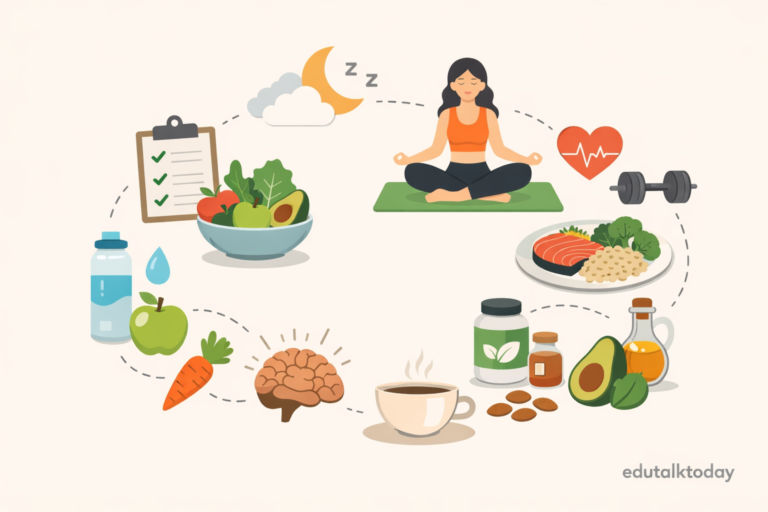
This might sound basic, but it’s foundational. When I don’t sleep well or forget to drink enough water, everything feels harder—focus, patience, even motivation. Good sleep and hydration don’t solve all problems, but they give your brain the stability it needs to handle them better. - Connecting with a friend or loved one regularly
Humans aren’t built to do life alone, even if we sometimes act like we are. A quick call, a text, or even sharing a meme can make a difference. I’ve had days where a simple conversation shifted my entire mood. Connection reminds you that you’re not stuck in your own head all the time. - Setting small, achievable daily goals
Some days, productivity feels impossible. That’s when small goals matter most. Instead of a long to-do list, pick one or two things you can realistically finish. The sense of completion—even from something small—creates momentum. It builds confidence and keeps you moving forward without burnout.
What I like about these habits is that they’re flexible. You don’t have to do all of them every day. Even picking two or three consistently can make a noticeable difference over time.
Cognitive Exercises to Strengthen Your Mind
If the last section was about maintaining your mental health, this one is about actively strengthening it. Think of these as workouts for your brain—ways to challenge how you think, process, and respond to situations.
Challenging Negative Thoughts
Let’s talk about that inner voice for a second. You know, the one that says things like, “You’re not good enough,” or “You always mess things up.” For a long time, I didn’t question that voice—I just assumed it was telling the truth.
But here’s the thing: thoughts aren’t facts.
Cognitive reframing is about catching those negative thoughts and questioning them. Not ignoring them, not forcing positivity—just asking, “Is this actually true?”
For example, if you think, “I completely failed that presentation,” pause and look at the evidence. Maybe you stumbled on one slide, but the rest went fine. A more balanced thought might be, “It wasn’t perfect, but I handled most of it well.”
That shift might seem small, but it changes how you feel. I’ve noticed that when I practice this regularly, I become less harsh on myself and more realistic about situations. And honestly, that alone reduces a lot of unnecessary stress.
Brain Training Activities
Now, let’s get into something a bit more fun.
- Puzzles (crosswords, Sudoku)
These aren’t just time-fillers—they actually engage your brain in problem-solving. I like doing a quick puzzle in the morning instead of scrolling my phone. It wakes up my brain in a more intentional way. - Memory games
Simple things like trying to recall a grocery list without looking at it or playing memory-based apps can help sharpen your focus. It’s subtle, but over time, you’ll notice improved concentration and mental clarity. - Learning a new skill or language
This is probably one of the most powerful cognitive exercises out there. When you learn something new, your brain forms new connections. I once tried learning basic phrases in a new language, and even that small effort felt mentally refreshing. It pushes your brain out of autopilot and into growth mode.
The key here isn’t to become a genius overnight. It’s about keeping your brain engaged and adaptable.
Creative Expression
This is where things get a little more personal.
For the longest time, I underestimated creativity. I thought it was only for artists or people with “talent.” But creativity, in this context, is just a way of expressing what’s going on inside you.
That could be writing, drawing, playing music, or even cooking something new. I’ve had days where I didn’t feel like talking about what I was going through, but writing a few paragraphs helped me process it anyway.
There’s something powerful about turning emotions into something tangible. It gives your feelings somewhere to go instead of letting them build up inside you.
You don’t have to be good at it. Seriously. The goal isn’t to create something impressive—it’s to create something honest. And that alone can be incredibly freeing.
Before You Leave
If you take one thing from all of this, let it be this: you don’t need to overhaul your life to improve your mental health. Small, consistent actions add up in ways you don’t notice right away—but over time, they quietly change how you feel, think, and respond.
Try one or two exercises. See how they feel. Adjust as you go.
Because at the end of the day, taking care of your mind isn’t a one-time effort—it’s a daily relationship you build with yourself.