80/20 Rule in Weight Loss and How to Actually Make It Work
If you’ve ever tried to lose weight, you probably know the cycle: you go all-in, cut out your favorite foods, stay “perfect” for a couple of weeks… and then something snaps. A stressful day, a weekend outing, or just plain boredom—and suddenly you’re off track again. I’ve been there more times than I’d like to admit.
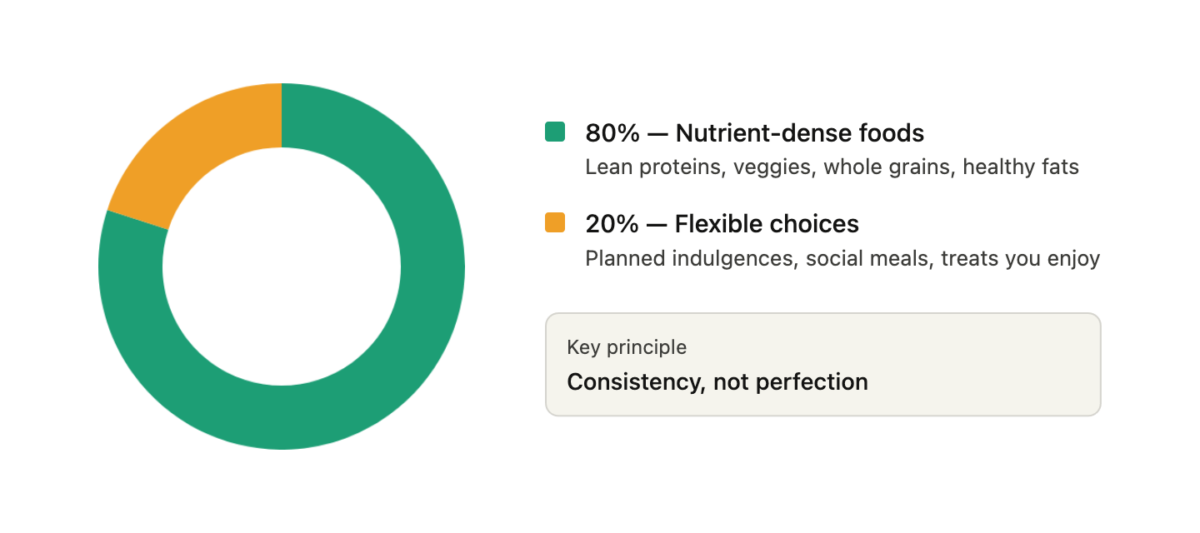
That’s exactly why the 80/20 rule caught my attention. Instead of chasing perfection, it’s about being consistent most of the time while still enjoying life. The idea is simple: about 80% of what you eat should be whole, nutrient-dense foods, and the remaining 20% can be more flexible.
What makes this approach powerful isn’t just the balance—it’s the sustainability. You’re not “on” or “off” a diet anymore. You’re just eating like a normal human who also happens to care about their health.
What the 80/20 Rule Really Means in Weight Loss
It’s Not a Free Pass to Eat Whatever You Want
Let’s clear up the biggest misconception right away: the 80/20 rule is not an excuse to eat junk food guilt-free all day.
A lot of people hear “20% flexibility” and think it means desserts after every meal, late-night snacks, and whatever else fits the mood. But that’s not how this works. The 20% is still part of your overall intake—it’s just a small, intentional portion.
For example, instead of randomly snacking on cookies throughout the day, you might plan a slice of pizza for dinner or enjoy a couple of squares of chocolate after lunch. The key difference is awareness. You’re choosing it, not drifting into it.
It Still Comes Down to Calories (But in a Smarter Way)
Here’s the honest truth: weight loss still depends on a calorie deficit. The 80/20 rule doesn’t magically bypass that. What it does is make that deficit easier to maintain.
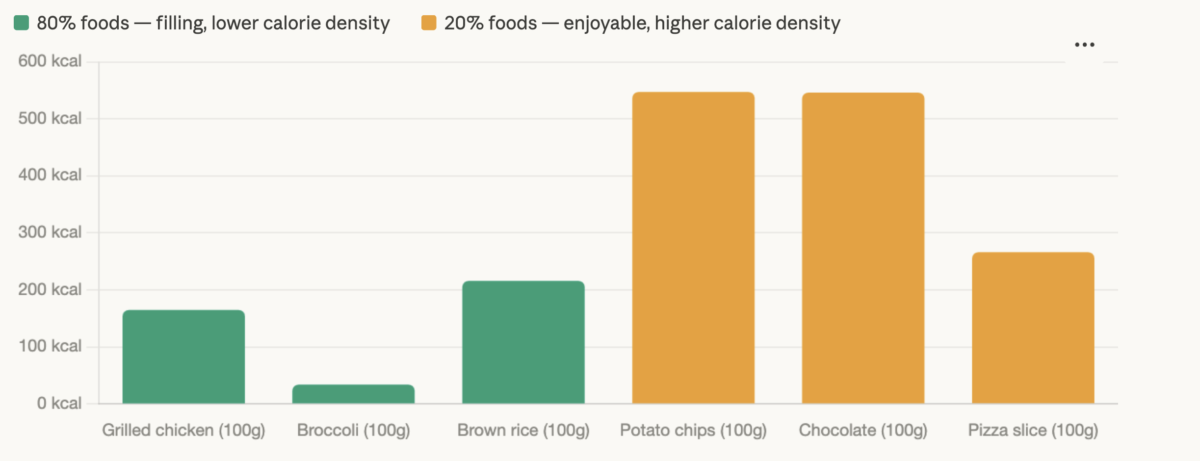
Think about it like this. If 80% of your diet is made up of lean proteins, vegetables, whole grains, and healthy fats, you’re naturally eating foods that are more filling and less calorie-dense. That means you can eat a decent volume of food without going overboard.
Now compare that to a strict “clean eating” approach where you try to be perfect all the time. It might work short-term, but it often leads to cravings. And when those cravings hit, they hit hard.
I remember a phase where I cut out all “bad” foods—no sugar, no processed snacks, nothing. It felt great for about ten days. Then one night, I ended up eating half a pint of ice cream and a bag of chips. Not because I was hungry, but because I felt restricted.
That’s where the 80/20 rule shines. By allowing some flexibility upfront, you reduce the urge to rebel later.
Why Rigid Dieting Usually Backfires
Strict diets tend to rely on willpower. And the problem with willpower is that it’s limited. You can’t expect yourself to say no to everything, all the time, especially when life gets busy or stressful.
The 80/20 approach flips that idea. Instead of relying on constant discipline, it builds in room for real life.
Let’s say you’re invited to a birthday party. On a rigid diet, you’re stuck choosing between two extremes: either you skip the cake and feel left out, or you eat it and feel like you’ve “ruined everything.”
With the 80/20 mindset, it’s different. You can have a slice of cake, enjoy it, and move on without guilt—because it fits into your 20%. No drama, no spiral.
And that mental shift matters more than most people realize. Consistency beats perfection every single time.
The Psychological Side Most People Overlook
This is the part that really changed things for me.
When you stop labeling foods as “good” or “bad,” you also stop attaching guilt to eating. And when there’s less guilt, there’s less emotional eating.
Instead of thinking, “I messed up, so I might as well keep going,” you start thinking, “That was part of the plan.” That’s a huge difference.
For example, if you plan to have a burger on Friday night, it’s not a cheat—it’s just part of your normal routine. You enjoy it, and the next meal, you’re back to your usual balanced eating.
That kind of mindset makes weight loss feel less like a battle and more like a rhythm.
What an 80/20 Day or Week Actually Looks Like
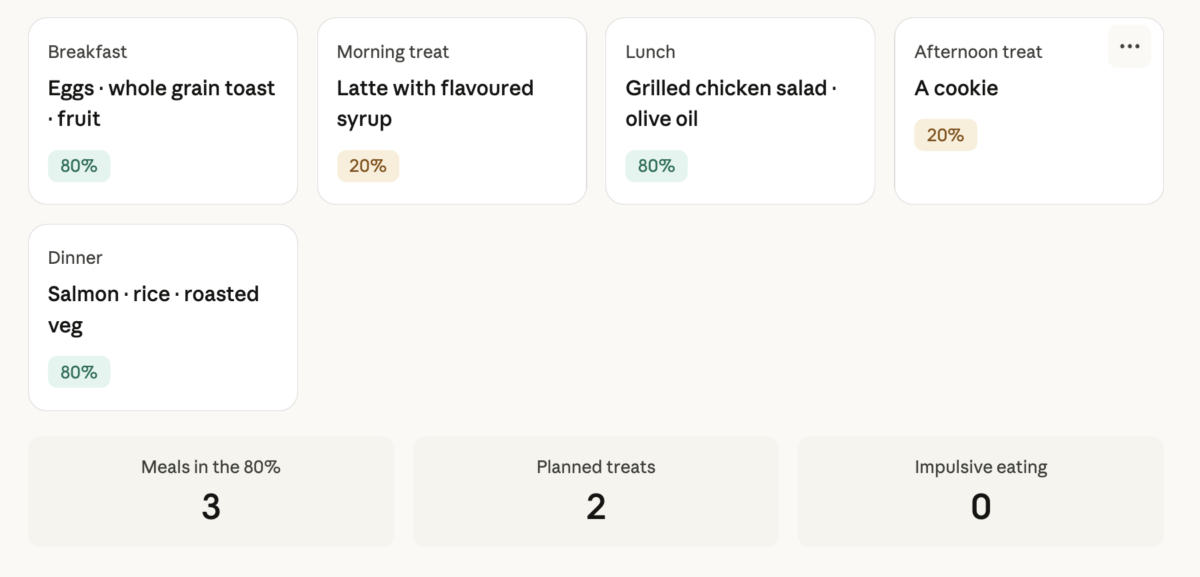
A lot of people struggle because they don’t know how to visualize this in real life. So here’s a simple example.
Let’s say you’re eating three meals a day.
Most of your meals might look like this:
- Breakfast: eggs, whole grain toast, fruit
- Lunch: grilled chicken salad with olive oil dressing
- Dinner: salmon, rice, and roasted vegetables
That’s your 80%.
Now, for the 20%, you might:
- Add a latte with flavored syrup in the morning
- Have a cookie after lunch
- Enjoy a couple of slices of pizza on the weekend
Or you can zoom out and think weekly. Maybe you eat super balanced meals Monday through Friday, and then on Saturday, you go out with friends and have a burger and fries. That still fits.
The key is that your foundation stays solid, and the flexibility is controlled—not chaotic.
Once you start thinking this way, weight loss stops feeling like something you have to “start over” every Monday. It just becomes how you live.
How to Apply the 80/20 Rule in Real Life
Structuring Your Diet Without Overthinking It
One of the biggest mistakes I see (and honestly, I’ve made it too) is trying to make the 80/20 rule overly complicated. You don’t need spreadsheets, perfect ratios, or a calculator for every bite. What you do need is a simple structure you can stick to.
I like to think of it this way: build your meals around the 80%, and then intentionally “plug in” the 20%.
So instead of starting your day wondering what you’re allowed to eat, you flip it:
- “What’s my protein source?”
- “Where are my veggies or fiber coming from?”
- “What’s keeping me full for the next few hours?”
For example, a lunch could be a turkey sandwich on whole grain bread with some veggies. That’s your 80%. Then maybe you add a small bag of chips on the side—that’s your 20%.
See how it doesn’t feel restrictive? You’re not cutting anything out. You’re just prioritizing what matters first.
Thinking Weekly Instead of Daily
This shift alone can change everything.
A lot of people try to hit 80/20 perfectly every single day, and when they don’t, they feel like they’ve failed. But real life doesn’t work in neat daily boxes.
Some days you’ll eat closer to 90/10. Other days, maybe it’s 70/30. That’s normal.
What matters is your overall pattern.
For instance, let’s say:
- Monday to Thursday: mostly home-cooked, balanced meals
- Friday night: dinner out with friends
- Saturday: brunch + a dessert
- Sunday: back to simple meals
That can still average out beautifully.
When you zoom out, you realize that consistency over time matters way more than daily perfection. And honestly, this mindset takes a lot of pressure off.
Planning Indulgences Instead of “Falling Into” Them
Here’s something that made a huge difference for me: I stopped waiting until I craved something and started planning for it instead.
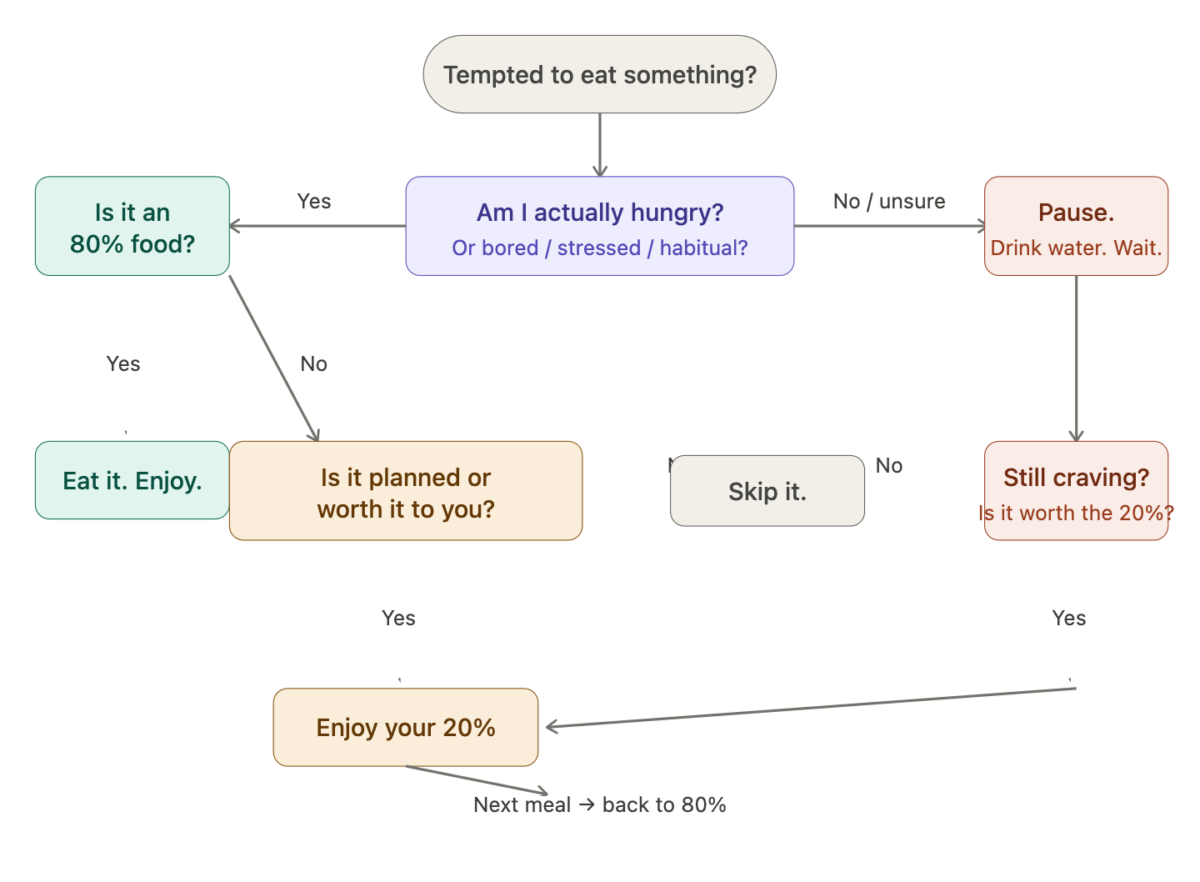
Because let’s be real—if you don’t plan your indulgences, they’ll plan themselves.
You’ve probably experienced this:
You’re trying to eat “clean,” then suddenly at 9 PM, you’re standing in the kitchen eating whatever you can find.
That’s not a lack of discipline—it’s a lack of planning.
Now, I’ll literally think ahead:
- “I’m going to have tacos on Saturday.”
- “I’ll grab ice cream after dinner tonight.”
And once it’s planned, it feels controlled. You enjoy it more, and you don’t overdo it as much.
Planned indulgence almost always beats impulsive eating.
Portion Awareness Without Obsession
Let’s talk about the part nobody loves: portions.
You don’t need to weigh every gram forever, but you do need some awareness—especially for the 20% foods, which are usually more calorie-dense.
For example, a handful of chips can easily turn into half a bag if you’re not paying attention. Same with peanut butter, desserts, or takeout portions.
A simple trick I use:
- Put snacks in a bowl instead of eating from the package
- Order a regular size instead of upsizing automatically
- Pause halfway through and check if I’m actually still hungry
These are small habits, but they add up.
The goal isn’t perfection—it’s preventing the 20% from quietly turning into 50%.
Choosing Indulgences That Actually Feel Worth It
This might sound obvious, but it’s surprisingly important: if you’re going to use your 20%, make it count.
Don’t waste it on food you don’t even enjoy that much.
I used to grab random snacks just because they were there—office donuts, leftover candy, whatever. And honestly? Most of the time, they weren’t even that satisfying.
Now I ask myself:
“Do I actually want this, or is it just available?”
If the answer is “meh,” I skip it and save my 20% for something I really enjoy—like a good burger, a quality dessert, or my favorite takeout.
That way, I feel satisfied instead of feeling like I “used up” my flexibility on something forgettable.
Making It Work in Social Situations
This is where the 80/20 rule really shines.
Social events are usually where strict diets fall apart. But with this approach, you don’t have to choose between your goals and your life.
Let’s say you’re going out to dinner:
- You might keep breakfast and lunch simple and balanced
- Then enjoy your meal without overthinking every bite
Or at a party:
- Focus on protein and lighter options first
- Then have a dessert or drink you actually want
It’s not about being perfect—it’s about being intentional.
And honestly, this makes you feel way more relaxed around food. You’re not the person stressing over the menu or skipping events. You’re just someone who knows how to balance things.
Common Mistakes and How to Fix Them
When 20% Quietly Becomes 50%
This is probably the most common issue.
You start with good intentions—maybe a treat here and there—but over time, those “little extras” start stacking up. A snack here, a drink there, something after dinner… and suddenly, your 20% isn’t so small anymore.
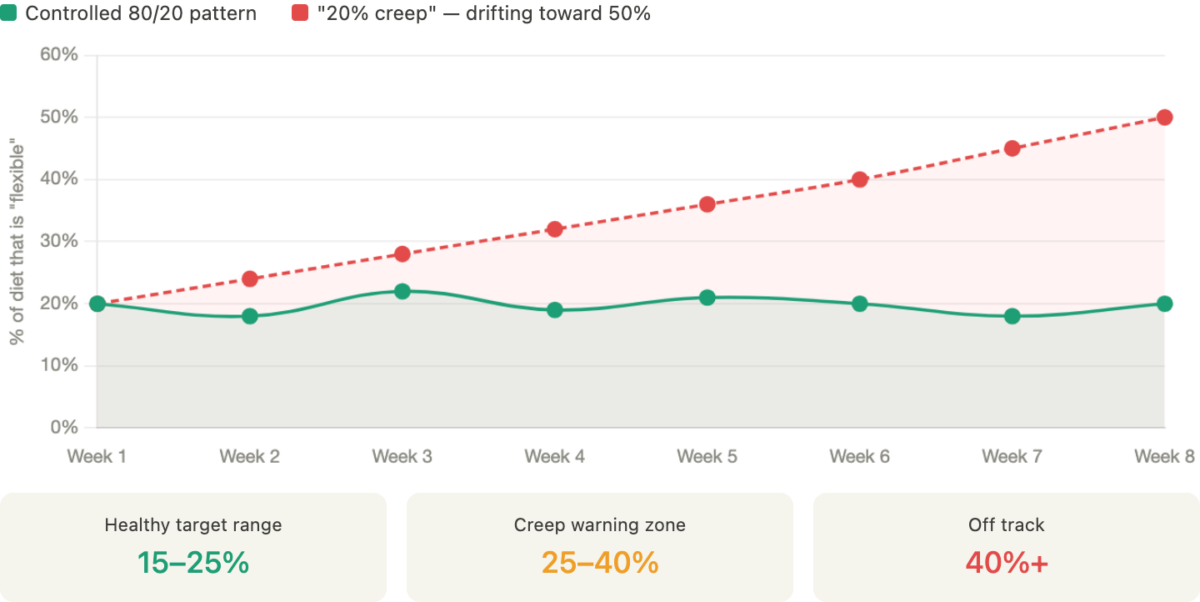
The tricky part is that it doesn’t feel like a big shift. It happens gradually.
I’ve caught myself doing this, especially during busy weeks. You’re tired, you’re distracted, and you stop paying attention.
The fix isn’t to cut everything out again. That just restarts the cycle.
Instead, bring back awareness:
- Notice how often you’re reaching for extras
- Ask yourself if it’s hunger, habit, or boredom
- Gently pull things back—not all at once, but step by step
Awareness alone can correct a lot more than strict rules ever will.
Using the Rule as an Excuse
Let’s be honest for a second—this one stings a little.
Sometimes we say we’re following the 80/20 rule, but we’re really just justifying overeating.
“I’ve been good all day, so I deserve this.”
“It’s part of my 20%, so it doesn’t matter.”
But it does matter—because your body still responds to what you eat overall.
The 80/20 rule works when it’s used intentionally, not as a loophole.
A better way to think about it is:
“Does this fit into my bigger pattern?”
If the answer is yes, enjoy it. If not, maybe pause and reconsider.
No guilt—just honesty.
Ignoring the Basics That Actually Drive Results
Here’s something people don’t talk about enough: the 80/20 rule isn’t a replacement for the fundamentals.
You still need:
- Enough protein
- A reasonable calorie intake
- Some level of activity
If those aren’t in place, no amount of “balance” will move things forward.
For example, if most of your 80% is still low in protein or overly processed, you might feel hungry all the time. And that makes sticking to any plan harder.
So before tweaking the 20%, make sure your 80% is actually solid.
That’s your foundation.
Being Inconsistent With the 80%
This one sounds obvious, but it’s easy to miss.
If your “80%” isn’t consistent, the whole system falls apart.
Maybe one day you’re eating balanced meals, and the next day it’s mostly takeout. Or you skip meals and then overeat later.
The result? You feel out of control again.
The solution is simple (not always easy, but simple):
build repeatable habits.
Have a few go-to meals you can rely on:
- A quick breakfast you don’t have to think about
- A couple of easy lunches you enjoy
- Simple dinners you can rotate
When your base is consistent, everything else becomes easier.
Treating Every Day Like a “Special Occasion”
This one is sneaky.
Birthdays, dinners, celebrations—they’re all part of life. And the 80/20 rule absolutely allows for them.
But when every day starts feeling like an exception, it adds up.
“I’ll start fresh tomorrow.”
“It’s just one more treat.”
And suddenly, there’s no structure left.
What helps here is redefining what “normal” looks like.
Your normal should be your 80% habits—simple, balanced, repeatable. The 20% should feel like a conscious addition, not the default.
Once you get that balance right, things start to feel… easier. Less forced. Less chaotic.
Before You Leave
If there’s one thing I’ve learned, it’s this: you don’t need to be perfect to see results—you just need to be consistent enough.
The 80/20 rule works because it meets you where you are. It gives you structure without taking away your freedom. And when you find that balance, weight loss stops feeling like something you have to fight for.
It just becomes something you can actually maintain.