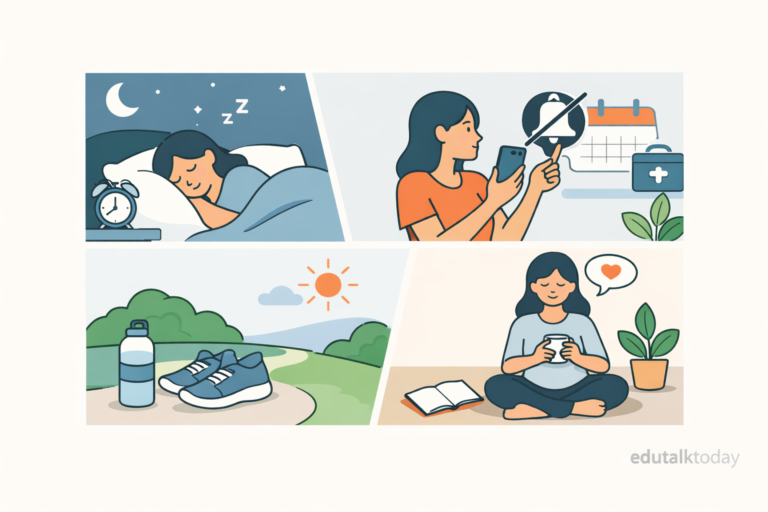
Autumn Self Care: A Detailed Guide
There’s something about autumn that always makes me want to reset my life a little. Not in a dramatic, throw-everything-out-and-become-a-new-person way. More like, “Maybe I should drink more water, go to bed earlier, and stop pretending iced coffee still makes sense when it’s 48 degrees outside.”
I think that’s part of what makes fall such a good season for self-care. The world starts slowing down, the light changes, and suddenly we notice things we were too busy to feel in summer. We feel the colder air on our skin. We realize we’re more tired when it gets dark earlier. We start craving comfort, routine, and a little more quiet.
That shift matters. Autumn self-care isn’t just about making life look cozy. It’s about helping your body and mind adjust to a real seasonal transition. And when you do that on purpose, you usually feel more grounded, more rested, and honestly a lot more like yourself.
Creating Cozy Daily Rituals
Why small rituals matter more than big self-care plans
I’ve learned this the hard way: the best self-care habits are usually the least dramatic ones.
It’s easy to imagine fall self-care as a perfect routine with candles, herbal tea, fresh soup on the stove, and an adorable journal you actually write in every night. That sounds lovely. But real life usually looks more like answering emails in a sweatshirt and trying not to eat crackers for dinner.
That’s why daily rituals work so well. They don’t ask you to reinvent your life. They just ask you to make a few moments feel more supportive.
A ritual is really just an ordinary action done with a little intention. Making tea can be a ritual. Taking a ten-minute walk after lunch can be a ritual. Turning off your phone at 9 p.m. and reading a few pages of a novel can be a ritual. The activity itself isn’t magical. The consistency is what changes you.
And there’s real logic behind that. When the season changes, your energy often changes too. Shorter days can affect mood, motivation, and sleep. Colder weather can make the body feel tighter and the mind feel heavier. Rituals create predictability, and predictability helps your nervous system relax.
Think of it this way: when the outside world feels a little colder, darker, or busier, your inner world benefits from having a few reliable places to land.
Start with your mornings, even if you’re not a morning person
I am deeply suspicious of anyone who claims to wake up cheerful in October at 6:00 a.m. without effort. But even if mornings aren’t your thing, they still shape the tone of the day.
A rushed morning usually spills into everything else. You skip breakfast, forget your water bottle, feel annoyed by 9:15, and suddenly your whole day has that slightly scrambled feeling. A simple fall morning ritual can interrupt that.
That doesn’t mean waking up an hour earlier and doing a twelve-step wellness routine. It means choosing one or two things that help you feel human before the day starts asking things from you.
For example, a realistic autumn morning ritual might look like this:
- Open the curtains right away to get natural light
- Drink something warm before checking your phone
- Stretch for five minutes while the coffee brews
- Eat a breakfast with protein instead of just sugar
- Step outside for two minutes, even if it’s chilly
That first one matters more than people think. Morning light helps regulate your body clock, which becomes especially important when daylight hours get shorter. If you feel groggy or weirdly off in the fall, more morning light may actually help.
I have a friend who started sitting by her brightest window for ten minutes every morning while drinking coffee. That’s it. No elaborate wellness plan. She told me it made her feel noticeably less sluggish within a couple of weeks. It sounds small, but small often works because it’s repeatable.
Evening rituals can help your brain actually slow down
If autumn mornings feel a little harder, autumn evenings usually feel a little more inviting. This is where cozy self-care gets its reputation, and honestly, for good reason.
Fall evenings are perfect for creating cues that tell your body, “We’re done for the day. You can soften now.”
A lot of us struggle with this more than we realize. We work late, scroll too long, watch one more episode, answer one more text, and then wonder why sleep feels messy. The problem isn’t always that we’re doing too much. Sometimes it’s that we never clearly transition out of doing mode.
That’s where an evening ritual helps.
Mine usually starts with turning off bright overhead lights and switching to a lamp. It sounds ridiculously simple, but the room instantly feels calmer. Then I’ll make tea or shower, put my phone farther away than I want it to be, and do something low-stimulation for a little while.
You don’t need a perfect version of this. You just need something repeatable.
Here are a few evening rituals that genuinely support rest:
- A warm shower followed by skincare
- Ten minutes of tidying to make tomorrow feel easier
- Writing down three things on your mind before bed
- Reading instead of scrolling for the last 20 minutes of the night
- Drinking herbal tea as a signal that the day is ending
The point isn’t to be impressive. The point is to create a pattern your body recognizes.
That’s how rituals become useful. They reduce friction. They help your brain stop negotiating every little decision. And when your mind is tired, that matters.
Let your senses do some of the work
One thing I love about fall self-care is that it can be incredibly sensory. And that’s not just for aesthetics. Your senses are one of the fastest ways to shift how you feel.
When life feels overstimulating, sensory rituals can be surprisingly grounding. Warmth, scent, texture, and sound all send signals to the brain. A soft blanket, a cinnamon candle, a mug warming your hands, rain tapping the window, a soup that smells like garlic and rosemary—those things can make you feel safe and settled in a very immediate way.
That doesn’t mean you need to buy a bunch of seasonal stuff. You can use what you already have.
Maybe you switch to softer lighting at night. Maybe you wear the coziest socks you own when you work from home. Maybe you start making oatmeal with apples and walnuts because it’s comforting and filling. Maybe you keep a playlist for slow evenings.
These details matter because self-care works better when it’s easy to enjoy. If a habit feels pleasant, you’re more likely to keep doing it.
I’ve noticed that when I make my environment feel just a little warmer and calmer, I stop reaching for quick fixes quite as often. I’m less likely to doom-scroll, snack mindlessly, or stay up too late because I already feel somewhat cared for.
The best ritual is the one you’ll actually keep
This is the part I wish more people said out loud: not every self-care habit is for every person.
Some people love journaling. Some people hear “journal your feelings” and immediately want to leave the room. Some people genuinely relax by baking bread. Others would rather take a walk and buy bread from someone else. Both are fine.
The goal is not to copy someone else’s autumn routine. The goal is to notice what helps you feel steadier.
You might ask yourself:
- When do I feel most drained in the fall?
- What part of my day feels rushed or neglected?
- What simple habit would make that part feel better?
- What feels comforting to me, not just visually appealing online?
Those questions lead to better routines than trends do.
For one person, fall self-care might be meal prepping soup on Sundays. For another, it might be blocking off 20 minutes after work to walk around the neighborhood before going inside. For a parent with young kids, it might be as basic and important as drinking coffee while it’s still hot and taking five quiet minutes in the car before pickup.
That counts. It all counts.
Good self-care should support your real life, not compete with it. And in autumn, when the pace of the world starts nudging us inward, that kind of gentle support can make the whole season feel more nourishing instead of more exhausting.
Autumn Self-Care Essentials
Feed yourself like the season actually changed
One of the easiest ways to support yourself in fall is to stop eating like it’s still July.
I don’t mean you need to give up every cold salad or smoothie the second the weather drops. I just mean your body often wants different things when the air gets colder, the days get shorter, and your energy starts shifting. Seasonal self-care gets a lot easier when you work with those changes instead of ignoring them.
Warm foods can feel more satisfying in autumn because they literally warm the body and tend to be easier to settle into emotionally. There’s a reason soup, oatmeal, roasted vegetables, chili, and baked apples feel comforting this time of year. They’re grounding. They slow you down a little. They make eating feel less rushed.
And honestly, that matters. A lot of people think of self-care as skin masks and bubble baths, but food is one of the most practical ways we care for ourselves every day. If you’re running on coffee, snacks, and random bites of things from the fridge, fall can make that feel worse fast. Lower energy plus less daylight plus under-eating is not a fun combination.
I’ve noticed that when I start the day with something warm and filling, like oatmeal with peanut butter and cinnamon or eggs with toast and sautéed spinach, my mood is steadier. I’m less likely to crash at 11 a.m. and suddenly need sugar like it’s an emergency.
That doesn’t mean every meal needs to be perfect. It just helps to build in a few seasonal basics.
A few fall food staples that pull their weight
Here are some easy options that feel good and actually make daily life simpler:
- Roasted sweet potatoes for quick lunches or dinner sides
- Soup or chili you can reheat without thinking
- Apples with nut butter for an easy snack
- Oatmeal with fruit, nuts, and seeds
- Herbal tea for evenings when you want comfort without more caffeine
- Whole grain toast, eggs, and avocado for a fast breakfast
- Roasted squash, carrots, and Brussels sprouts for meal prep
What I like about these foods is that they do more than just taste seasonal. They help with fullness, warmth, and energy. A pot of soup in the fridge is basically future kindness. It makes it easier to eat something nourishing when you’re tired and temptation is whispering, “Just order fries again.”
And yes, fall treats can absolutely fit in here too. Pumpkin bread, apple crisp, cinnamon rolls, warm cookies on a chilly night—I’m not here to ruin any of that. Part of self-care is pleasure. The key is balance. Enjoying seasonal comfort food is lovely. Depending on sugar and caffeine to carry your whole nervous system through October is a different story.
Update your skincare before your skin starts complaining
If your skin always gets weird in the fall, you’re not imagining it.
The drop in humidity, cooler air, indoor heating, and wind can all make skin feel drier, tighter, or more irritated. Lips crack. Hands get rough. Your face suddenly feels like it’s asking for help.
This is one of those places where a small adjustment saves a lot of annoyance later. Preventive self-care is usually less glamorous, but it’s incredibly effective.
You probably don’t need a brand-new ten-step routine. You just need to notice what the environment is doing and respond accordingly.
A few simple fall skincare shifts can make a big difference:
- Use a gentler cleanser if your current one leaves skin tight
- Add a richer moisturizer, especially at night
- Keep lip balm where you’ll actually use it
- Put hand cream near the sink
- Keep wearing sunscreen, even when it’s cloudy
That last one gets ignored all the time. People hear “fall” and act like the sun retired. But UV exposure still matters, especially if you spend time outside or near windows.
One of the smartest self-care moves is making things easy to remember. I’m much better at using hand cream when it’s already sitting by the soap. I’m much better at lip balm when there’s one in my bag, one by the bed, and one I’ve somehow permanently assigned to a jacket pocket.
That’s not laziness. That’s design. If you want a habit to happen, lower the barrier.
Move your body gently instead of waiting for motivation
Autumn can be sneaky when it comes to movement.
Summer makes activity feel obvious. You’re outside more, days are longer, and movement often happens without much planning. In fall, that changes. It gets darker earlier. Mornings feel colder. The couch starts becoming more persuasive.
That’s why I think fall movement works best when it’s gentle, flexible, and realistic.
You do not need to suddenly become the kind of person who leaps into a 6 a.m. boot camp class because the leaves changed color. If that’s your thing, great. But for most people, the better question is: what kind of movement can I keep doing when the season makes me want to do less?
Sometimes that looks like:
- A 20-minute neighborhood walk after dinner
- Stretching while watching TV
- A yoga video before bed
- A weekend hike with a friend
- Dancing in the kitchen while dinner cooks
- Taking the long route when running errands
This matters for more than physical fitness. Movement helps with energy, mood, circulation, sleep, and stress. And because fall can bring a subtle heaviness for some people, even light exercise can make a noticeable difference.
I know someone who starts getting low every November, so she made herself one rule: walk outside for at least ten minutes every day unless it’s truly awful weather. She said the habit helps less because it’s intense and more because it keeps her connected to daylight, fresh air, and a sense of rhythm.
That’s a great example of smart seasonal self-care. It’s specific. It’s doable. And it solves a real problem.
Protect your sleep before the season throws it off
People don’t always connect fall with sleep changes, but I think the season absolutely affects rest.
Less daylight can shift your energy. Cooler weather can make bed feel more appealing, but darker evenings can also make you feel sleepy too early and then oddly alert later if your routine is inconsistent. Add stress, screen time, and holiday buildup, and sleep gets messy fast.
The good news is that fall is actually a great season to rebuild sleep habits because the environment supports rest. Colder nights, softer lighting, and quieter evenings can all help if you lean into them.
A few practical ways to support better sleep in autumn:
- Keep a regular bedtime, even on weekends
- Dim lights earlier in the evening
- Cut late caffeine if you’re feeling wired at night
- Use a blanket or bedding that feels warm but not stuffy
- Keep your bedroom calm, dark, and a little cool
- Avoid scrolling in bed when you’re already tired
This sounds obvious, but your bedtime environment matters more than people think. If your room feels cluttered, bright, or full of reminders about work, your brain doesn’t fully settle.
I’m not saying your bedroom needs to look like a spa. Mine definitely doesn’t. But even tiny changes help. A bedside lamp instead of bright overhead light. Cleaner sheets. A book within reach. Charging your phone across the room. Those details create fewer chances to sabotage rest.
And when sleep improves, everything else usually gets easier. Mood, patience, food choices, focus, resilience—all of it.
Make your home support you, not drain you
Fall is a good time to do a gentle reset of your space, not because you need a Pinterest-perfect house, but because your environment affects your stress level more than you realize.
When the season pulls us indoors more often, the spaces we spend time in start carrying extra emotional weight. If your kitchen counters are chaotic, your entryway is a pile of shoes and mail, and your bedroom feels like a laundry side quest, that low-level friction adds up.
You don’t need a full home makeover. Usually, a few practical changes do the trick.
Try focusing on the spots that affect daily life the most:
- Clear the surface where you make coffee or breakfast
- Put a basket by the door for scarves, hats, or mail
- Rotate out summer clothes so your closet feels easier to use
- Keep a blanket where you actually sit
- Tidy the nightstand so bedtime feels calmer
I love this kind of self-care because it’s not flashy, but it works. You’re creating fewer tiny annoyances and more tiny comforts.
And honestly, that’s what a lot of real self-care is: less friction, more support.
Reconnecting With Yourself and Nature
Fall invites reflection, whether you plan for it or not
There’s a reason autumn makes so many people feel reflective.
Maybe it’s the shorter days. Maybe it’s the fact that everything outside looks beautiful and slightly like it’s letting go at the same time. Maybe it’s because the season naturally asks us to come inward a little more.
Whatever the reason, fall has a way of making us notice ourselves.
I always feel it somewhere around the first genuinely cold afternoon, when the light starts looking different and I suddenly want to rethink my schedule, my habits, my priorities, and occasionally my entire personality. It’s not always logical, but it is useful. Autumn creates a natural pause point, and that pause can help you hear yourself again.
That matters because a lot of us spend the rest of the year moving fast enough to miss our own signals. We override tiredness. We brush past stress. We ignore the fact that something feels off because everything is busy and loud and immediate. Then fall shows up, things slow down just enough, and suddenly we can feel what was there all along.
That’s why reconnecting with yourself is such an important part of autumn self-care. Not in a heavy, dramatic way. More in a “let me actually check in with my life” way.
Ask better questions instead of judging yourself
One of my favorite things about seasonal self-care is that it can be deeply practical.
Reflection doesn’t have to mean writing pages of emotional insight while staring pensively out a rainy window. It can be much simpler than that. It can look like asking honest questions without turning the answers into a personal attack.
For example:
- What’s draining me lately?
- What have I been tolerating that I don’t need to keep tolerating?
- What’s been feeling good that I want more of?
- Where do I need more rest, more help, or more boundaries?
- What do I want this season to feel like?
Those questions are useful because they create awareness without immediately pushing you into performance mode.
A lot of us are very quick to respond to discomfort with self-criticism. We feel scattered, so we tell ourselves to “be more disciplined.” We feel tired, so we assume we’re lazy. We feel emotionally stretched, so we decide we just need to try harder.
But often, the issue is not character. It’s mismatch.
Maybe your schedule is too packed for the energy you actually have right now. Maybe your social calendar looked fun on paper but feels exhausting in practice. Maybe you’re still holding yourself to summer levels of output even though your body is clearly asking for a different rhythm.
That’s not failure. That’s information.
And this is where autumn self-care gets interesting. It teaches you to respond to information instead of shame.
Nature is doing something useful right in front of us
I know “learn from nature” can sound a little cheesy, but hear me out.
Autumn is full of reminders that change isn’t always loud or destructive. Sometimes it’s quiet. Sometimes it looks like pulling back. Sometimes it looks like conserving energy, shedding what’s unnecessary, and preparing for a season that needs different things from you.
Trees are not out here trying to keep their summer leaves out of guilt.
That sounds funny, but it’s a real lesson. We often resist seasonal change because we think consistency means doing the same thing all year long. But healthy systems don’t work that way. Nature adapts. Your body adapts. Your emotional needs adapt too.
So when fall makes you want more rest, more warmth, more stillness, or more time at home, that isn’t automatically a sign that you’re becoming boring or unmotivated. It may just mean you’re paying attention.
This is one reason I love getting outside in autumn, even when I don’t feel like it at first. A walk through a neighborhood with changing leaves, a local park, or even a quiet trail can do something surprising to your brain. It interrupts mental noise. It widens your focus. It gives your thoughts somewhere to go besides circles.
And you don’t need a big scenic moment for this to work.
A real example: I know someone who started taking a 15-minute walk during her lunch break every fall because she noticed she was getting stuck in an afternoon slump. She didn’t do anything fancy. No podcast, no workout gear, no productivity angle. She just walked around the block and paid attention to what the trees looked like that week. She said the habit became one of the few parts of her day that felt fully hers.
That’s the kind of self-care that lasts. It’s small, sensory, and emotionally honest.
Let go of what doesn’t fit this season
I think one of the most useful emotional themes of fall is release.
Not everything needs to come with you into the next season. Some habits don’t fit anymore. Some expectations are outdated. Some commitments looked manageable a month ago and now just feel heavy.
Part of reconnecting with yourself is noticing what you’re carrying out of habit instead of intention.
That might be:
- Saying yes to plans you don’t have the energy for
- Keeping clutter that makes your home feel noisy
- Following routines that worked in summer but feel draining now
- Holding yourself to unrealistic standards
- Staying available to everyone all the time
Letting go doesn’t have to be dramatic. Sometimes it’s as simple as deciding that this season will not be the season you overbook every weekend. Sometimes it’s deleting one app that scrambles your brain. Sometimes it’s accepting that you need more sleep than you did in August and acting accordingly.
I’ve had seasons where the best self-care decision I made was not adding something good, but removing something exhausting.
That’s worth remembering because self-care is often marketed as extra stuff to buy, do, or optimize. But some of the best care comes from subtraction.
Build an emotional routine, not just a practical one
A lot of people are pretty good at practical self-care and less practiced at emotional self-care.
We’ll buy moisturizer, prep soup, and light the candle. Great. Love that. But we’ll also keep swallowing stress whole and acting like that doesn’t count.
Autumn is a really good time to change that. The season naturally supports quieter habits, which makes emotional check-ins easier to build.
That could look like:
- Journaling for five minutes at the end of the day
- Voice-noting your thoughts on a walk
- Calling a friend when you feel off instead of isolating
- Keeping a running list of what’s helping and what’s draining you
- Taking a few slow breaths before switching from work mode to home mode
You don’t need to become a profoundly reflective woodland philosopher. You just need a way to notice yourself.
I personally like simple prompts because they don’t create pressure. Questions like “What do I need more of right now?” or “What felt good today?” are enough to reveal patterns over time.
And once you see the patterns, you can actually respond to them.
Maybe you notice every Wednesday feels terrible because you stack too much into one day. Maybe you realize you feel calmer every time you cook dinner with music on. Maybe you see that certain group chats, errands, or habits are way more draining than you admitted.
That’s useful knowledge. That’s how self-care gets smarter.
Gratitude works better when it’s specific
Fall tends to bring out gratitude talk, and I get why. But generic gratitude can start sounding a little hollow if you’re not careful.
What works better, in my experience, is specific gratitude.
Not “I’m grateful for my life.” Fine, nice, true maybe. But also vague.
Try things like:
- The warmth of the shower after being outside in the cold
- The person who texted you at exactly the right moment
- The way your kitchen smelled when dinner was in the oven
- The patch of golden trees you pass on the way home
- The fact that you remembered to rest before you got completely wiped out
Specific gratitude helps because it trains attention. It teaches your brain to notice what’s actually supporting you. And when life feels fast or heavy, that kind of noticing can bring you back into the present.
I think that’s one of autumn’s quiet gifts. It makes small comforts feel visible again.
Give yourself permission to want a gentler season
I really think more people need to hear this: you are allowed to want your fall to feel calmer.
You do not have to fill every weekend. You do not have to turn every cozy impulse into a productivity challenge. You do not have to prove anything by staying busy just because the calendar starts getting crowded.
There’s so much pressure, especially later in the season, to keep doing more. More events, more shopping, more plans, more obligations, more noise. But if autumn is teaching you that you need steadiness, privacy, warmth, rest, or simplicity, that’s worth honoring.
A gentle season is still a meaningful season.
And often, it’s the season where you hear yourself most clearly.
Before You Leave
If autumn has a lesson, I think it’s this: taking care of yourself doesn’t have to be dramatic to be real.
It can look like soup in the fridge, a walk in cool air, a bedtime that makes tomorrow easier, a softer light in the evening, or finally admitting you need a little more rest than usual.
That’s not laziness. That’s wisdom.
The season is already changing around you. The most caring thing you can do is let some of your habits change too. When you do, fall starts feeling like more than a pretty backdrop. It becomes a chance to come back to yourself in small, steady, deeply human ways.