How to Encourage Healthy Eating Habits
When I first tried to “eat healthier,” I went all in. I stocked my kitchen with kale, quinoa, and things I couldn’t even pronounce. And guess what? Most of it sat there untouched. That’s when I realized something important: healthy eating isn’t about sudden, dramatic change—it’s about building habits that actually fit your life.
For most of us, food is emotional, social, and deeply personal. It’s not just fuel—it’s comfort, celebration, and sometimes even stress relief. So if we want to eat better, we have to work with those realities, not against them. The good news? You don’t need a perfect diet or extreme discipline. What you need is a smarter approach that makes healthier choices feel easier, not forced.
Build a Positive Food Environment
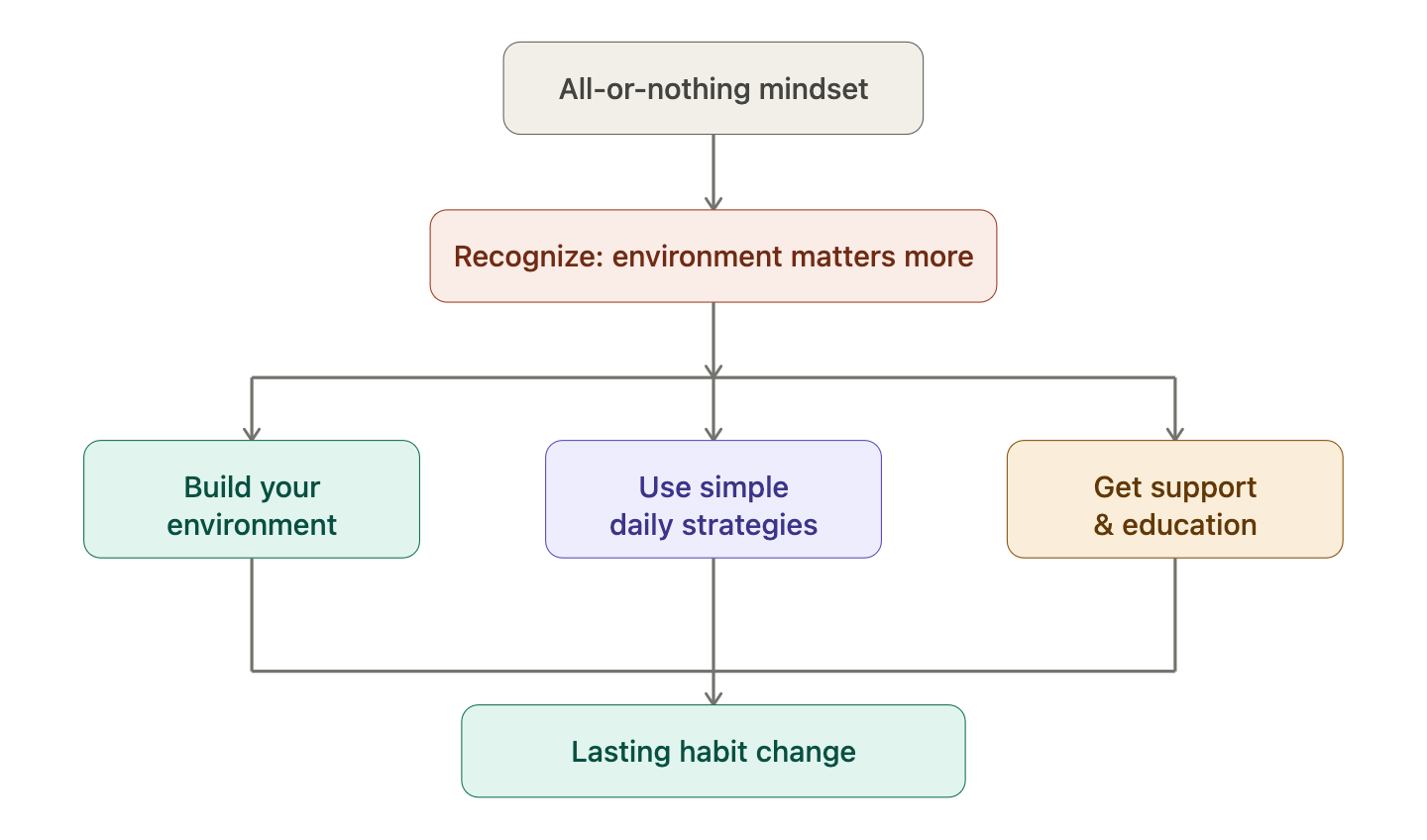
Make the healthy choice the easy choice
Here’s something I’ve learned the hard way: we don’t rise to our goals—we fall to our environment. If your kitchen is full of chips, cookies, and soda, guess what you’re going to reach for when you’re tired after a long day? Not the carrots hiding in the back of the fridge.
I started small. Instead of overhauling everything overnight, I just made healthy options more visible. I put a bowl of apples on the counter, pre-cut veggies at eye level in the fridge, and suddenly… I was actually eating them. It sounds simple, but visibility changes behavior more than we think.
One friend of mine swapped out her snack drawer entirely. She replaced candy bars with nuts, protein bars, and dried fruit. She told me, “I didn’t stop snacking—I just started snacking better.” That’s the kind of shift that sticks.
Reduce friction for good habits
Let’s be real—most unhealthy eating happens because it’s convenient. Fast food is quick. Frozen pizza is easy. Cooking? That can feel like a whole project.
So instead of relying on willpower, I started asking myself: How can I make healthy eating just as convenient?
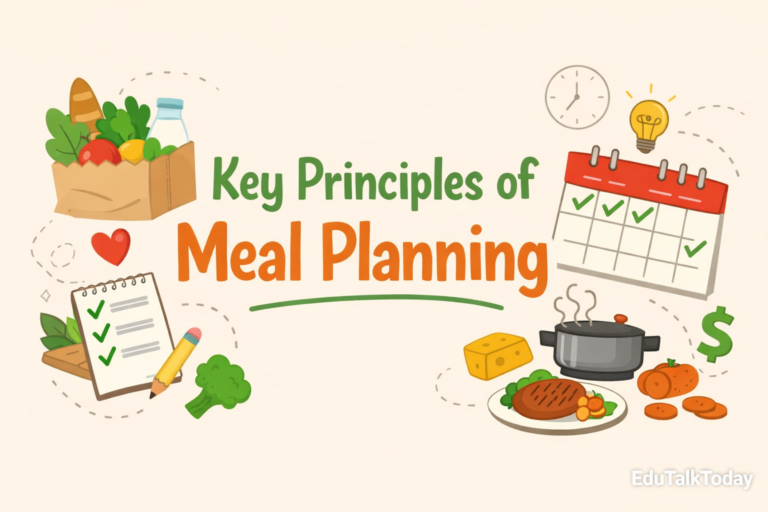
Meal prep was a game changer for me. Not in a hardcore, spend-your-Sunday-cooking-all-day way—but in a relaxed, realistic way. I’d grill some chicken, roast a tray of veggies, and cook a batch of rice. That alone gave me 3–4 easy meals during the week.
For example, on busy workdays, I’d just throw everything into a bowl, add some dressing, and I was done in five minutes. Compare that to ordering takeout, and suddenly healthy eating felt way more doable.
Rethink what’s “normal” in your space
This one took me a while to understand. The foods you keep around become your “normal.” If soda is always in your fridge, it feels like a standard drink. If it’s not there, you stop thinking about it as much.
I remember visiting a friend who only kept sparkling water and herbal tea at home. At first, I thought it was odd. But after a few visits, it started to feel… normal. I didn’t miss soda because it simply wasn’t part of that environment.
So I tried it myself. I didn’t ban anything completely, but I stopped stocking certain things regularly. And honestly?
Out of sight really does mean out of mind more often than we admit.
Make meals something you actually look forward to
Healthy eating has a bad reputation for being boring, and I think that’s one of the biggest barriers. If your meals feel like punishment, you’re not going to stick with them.
I used to think eating healthy meant plain grilled chicken and steamed broccoli every day. No wonder I kept falling off track. But once I started experimenting—adding spices, trying new recipes, mixing textures—everything changed.
For example, I started making tacos with whole-grain tortillas, grilled chicken, avocado, and fresh salsa. It felt indulgent, but it was actually pretty balanced. That’s when it clicked: healthy food can—and should—taste really good.
Use your social environment to your advantage
Food isn’t just about what’s in your kitchen—it’s also about the people around you. I’ve noticed that when I’m with friends who prioritize healthier choices, I naturally do the same.
You don’t have to overhaul your social life, but small shifts can help. Suggest a brunch spot with healthier options. Invite friends over and cook together. Even something as simple as sharing recipes can create a sense of support.
I had a coworker who started bringing homemade lunches, and it inspired a few of us to do the same. Before long, we were swapping meals and ideas. It didn’t feel like a “health kick”—it just became part of our routine.
At the end of the day, your environment quietly shapes your decisions more than motivation ever will. If you set things up in a way that nudges you toward better choices, you won’t have to rely on constant self-control—and that’s where real, lasting change begins.
Simple Strategies to Make Healthy Eating Stick
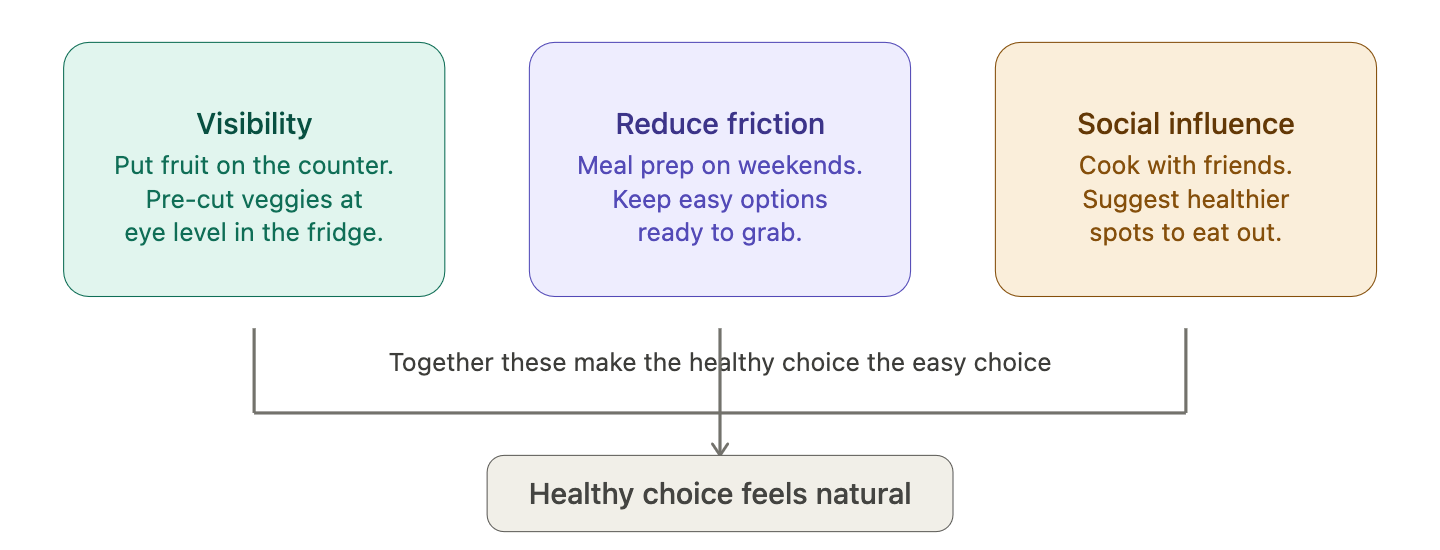
I used to think healthy eating required some kind of all-or-nothing mindset. Like, either you’re “on track” or you’ve completely failed. But honestly, that thinking is what kept me stuck for years. What actually works? Simple, flexible strategies you can repeat without burning out.
Start small—seriously, smaller than you think
I know this sounds almost too basic, but it’s probably the most important shift I’ve made. Instead of trying to change everything at once, I picked one thing. Just one.
For me, it was breakfast. I stopped skipping it and started having something quick like Greek yogurt with fruit. That one habit gave me more energy in the morning, and surprisingly, it also made me less likely to overeat later.
A friend of mine started with something even simpler—just adding one vegetable to dinner each night. That’s it. No restrictions, no complicated rules. A few months later, she was naturally eating more balanced meals without even forcing it.
Add before you subtract
Here’s a mindset shift I love: instead of focusing on what to cut out, focus on what you can add in.
When I tried to “quit sugar,” I lasted about three days. But when I focused on adding more protein and fiber to my meals, something interesting happened—I felt fuller, and those sugar cravings started to fade on their own.
For example, swapping a plain bagel for whole-grain toast with eggs and avocado kept me satisfied for hours. It wasn’t about restriction—it was about nourishment.
Hydration changes more than you expect
I used to underestimate how much water mattered. I’d feel tired, snacky, and unfocused, and I’d assume I needed food. But a lot of the time, I was just dehydrated.
Now I keep a water bottle nearby, especially during work hours. It sounds boring, but staying hydrated can actually reduce unnecessary snacking and improve your energy levels.
One easy trick? Pair water with existing habits. I started drinking a glass every time I checked my email in the morning. It became automatic.
Don’t skip meals—it backfires
Skipping meals might seem like a way to “save calories,” but in my experience, it almost always leads to overeating later.
I’ve had days where I skipped lunch because I was busy, and by dinner, I was so hungry I ate twice as much as I normally would. And not the balanced kind of meal either—it was whatever was fastest and most comforting.
Now I try to keep meals consistent, even if they’re simple. A quick sandwich, a smoothie, or even leftovers—it doesn’t have to be perfect. Consistency beats perfection every time.
Practice mindful eating (without overcomplicating it)
Mindful eating sounds fancy, but really, it’s just about paying attention. And honestly, I still struggle with this one.
I used to eat while scrolling my phone or watching TV, barely noticing what I was eating. Then I’d finish and think, “Wait, did I even enjoy that?”
Now I try—keyword try—to slow down a bit. Even just putting my phone aside for the first few bites helps. When you actually taste your food, you’re more likely to feel satisfied with less.
A small trick I use is checking in halfway through a meal: “Am I still hungry, or just eating because it’s there?” It’s a simple question, but it makes a difference.
Keep portions realistic, not restrictive
Portion control used to feel like a punishment to me. Tiny servings, constant hunger—it wasn’t sustainable.
What helped was focusing on balance instead of strict limits. I started building meals with a mix of protein, carbs, and healthy fats. When meals are balanced, you naturally feel more satisfied.
For example, instead of a huge bowl of pasta on its own, I’d add grilled chicken and some veggies. Same meal, just more balanced—and I didn’t feel the need to go back for seconds.
Build a routine that fits your life
This is where things get personal. What works for me might not work for you, and that’s okay.
I’ve learned that healthy eating needs to match your schedule, not fight against it. If your mornings are hectic, don’t plan elaborate breakfasts. If you work late, have easy dinner options ready.
One of my busiest friends relies on a “default meal”—something she can make in under 10 minutes without thinking. For her, it’s a wrap with hummus, veggies, and chicken. It’s not fancy, but it works—and that’s what matters.
Celebrate progress, not perfection
This might be the hardest one, especially if you’re used to being hard on yourself.
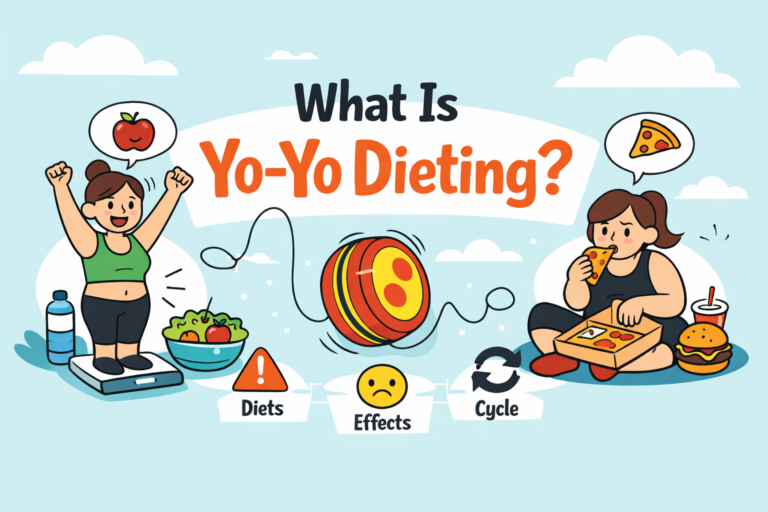
There were so many times I’d eat one “unhealthy” meal and think, “Well, I’ve already messed up today,” and then spiral into worse choices. But that all-or-nothing thinking is the real problem.
Now I try to zoom out. One meal doesn’t define your habits—your overall pattern does. Progress is built on consistency, not perfection.
Even small wins count. Choosing water over soda, cooking one extra meal at home, adding more veggies—these things add up more than you think.
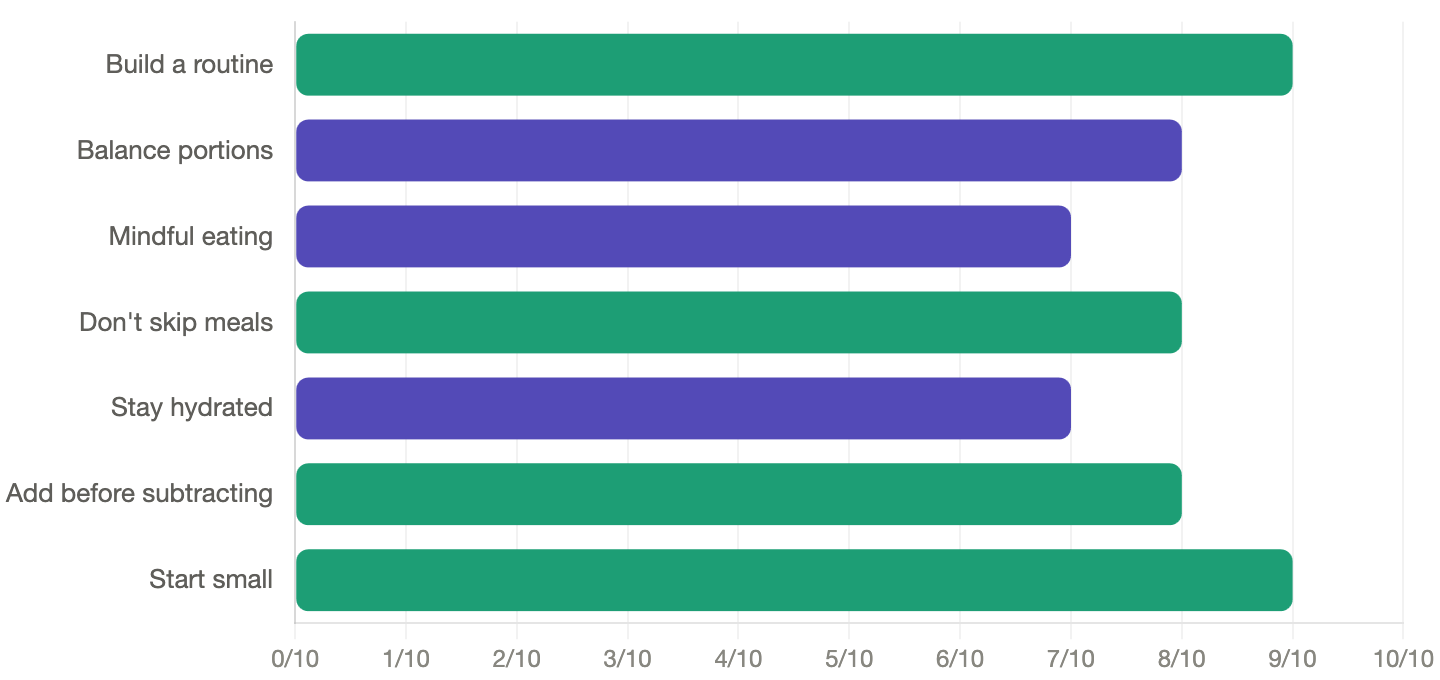
At some point, I realized that healthy eating isn’t about being strict—it’s about being smart and adaptable. The more these strategies feel like part of your normal life, the less effort they take. And that’s when things really start to stick.
Encourage Motivation Through Support and Education
If there’s one thing I wish I understood earlier, it’s this: you don’t have to do this alone. Healthy eating gets a lot easier—and honestly, more enjoyable—when you have the right kind of support and understanding behind it.
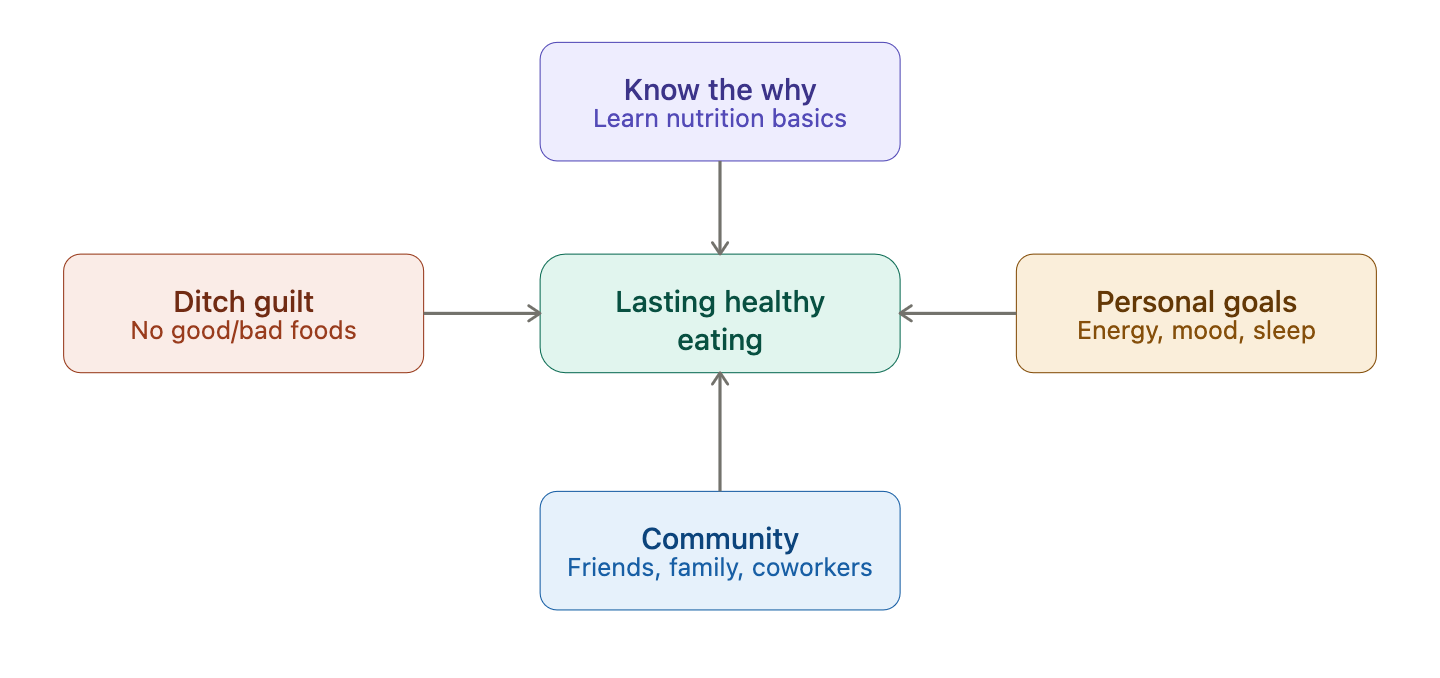
Learn the “why” behind your choices
For a long time, I followed random diet advice without really understanding it. Low-carb one week, low-fat the next—it was confusing and exhausting.
Everything changed when I started learning the basics of nutrition. Not in a complicated, textbook way, but just enough to understand what my body actually needs.
For example, once I understood how protein helps with satiety and muscle repair, I started including it more intentionally. Same with fiber—it’s not just “healthy,” it actually helps you stay full and supports digestion.
When you understand why something matters, you’re more likely to stick with it. It stops feeling like a rule and starts feeling like a choice.
Ditch guilt and all-or-nothing thinking
I used to feel guilty every time I ate something “unhealthy.” And that guilt? It didn’t help—it made things worse.
The truth is, no single food is the problem. It’s the pattern over time that matters. Once I stopped labeling foods as “good” or “bad,” I felt a lot more relaxed—and ironically, I made better choices.
For example, if I want dessert now, I have it. But I actually enjoy it, instead of rushing through it with guilt. And because I’m not restricting myself, I don’t feel the urge to overdo it.
A balanced mindset leads to balanced habits. It’s not about being perfect—it’s about being consistent and realistic.
Set goals that actually mean something to you
A lot of people start with goals like “lose weight” or “eat clean,” but those can feel vague or external.
What helped me was shifting to goals that felt more personal. I wanted more energy during the day. I wanted to feel less sluggish after meals. I wanted to sleep better.
Those goals made my choices feel more meaningful. Choosing a balanced meal wasn’t about discipline—it was about feeling better.
Try asking yourself: what do you actually want from healthier eating? More focus? Better mood? Long-term health? When your goals are personal, your motivation becomes stronger and more sustainable.
Involve the people around you
This one made a bigger difference than I expected. When I started sharing my goals with friends and family, things got easier.
Not because they held me accountable in a strict way, but because they supported me in small, everyday moments.
For example, my family started including more veggies in dinners. A friend of mine began inviting me to cook meals together instead of ordering takeout. These little shifts added up.
Even something as simple as texting a friend, “Hey, I’m trying to eat better this week,” can create a sense of connection.
Support doesn’t have to be formal—it just has to be present.
Make it a shared experience, not a solo mission
One of the most fun changes I made was turning healthy eating into something social instead of isolating.
I started hosting casual dinners where everyone brought a dish. We’d try new recipes, swap ideas, and honestly, just enjoy the process.
It reminded me that food isn’t just about nutrition—it’s about connection. And when healthy eating becomes part of that, it feels a lot less like a chore.
I’ve also seen this work in workplaces. A coworker of mine started a “lunch club,” where a few people brought homemade meals and ate together once a week. It created this positive ripple effect—more people started cooking, sharing, and learning.
Adapt your approach to your lifestyle
This is where a lot of people get stuck. They try to follow a plan that doesn’t fit their life, and then they blame themselves when it doesn’t work.
But here’s the thing: your strategy should adapt to you, not the other way around.
If you travel a lot, focus on simple, portable options. If you have a busy family life, look for meals that everyone can enjoy. If you love certain comfort foods, find ways to make them more balanced instead of cutting them out completely.
For example, I still eat burgers—but now I’ll pair them with a side salad or use a whole-grain bun. It’s not about eliminating foods you love. It’s about making them work for you.
Keep learning, stay curious
Healthy eating isn’t something you “master” once and forget. It evolves as your life changes.
I still learn new things all the time—new recipes, new ingredients, new ways to make meals easier. And that curiosity keeps things interesting.
Instead of seeing healthy eating as a fixed set of rules, think of it as something you get to explore. The more curious you are, the less it feels like a restriction and the more it feels like a lifestyle.
At the end of the day, motivation isn’t just about willpower—it’s about understanding, support, and flexibility. When those pieces come together, healthy eating stops feeling like something you “have to do” and starts feeling like something you actually want to do.
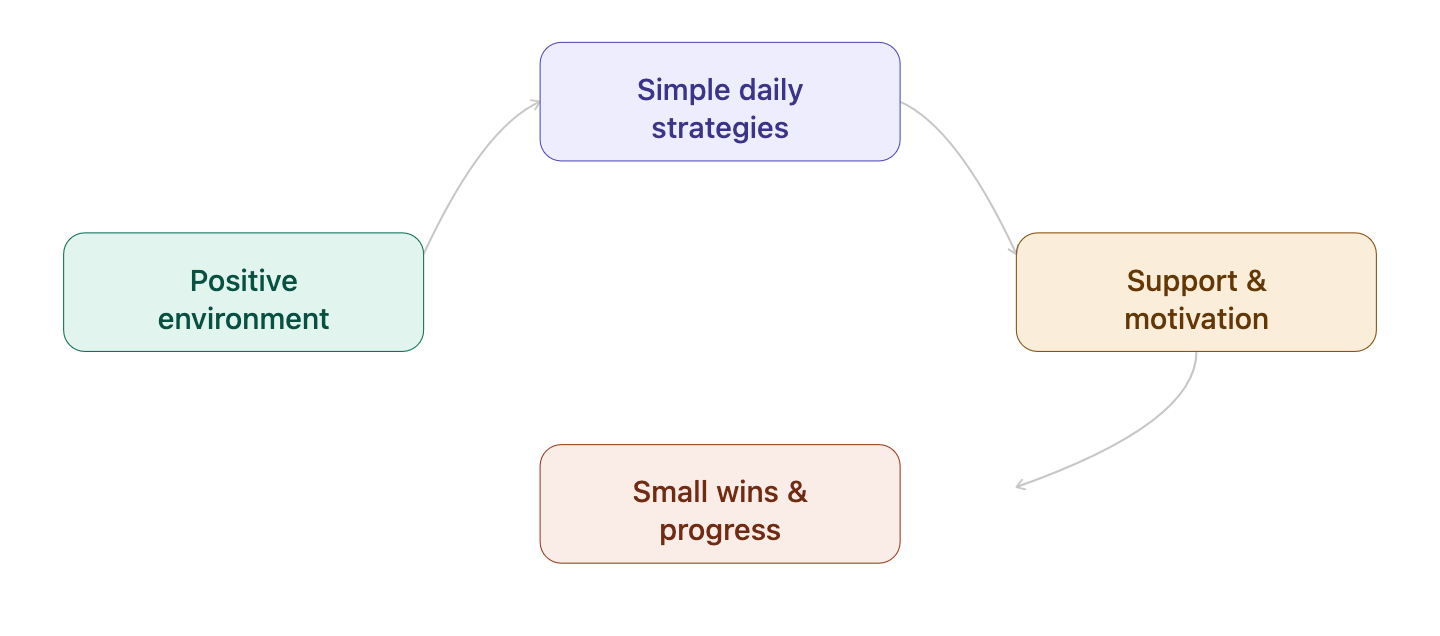
Remember this chart below –
Before You Leave
If there’s one thing I hope you take away from all of this, it’s that healthy eating doesn’t have to be complicated or overwhelming. It’s not about perfect meals or strict rules—it’s about small, thoughtful choices that add up over time.
Start where you are. Keep it simple. And most importantly, make it something you can actually enjoy.