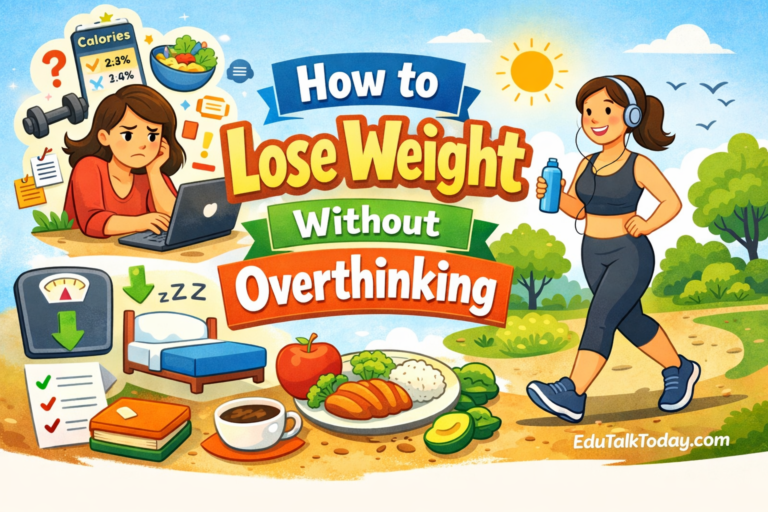
How to Lose Weight without Exercise and Only Dieting
I used to think weight loss was impossible without sweating through workouts. If I wasn’t doing cardio, I assumed nothing “counted.” But after years of trying every intense routine and then burning out, I learned something that changed everything: diet is the main driver of weight loss. Not in a trendy, “cut carbs forever” way—just in a practical, real-life way.
Here’s the truth most people don’t hear enough: your body loses weight when it gets less energy from food than it uses. That’s it. Exercise can help, sure, but it’s not required. In fact, if you’re busy, tired, injured, or just not into the gym, you can still make real progress by changing what and how you eat.
I’m not saying it’s easy. It takes consistency, patience, and some trial and error. But it’s absolutely doable—and honestly, for a lot of people, it’s more sustainable than forcing workouts they hate.
Why Diet Alone Can Work for Weight Loss
Your body runs on energy, and food is where that energy comes from
Think of your body like a phone battery. Every day, you use energy just by existing—breathing, thinking, digesting food, walking around the house, even sleeping. That energy is measured in calories. If you eat more calories than your body needs, the extra gets stored, mostly as fat. If you eat fewer calories than your body needs, your body has to “make up the difference” by using stored energy, including body fat.
That gap is called a calorie deficit, and it’s the core reason any weight-loss method works. It doesn’t matter if someone is doing keto, intermittent fasting, low-fat, or meal prepping chicken and rice. If they’re losing weight, they’re in a calorie deficit—whether they realize it or not.
I know “calorie deficit” can sound clinical, but it’s actually a super useful idea because it cuts through all the confusion. You don’t need to follow a perfect diet. You don’t need to “detox.” You don’t need a magic fat-burning food. You just need a consistent deficit that you can maintain without feeling miserable.
Why food changes are usually more powerful than workouts
Here’s something that surprised me when I first looked into it: it’s often much easier to cut calories from food than to burn them through exercise.
Let’s say you grab a muffin and a flavored latte in the morning. That combo can easily hit 500 calories. To burn 500 calories through exercise, you might need to jog for 45–60 minutes, depending on your body size and pace. And most of us aren’t doing that every day.
Another example: one “healthy” smoothie can be 600 calories if it has banana, peanut butter, honey, oats, and full-fat yogurt. It sounds nutritious—and it can be—but if your goal is weight loss, calories still matter. You can accidentally drink half your daily deficit before lunch and wonder why the scale won’t move.
That’s why I always tell people: start with your plate, not your treadmill. If you can reduce 300–500 calories a day by making smarter food choices, you’re already doing the heavy lifting.
The hidden calories that quietly sabotage progress
One of the biggest reasons people feel stuck is because they’re not eating “badly”—they’re just eating more than they think. I’ve been there. You switch to “clean” foods, stop eating fries, and still don’t lose weight. It feels unfair.
Usually, the issue is hidden calories:
- A tablespoon of olive oil while cooking: 120 calories
- A handful of nuts: 150–200 calories
- “Just a little” mayo: 100 calories
- A few bites while cooking dinner: 100+ calories
- Sugary coffee drinks: 200–400 calories
None of these are evil foods. They’re just easy to underestimate. And when you stack several small extras across the day, you can erase your calorie deficit without realizing it.
This is why tracking food—even temporarily—can be eye-opening. I’m not saying you need to count calories forever, but spending 1–2 weeks logging what you eat can teach you more than any diet rule ever will. You start noticing patterns: “Oh wow, I’m barely eating at breakfast and then overeating at night,” or “I thought my salad was light, but the dressing and toppings made it huge.”
You can lose weight without exercise, but hunger management matters
Here’s the part people don’t talk about enough: creating a calorie deficit is simple in theory, but staying in one is the hard part. And the reason most diets fail isn’t because people are lazy—it’s because they get too hungry.
If you slash your calories too aggressively, your body pushes back. You feel tired, irritable, obsessed with snacks, and suddenly a normal dinner turns into a binge. Then guilt kicks in, and the cycle repeats.
The solution isn’t more discipline. It’s smarter food choices.
If I eat 500 calories of pastries, I’ll still be hungry an hour later. If I eat 500 calories of eggs, fruit, Greek yogurt, and toast, I’ll feel full for hours. Same calories, completely different experience.
That’s why the quality of your diet matters even when the calorie deficit is the main driver. To make dieting work without exercise, your meals need to help you feel satisfied. The best foods for that are:
- Protein-rich foods (chicken, eggs, fish, tofu, yogurt)
- High-fiber foods (vegetables, oats, beans, berries)
- Whole foods with volume (soups, salads, stir-fries, potatoes)
These foods take up more space in your stomach and digest more slowly, so you naturally eat less without feeling deprived.
Real-life example: two different lunches, two different outcomes
Let me show you what this looks like in real life.
Lunch option A:
A chicken sandwich from a café, chips, and a bottled iced tea.
Calories: around 900.
Lunch option B:
A homemade bowl with grilled chicken, rice, roasted veggies, and a yogurt dip.
Calories: around 550.
Both are “normal” lunches. Both can taste great. But if you choose option B most days, you’re saving around 350 calories per meal. Over a week, that’s 2,450 calories—without stepping foot in a gym. Over a month, that can add up to nearly a pound of fat loss, sometimes more depending on the rest of your routine.
That’s the power of small, repeatable choices.
What about metabolism? Does dieting “slow it down”?
This is a common fear, and it’s a fair one. Yes, your metabolism can adapt a bit when you lose weight. As your body gets smaller, it needs fewer calories to maintain itself. That’s normal. It doesn’t mean your metabolism is broken.
What usually happens is this: people lose a few kilos, then keep eating the same “diet foods” but stop tracking portions. Or they get more relaxed on weekends. Or they reward themselves with extra treats because they “earned it.” Again, totally human. But those little changes can wipe out the deficit.
If weight loss stalls, it doesn’t mean your body is refusing to lose weight. It usually means your calorie intake and calorie needs are now closer than before. The fix is often simple: tighten up portions, add more protein and fiber, and stay consistent for another couple of weeks.
Consistency beats perfection every time
I used to think I had to be perfect to lose weight: no sugar, no snacks, no eating out, no mistakes. That mindset made me quit over and over.
What actually worked was aiming for consistency. If I ate well 80% of the time and left room for a dessert or a takeout meal now and then, I could stick with it. And if I could stick with it, I got results.
Weight loss through diet alone isn’t about punishment. It’s about learning how to eat in a way that supports your goals while still feeling like a real person. You can absolutely lose weight without exercise—but the trick is building a way of eating you can maintain when life gets busy, stressful, or messy.
That’s the part that makes it sustainable. And honestly, that’s the part that makes it worth it.
What to Eat and What to Avoid for Weight Loss
If you want to lose weight without exercise, this is where things get real. The foods you choose every day matter more than any “cheat day” or occasional salad. I’m not going to tell you to live on plain chicken and lettuce, because that’s not real life. I’m talking about building meals that are satisfying, affordable, and easy enough to repeat on busy weekdays in the U.S. when your schedule is packed and your fridge looks a little sad.
The goal isn’t to eat “perfectly.” The goal is to eat in a way that keeps you in a calorie deficit without feeling like you’re constantly starving. That means focusing on foods that give you the most fullness for the fewest calories and being honest about the foods that make it easy to overeat.
Foods That Make Weight Loss Easier
These foods aren’t magic, but they work because they help with hunger, energy, and consistency. If your meals are built around these, dieting gets a lot less miserable.
Protein is your best friend
If I had to pick one thing that helps people lose weight and keep it off, it’s eating more protein. Protein keeps you full, helps preserve muscle while you lose fat, and makes your meals feel more “complete.”
Good protein options for an American kitchen include:
- Chicken breast or thighs
- Eggs and egg whites
- Greek yogurt
- Cottage cheese
- Tuna, salmon, shrimp
- Lean ground turkey
- Tofu or tempeh
- Protein shakes (especially if you’re busy)
A practical example: if breakfast is a bagel with cream cheese, you’ll probably be hungry by 10:30. If breakfast is Greek yogurt with berries and a little granola, or eggs with toast and fruit, you’re way more likely to make it to lunch without raiding the snack drawer.
Fiber keeps you full longer
Fiber slows digestion and helps you feel full. It also keeps your digestion regular, which is a nice bonus when you’re changing your eating habits.
Easy high-fiber foods:
- Oatmeal
- Apples, berries, pears
- Baby carrots, broccoli, green beans
- Beans and lentils
- Popcorn (plain or lightly seasoned)
- Whole grain bread and wraps
- Potatoes with the skin
One of my favorite examples is swapping chips for air-popped popcorn. A small bag of chips can be 250 calories and gone in five minutes. A giant bowl of popcorn can be around 100–150 calories and takes way longer to eat. Same “snack mood,” totally different calorie impact.
Volume foods help you eat more while consuming less
Volume eating is one of the easiest ways to make dieting feel normal. These are foods that take up a lot of space on your plate but don’t carry a ton of calories.
Think:
- Big salads with protein
- Stir-fried veggies
- Soup-based meals
- Roasted vegetables
- Fruit bowls
- Zucchini, mushrooms, cauliflower, cucumbers
If your dinner plate looks tiny, your brain will feel cheated. If your plate is loaded with chicken, roasted veggies, and a baked potato, you get the same comfort of a “real meal” without blowing your calories.
Foods That Quietly Stall Progress
This is the part nobody likes, but it matters. You don’t need to ban these foods forever, but you do need to know which ones can wreck your deficit fast.
Liquid calories are sneaky
A lot of people are doing “everything right” and still not losing weight because they’re drinking their calories.
Common examples in the U.S.:
- Sweet tea
- Soda
- Fancy coffee drinks
- Smoothies loaded with peanut butter and honey
- Fruit juice
- Alcohol
A grande caramel frappuccino can be over 350 calories. A glass of orange juice can be 110 calories and won’t fill you up at all. A couple beers while watching the game? Easily another 300 calories. It adds up fast.
If you want a simple win, switch to zero-calorie drinks most of the time. Water, sparkling water, black coffee, diet soda, unsweetened tea. It sounds boring, but it’s one of the easiest changes you can make.
“Healthy” snacks can still be calorie bombs
I love trail mix, granola, and nut butter. But let’s be honest: these foods are easy to overeat because they’re dense and delicious.
A “healthy” snack can look like this:
- Handful of almonds: 170 calories
- Granola bar: 180 calories
- Banana with peanut butter: 250 calories
That’s 600 calories in snacks before dinner, and you still feel like you didn’t eat much. Again, these aren’t bad foods. They’re just easy to underestimate.
If snacks are part of your day, choose ones with protein and volume:
- Greek yogurt cup
- Apple and a light string cheese
- Cottage cheese and berries
- Turkey slices and baby carrots
- Popcorn and a diet soda
What a Weight-Loss Plate Actually Looks Like
Let’s make this practical. A lot of people know what to “avoid,” but they don’t know what to eat instead. Here’s a simple plate formula I use all the time:
- Half the plate: vegetables
- Quarter of the plate: protein
- Quarter of the plate: carbs
- Small amount of healthy fat
So dinner could be:
- Grilled chicken
- Roasted broccoli and carrots
- Rice or a baked potato
- A drizzle of olive oil or a little avocado
That’s not a “diet meal.” That’s just a normal meal that keeps you full and supports fat loss.
Grocery Store Reality Check
You don’t need expensive “diet foods.” You can lose weight shopping at Walmart, Target, Costco, Trader Joe’s, or your local grocery store. Here’s a simple list that works for most people in the U.S.:
Proteins
- Rotisserie chicken
- Eggs
- Greek yogurt
- Tuna packets
- Frozen shrimp
- Lean ground turkey
Carbs
- Oatmeal
- Potatoes
- Rice
- Whole grain bread
- Tortillas
- Beans
Produce
- Frozen vegetables
- Salad kits
- Apples
- Bananas
- Berries (fresh or frozen)
Extras that make meals easier
- Salsa
- Mustard
- Light dressings
- Hot sauce
- Low-calorie wraps
- Broth-based soups
You can make a week of meals with these basics and avoid that “I have nothing to eat, so I ordered takeout” spiral.
Portion Control Without Obsessing
You don’t need a food scale forever, but portion awareness matters. Most of us grew up with giant restaurant portions and got used to “normal” looking like way more than we need.
A few simple tricks:
- Use smaller plates
- Serve your plate in the kitchen instead of family-style at the table
- Eat slowly and pause halfway through
- Don’t eat straight out of the bag
- Keep high-calorie foods in single portions
I also like the “add before you subtract” method. Before you cut anything out, add protein and veggies to the meal. Most people naturally eat less of the calorie-dense stuff when they do that.
Eating Out in America Without Blowing Your Progress
You can still lose weight and eat out. You just need a game plan.
At fast food spots:
- Choose grilled over fried
- Skip mayo-heavy sauces
- Order a smaller size
- Get a diet drink
- Add a side salad or fruit if available
At sit-down restaurants:
- Ask for dressing on the side
- Split an entrée or take half home
- Start with a salad or broth-based soup
- Watch the bread basket and chips before the meal
A practical example: at Chipotle, a burrito with rice, beans, chicken, cheese, sour cream, and guac can be over 1,200 calories. A bowl with chicken, fajita veggies, lettuce, salsa, and a little rice is often closer to 500–700 and still super filling.
What to Avoid Mentally, Not Just on Your Plate
This might be the most important part: avoid the “all-or-nothing” mindset. If you eat one cookie, you didn’t ruin the day. If you had pizza Friday night, you didn’t “fail.”
What ruins progress is turning one choice into a weekend-long free-for-all.
I’ve seen this over and over. Someone eats one donut at the office and says, “Well, today’s already messed up,” then they order takeout and snack all night. But if they just moved on and had a normal lunch, they’d still be on track.
Weight loss is mostly about what you do most days, not what you do once in a while.
A No-Exercise Dieting Plan You Can Actually Stick To
I’ve tried strict plans. I’ve tried “starting Monday.” I’ve tried the dramatic clean-out-the-pantry thing. What actually works is a plan that fits your life, not a plan that turns your life upside down. If your goal is to lose weight without exercise, your routine has to be simple enough to repeat on busy workdays, stressful weeks, and weekends when your family wants pizza.
This section is your practical blueprint. Not a crash diet. Not a challenge. Just a realistic way to eat that creates a calorie deficit and still lets you enjoy food.
Start with a calorie target that isn’t miserable
The fastest way to fail is to cut calories too low. If you’re starving all day, your body is going to fight back. You’ll feel tired, cranky, and eventually overeat.
A good starting point for many adults is to aim for a moderate deficit, not an extreme one. If your maintenance calories are around 2,200, dropping to 1,700–1,900 is usually enough to lose weight steadily. If you don’t know your maintenance, use an online calculator and treat it as a starting estimate.
What matters most is consistency. A small deficit you can stick to beats a huge deficit you quit after five days.
Build your day around three meals and one planned snack
You don’t need to eat six tiny meals. You also don’t need to skip breakfast if it makes you ravenous later. The easiest setup for most people is:
- Breakfast
- Lunch
- Dinner
- One planned snack
That structure keeps hunger under control and reduces random grazing. If you know your snack is coming at 3 p.m., you’re less likely to inhale a sleeve of crackers at 11 a.m.
A sample day that works in real life
Here’s an example of a weight-loss day built for an American routine. It’s simple, affordable, and filling.
Breakfast
Greek yogurt bowl with berries, a little granola, and a drizzle of honey
Coffee with a splash of milk
This gives you protein and fiber right away, which helps with cravings later.
Lunch
Turkey sandwich on whole grain bread, mustard, lettuce, tomato
Baby carrots and an apple
Sparkling water
It’s not glamorous, but it’s balanced and easy to pack for work.
Snack
String cheese and popcorn
Or a protein shake and a banana
This is where a lot of people go off-track, so planning it helps.
Dinner
Ground turkey taco bowl with rice, black beans, salsa, lettuce, and a little shredded cheese
This is a perfect example of “diet food” not needing to be boring.
Meal prep doesn’t have to be intense
When people hear “meal prep,” they picture ten identical containers of chicken and broccoli. You don’t need to do that.
A simple version is enough:
- Cook one protein in bulk (chicken, turkey, tofu)
- Cook one carb (rice, potatoes, pasta)
- Buy pre-cut veggies or salad kits
- Keep a few easy sauces on hand
Now you can mix and match meals all week. Chicken and rice one night, chicken tacos the next, chicken salad bowl after that. Same ingredients, different vibe.
The “anchor habits” that make dieting easier
If I had to choose a few habits that make the biggest difference, it would be these:
Eat protein at every meal
This keeps hunger lower and makes your meals more satisfying. If your breakfast is all carbs, you’ll usually be hungry fast.
Drink water before meals
Sometimes hunger is really thirst, and drinking water before you eat helps with portion control. It sounds basic, but it works.
Keep trigger foods out of sight
If cookies are on the counter, they’ll disappear. If they’re not in the house, they’re way easier to ignore. This isn’t about willpower. It’s about making good choices easier.
Decide your treats in advance
Instead of random snacking all day, plan one treat. Maybe it’s ice cream Friday night or a burger on Saturday. You’ll enjoy it more and stay on track.
What to do when cravings hit hard
Cravings happen. They don’t mean you’re weak. They usually mean one of three things:
- You’re too hungry
- You’re stressed
- You’re bored
When cravings hit, try this:
- Eat a protein snack first
- Wait 15 minutes
- If you still want the treat, have a reasonable portion
A lot of cravings fade once you’re actually fed. If they don’t, you can still have the food—just in a portion that fits your goals.
For example, instead of eating chips out of the bag, put a serving in a bowl and pair it with a sandwich or fruit. It sounds small, but that one move can save hundreds of calories.
The weekend trap is real, so plan for it
A lot of people are super consistent Monday through Thursday and then undo it all on the weekend. I’ve done this too. You eat “clean” all week, then Friday night turns into drinks, takeout, brunch, and snacks, and suddenly your weekly deficit is gone.
The fix is not to avoid fun. The fix is to be intentional.
Here’s a weekend strategy that works:
- Pick one meal to relax on, not the whole day
- Keep breakfast and lunch lighter if dinner is a splurge
- Stay hydrated
- Don’t “save calories” all day and show up starving
If you know you’re going out for burgers Saturday night, have a high-protein breakfast and a solid lunch. You’ll enjoy dinner more and be less likely to overdo it.
How to handle plateaus without panic
Weight loss is never perfectly linear. Some weeks the scale drops. Some weeks it doesn’t. That doesn’t mean your plan stopped working.
A plateau can happen because of:
- Water retention (especially after salty food)
- Hormonal changes
- Stress and sleep issues
- Inconsistent portions
Before you change everything, give it 10–14 days. If your average weight still isn’t moving, make one small adjustment:
- Reduce portions slightly
- Cut one high-calorie snack
- Swap a calorie-heavy drink for a zero-calorie one
Small changes are easier to maintain than dramatic cuts.
Sleep and stress matter more than people think
You can follow your diet perfectly and still struggle if you’re sleeping five hours a night. Poor sleep increases hunger hormones and cravings, especially for sugary and high-fat foods.
Stress does the same thing. It doesn’t “stop” fat loss, but it can make it way harder to stay consistent because your appetite goes up and your patience goes down.
You don’t need a perfect routine. Just aim for better:
- Try to get 7 hours of sleep most nights
- Keep a regular bedtime
- Take short breaks during the day
- Don’t use food as your only stress relief
Even a 10-minute walk after dinner can help with stress, but if you don’t want exercise in the plan, no problem. Try stretching, journaling, or just getting off your phone for a bit.
Progress tracking that doesn’t mess with your head
The scale is useful, but it’s not the whole story. If you weigh yourself, do it under the same conditions—like in the morning after using the bathroom—and look at the weekly average, not the day-to-day swings.
Also track:
- Waist measurements
- How your clothes fit
- Energy levels
- Hunger and cravings
- Sleep quality
Sometimes the scale stays the same for a week while your waist gets smaller. That still counts.
The mindset shift that changes everything
This is the big one: stop treating dieting like a temporary punishment. If you’re just “being good” until you hit your goal, you’ll probably regain the weight when you go back to old habits.
Instead, think of this as learning a new normal:
- Meals that keep you full
- Portions that fit your needs
- Treats that don’t turn into binges
- A routine you can maintain long-term
That’s how people lose weight without exercise and keep it off. Not with perfect discipline. Not with detoxes. Just with consistent choices that make sense in real life.
Before You Leave
If you remember one thing, make it this: you can absolutely lose weight without exercise. The key is building meals that keep you full, watching the sneaky calories that add up fast, and staying consistent even when life gets messy. You don’t need to be perfect, and you definitely don’t need to suffer. Start with a few changes you can actually stick to, give it time, and let the results build from there.