What Does Prioritizing Mental Health Mean (and What It Actually Looks Like in Real Life)
I used to think “prioritizing mental health” meant doing something big and dramatic—like taking a week off or going on a retreat somewhere quiet. But honestly, that’s not how it shows up for most of us. Most days, it’s way more subtle. It’s in the small choices we make when no one’s watching—like closing your laptop when you’re exhausted instead of pushing through, or admitting to yourself that something feels off.
The truth is, life gets loud. Between work deadlines, social expectations, and the constant noise of being online, it’s easy to ignore what’s going on inside your head. But when you don’t check in with yourself, things build up. And then suddenly, you’re overwhelmed and you don’t even know why. That’s why prioritizing mental health isn’t about being perfect—it’s about being aware and intentional with how you treat your mind every day.
What Does “Prioritizing Mental Health” Actually Mean?
It’s About Being Proactive, Not Just Reactive
Most of us only think about mental health when something goes wrong. Maybe you feel burned out, anxious, or just emotionally drained—and that’s when you finally stop and ask, “What’s going on with me?” I’ve been there more times than I can count. But here’s what I’ve learned: waiting until you’re struggling makes everything harder to fix.
Prioritizing mental health means you don’t wait for a breakdown to start caring. You build small habits that support you before things spiral. For example, I started noticing that by midweek, I’d feel completely drained. Instead of ignoring it, I began blocking off 30 minutes in the evening just to step away—no phone, no work, just a reset. It sounds simple, but it changed how I showed up the rest of the week.
It’s like physical health. You don’t wait until you’re seriously sick to start taking care of your body. Mental health works the same way. Consistency matters more than intensity.
It Means Recognizing Your Limits (Without Guilt)
This one is tough, especially if you’re used to pushing yourself. We live in a culture that rewards hustle, productivity, and always being “on.” So when you hit your limit, it’s easy to feel like you’re failing somehow.
But here’s the thing: your limits aren’t weaknesses—they’re signals.
I remember a time when I kept saying yes to everything—extra work, social plans, favors—because I didn’t want to disappoint anyone. On paper, I looked productive and “together.” In reality, I was exhausted and constantly irritated. It took me a while to realize that I wasn’t being helpful—I was burning myself out.
Prioritizing mental health means you start listening to those signals. Maybe it’s saying no to one more commitment. Maybe it’s rescheduling plans because you need a night to yourself. And yeah, it can feel uncomfortable at first. But over time, you realize that protecting your energy actually makes you more present and reliable—not less.
It’s About Emotional Honesty
If I’m being honest, one of the hardest parts of prioritizing mental health is just admitting how you feel. It’s so much easier to say “I’m fine” and move on, even when you’re clearly not.
But ignoring emotions doesn’t make them disappear—it just pushes them underground. And eventually, they show up in other ways, like stress, frustration, or even physical symptoms.
Prioritizing mental health means you allow yourself to feel what you’re feeling without immediately judging it. For example, instead of thinking, “I shouldn’t be this stressed,” you pause and ask, “Why am I stressed right now?” That small shift—from judgment to curiosity—can make a huge difference.
I’ve found that when I actually name what I’m feeling, it loses some of its intensity. It’s like turning the lights on in a dark room. You can’t deal with what you refuse to acknowledge.
It Includes Setting Boundaries (Even When It’s Awkward)
Let’s talk about boundaries for a second—because this is where a lot of people struggle, including me.
Setting boundaries sounds great in theory, but in real life? It can feel uncomfortable, even a little selfish. You might worry about how others will react or whether you’re letting someone down.
But here’s what changed my perspective: every time you say yes to something that drains you, you’re saying no to your own well-being.
That could look like answering work emails late at night when you really need rest. Or staying in conversations that make you feel uneasy just to avoid conflict. Over time, those small compromises add up.
When you prioritize mental health, you start being more intentional about what you allow into your time and space. Maybe that means turning off notifications after a certain hour. Maybe it means being honest with a friend about needing some space. It’s not always easy, but it’s necessary.
And the interesting part? The people who respect you will understand. The ones who don’t… well, that tells you something too.
It’s Built on Small, Everyday Choices
I think this is the part that gets overlooked the most. People assume prioritizing mental health has to involve big changes, but honestly, it’s usually the opposite.
It’s in the small stuff:
- Choosing to step outside for fresh air when you feel stuck
- Taking a break instead of forcing yourself to stay productive
- Letting yourself rest without feeling guilty about it
These choices might not seem like a big deal in the moment, but over time, they shape how you feel and function.
One thing I started doing recently is checking in with myself at the end of the day. Nothing complicated—I just ask, “What drained me today?” and “What helped me feel better?” That simple habit has made me way more aware of what I need.
Because at the end of the day, prioritizing mental health isn’t about doing everything right—it’s about paying attention and adjusting as you go.
Practical Ways to Prioritize Mental Health
Start With the Basics (Because They Matter More Than You Think)
I know this might sound obvious, but hear me out—the “basic” stuff is usually the first thing we ignore when life gets busy. Sleep, food, movement… we treat them like optional upgrades instead of essentials.
There was a phase where I’d stay up late scrolling, wake up tired, skip breakfast, and then wonder why I felt anxious and unfocused all day. It took me way too long to connect the dots. Your brain isn’t separate from your body—it runs on it.
So when we talk about prioritizing mental health, sometimes it looks like:
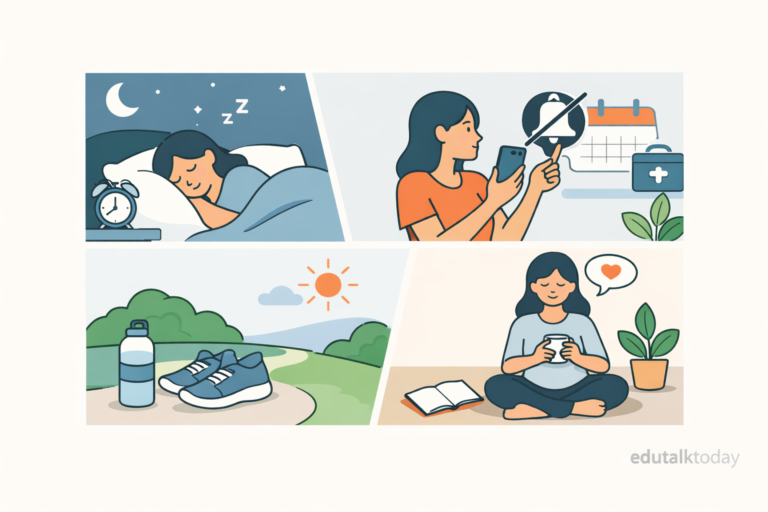
- Getting enough sleep, even when there’s one more episode you want to watch
- Eating regularly instead of running on coffee and snacks
- Moving your body, even if it’s just a short walk
These aren’t glamorous habits, but they create a foundation. And honestly, everything feels harder when your body is running on empty.
Build Tiny Breaks Into Your Day
You don’t need a full day off to reset your mind (although that helps too). What you really need are small pauses throughout the day.
Think about it—most of us go from one task to another without stopping. Emails, meetings, notifications… it’s constant. And your brain never really gets a chance to breathe.
One thing that helped me was setting a simple rule: every couple of hours, I step away for a few minutes. No screen, no multitasking. Sometimes I just stretch, grab water, or look outside.
It sounds almost too simple, but those micro-breaks interrupt the stress cycle before it builds up.
You can try things like:
- Standing up and walking around for five minutes
- Taking a few slow, deep breaths
- Stepping outside for fresh air
It’s not about escaping your responsibilities—it’s about giving your mind space so you can come back clearer.
Learn to Say No Without Over-Explaining
This one took me a while to get comfortable with. Saying no used to feel like I needed a full explanation or a “good enough” excuse.
But here’s the truth: you don’t need to justify protecting your time and energy.
Let’s say a coworker asks you to take on extra work when you’re already overwhelmed. Or a friend invites you out when you’re mentally drained. Instead of forcing yourself to say yes, you can respond with something simple and honest.
“I can’t take that on right now.”
“I’m going to pass this time, but thanks for asking.”
That’s it. No long explanation needed.
And yeah, it might feel awkward at first. But the more you do it, the more natural it becomes. Plus, you start to notice something interesting—people respect clarity more than over-commitment.
Be Intentional About What You Consume
This isn’t just about food—it’s about information too.
We spend hours every day consuming content without really thinking about how it affects us. Social media, news, videos… it all adds up.
I remember going through a phase where I’d scroll late at night and end up feeling worse about myself—comparing my life to everyone else’s highlight reel. It wasn’t obvious at first, but it was definitely impacting my mood.
Prioritizing mental health means you start asking:
- “How does this make me feel?”
- “Do I feel better or worse after this?”
And then adjusting accordingly.
That could look like:
- Unfollowing accounts that trigger comparison or negativity
- Limiting how much news you consume in a day
- Replacing scrolling time with something that actually relaxes you
You don’t have to cut everything out, but being selective makes a big difference.
Talk About What’s Going On (Even If It Feels Uncomfortable)
I’ll be honest—this is one of the hardest ones. Opening up about how you feel can be uncomfortable, especially if you’re used to handling things on your own.
But keeping everything inside? That gets heavy.
I’ve had moments where I thought, “It’s not a big deal, I’ll just deal with it myself.” But the more I ignored it, the more it built up. And when I finally talked to someone—a friend, a family member—it felt like a weight lifted.
You don’t always need solutions. Sometimes, just being heard is enough to make things feel lighter.
If talking to someone you know feels too hard, that’s where therapy can be incredibly helpful. Having a space where you can speak freely without judgment can change how you process things.
Make Time for Things That Aren’t “Productive”
This one is a big shift, especially if you’re used to measuring your day by how much you got done.
Not everything you do has to be productive.
Seriously.
You’re allowed to do things just because you enjoy them. Whether it’s watching a show, drawing, playing music, or just sitting quietly—those moments matter more than we give them credit for.
I used to feel guilty for taking time off without a clear “purpose.” Now I see it differently. That downtime is what helps me recharge and stay balanced.
And when you’re mentally recharged, everything else becomes easier.
Real-Life Examples of Prioritizing Mental Health
The “Logging Off On Time” Example
Let’s start with something a lot of people struggle with—work boundaries.
I know someone who used to stay online long after their work hours ended. Not because they had to, but because they felt like they should. Over time, it started affecting their sleep, mood, and even their relationships.
One day, they made a simple change: they started logging off at a set time every day.
At first, it felt uncomfortable. There was this lingering thought of, “What if someone needs me?” But over time, they realized something important—the work was still there the next day, but they felt way more rested and focused.
That small boundary created a ripple effect. Better sleep, less stress, and more energy during the day.
Choosing to Ask for Help Instead of Pushing Through
Another example that really stands out to me is a college student I once talked to.
They were dealing with anxiety but kept telling themselves it wasn’t “serious enough” to talk about. So they pushed through—studying, attending classes, pretending everything was fine.
Eventually, it got overwhelming.
Instead of continuing to ignore it, they decided to speak with a campus counselor. And here’s the interesting part—it wasn’t some dramatic turning point. It was a series of small conversations that helped them understand their patterns and manage their anxiety better.
The lesson here? You don’t have to wait until things fall apart to get support.
Everyday Choices That Add Up
Sometimes, prioritizing mental health isn’t one big decision—it’s a bunch of small ones that add up over time.
Here are a few examples you might recognize:
- Taking a mental health day when you feel completely drained
- Turning off notifications so you’re not constantly interrupted
- Leaving a conversation that makes you uncomfortable
- Going for a walk instead of staying stuck in your head
- Saying “I need a break” without feeling guilty
Individually, these might seem small. But together, they create a different experience of your day.
The Social Media Reset
I’ll share a personal one here.
There was a time when I didn’t realize how much social media was affecting me. I’d scroll without thinking, but afterward, I’d feel restless or a little down.
So I tried something simple—I cleaned up my feed.
I unfollowed accounts that made me feel like I wasn’t doing enough or being enough. I started following things that were either helpful or genuinely enjoyable.
The difference wasn’t instant, but over time, I noticed a shift. I felt less comparison and more control over what I was letting into my mind.
It’s a small change, but it can have a big impact.
Creating “Do Nothing” Time
This one might sound strange, but it’s surprisingly powerful.
A friend of mine schedules “do nothing” time into their week. No plans, no obligations—just space.
At first, they didn’t know what to do with that time. It felt almost uncomfortable. But eventually, it became something they looked forward to.
Sometimes they’d rest. Sometimes they’d think. Sometimes they’d just sit quietly.
And that’s the point.
In a world where we’re constantly doing something, giving yourself permission to do nothing can be one of the most restorative things you can do.
Before You Leave
If there’s one thing I hope you take away from all this, it’s this: prioritizing mental health isn’t about getting everything right—it’s about paying attention and making small adjustments along the way.
You don’t need to overhaul your entire life overnight. Start with one thing. Maybe it’s getting a little more rest, setting one boundary, or checking in with yourself at the end of the day.
Those small shifts? They add up more than you think.