Smart Goals for Weight Loss
If I’m being honest, most of us don’t fail at weight loss because we’re lazy or unmotivated—we fail because our goals are all over the place. I’ve been there. Saying things like “I want to get in shape” or “I should lose weight” feels productive in the moment, but it doesn’t actually give you anything to work with. There’s no direction, no structure, and definitely no clear finish line.
That’s where SMART goals come in. Once I started using them, everything felt a lot more doable. Instead of guessing what to do next, I had a plan I could actually follow. SMART goals turn vague intentions into clear, actionable steps, and that’s what makes them so powerful. If you’ve ever felt stuck or inconsistent, chances are your goals—not your effort—are the real issue.
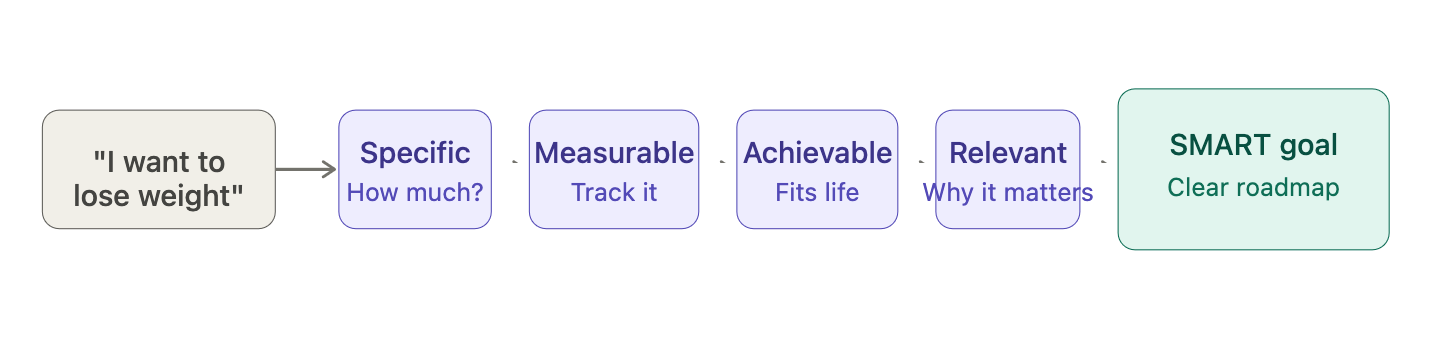
Understanding SMART Goals
What “Specific” Really Means
One of the biggest mistakes I used to make was keeping my goals way too broad. I’d say something like, “I want to lose weight,” and then wonder why I wasn’t making progress. The problem is, that goal could mean anything. Lose how much? By when? Doing what?
When a goal is specific, it answers those questions clearly. Instead of “lose weight,” I might say, “I want to lose 10 pounds by improving my eating habits and working out regularly.” Now I actually know what I’m aiming for.
Here’s a quick comparison:
- Vague: “I want to get healthier”
- Specific: “I want to reduce my body weight by 10 pounds and improve my stamina so I can jog for 20 minutes without stopping”
See the difference? One feels like a wish, the other feels like a plan.
Making It Measurable (So You Don’t Guess Progress)
I used to rely on how I “felt” to judge progress, which honestly isn’t reliable at all. Some days you feel great, some days you don’t—it doesn’t always reflect actual results.
That’s why measurable goals are a game changer. They give you concrete ways to track progress. This could be:
- Pounds lost
- Inches off your waist
- Number of workouts per week
- Daily step count
For example, instead of saying, “I’ll exercise more,” I’d say, “I’ll work out 4 times a week for at least 30 minutes.” Now I can actually check if I’m sticking to it.
And here’s something I didn’t expect at first: tracking progress is motivating. When you see numbers improving, even slowly, it keeps you going.
Why “Achievable” Matters More Than You Think
This is where a lot of people (including me, again) go wrong. We set goals that sound impressive but are completely unrealistic. Like trying to lose 20 pounds in a month while working a full-time job and barely having time to cook.
It’s not that ambition is bad—it’s just that unrealistic goals lead to burnout and frustration.
An achievable goal respects your current lifestyle. For example:
- Unrealistic: “I’ll go to the gym every single day starting tomorrow”
- Achievable: “I’ll go to the gym 3 times a week after work”
That second one fits into real life. And once you stick to it, you can always build up from there.
I’ve learned that consistency beats intensity every time. It’s better to do something sustainable for months than something extreme for two weeks.
Keeping It Relevant to Your Life
This part is often overlooked, but it’s huge. Your goal needs to actually matter to you—not just sound good on paper.
When I first started, I thought I needed to lose weight just to “look better.” But that didn’t really stick. What changed everything was when I connected my goal to something deeper: having more energy, feeling confident, and improving my overall health.
A relevant goal answers the question: why does this matter to me?
For example:
- “I want to lose weight so I can reduce my risk of health issues like high blood pressure”
- “I want to get stronger so I can keep up with my kids without feeling exhausted”
When your goal is personal, it’s a lot easier to stay committed—even on tough days.
The Power of Being Time-Bound
Without a timeline, goals tend to drift. I’ve definitely said things like, “I’ll start eating better soon,” and then… never actually started.
That’s why adding a deadline creates urgency and focus.
For example:
- Open-ended: “I want to lose 10 pounds”
- Time-bound: “I want to lose 10 pounds in 12 weeks”
Now there’s a clear window to work within. It also helps you break things down. If it’s 12 weeks, that’s less than a pound per week—suddenly it feels manageable.
Deadlines also help you evaluate progress. If you’re halfway through and not seeing results, you can adjust instead of drifting.
Turning a Vague Goal into a SMART Goal
Let me show you how this all comes together.
A vague goal might look like this:
“I want to lose weight and get fit.”
Now let’s turn it into something SMART:
“I want to lose 8 pounds in 10 weeks by working out 4 times a week, walking at least 7,000 steps daily, and cutting back on takeout to once a week.”
That’s specific, measurable, achievable, relevant, and time-bound. And more importantly, it tells you exactly what to do.
That’s the real difference. SMART goals don’t just sound better—they give you a roadmap. And once you have that, staying consistent becomes a whole lot easier.
Examples of SMART Weight Loss Goals
Let’s be real—understanding SMART goals is one thing, but actually applying them is where things click. I remember the first time I tried to set “real” goals for weight loss, I just sat there staring at a blank page thinking, okay… what does this even look like in real life?
So instead of overthinking it, I started with simple, practical goals I could actually stick to. And honestly, that’s what made the biggest difference. SMART goals shouldn’t feel complicated—they should feel doable.
Everyday SMART Goals You Can Actually Use
Here are some examples that I’ve either used myself or seen work really well for others:
- Lose 5 pounds in 8 weeks by cooking dinner at home at least 4 nights a week and limiting fast food to once a week
- Walk 8,000–10,000 steps daily for the next 30 days using a step tracker
- Work out 3 times a week for 45 minutes (mix of strength training and cardio) for the next 10 weeks
- Drink at least 80 ounces of water daily for the next 4 weeks
- Replace sugary snacks with fruit or protein-based snacks 5 days a week for a month
- Reduce waist size by 2 inches in 12 weeks by combining strength training and a calorie deficit
- Sleep at least 7 hours per night for the next 21 days to support recovery and metabolism
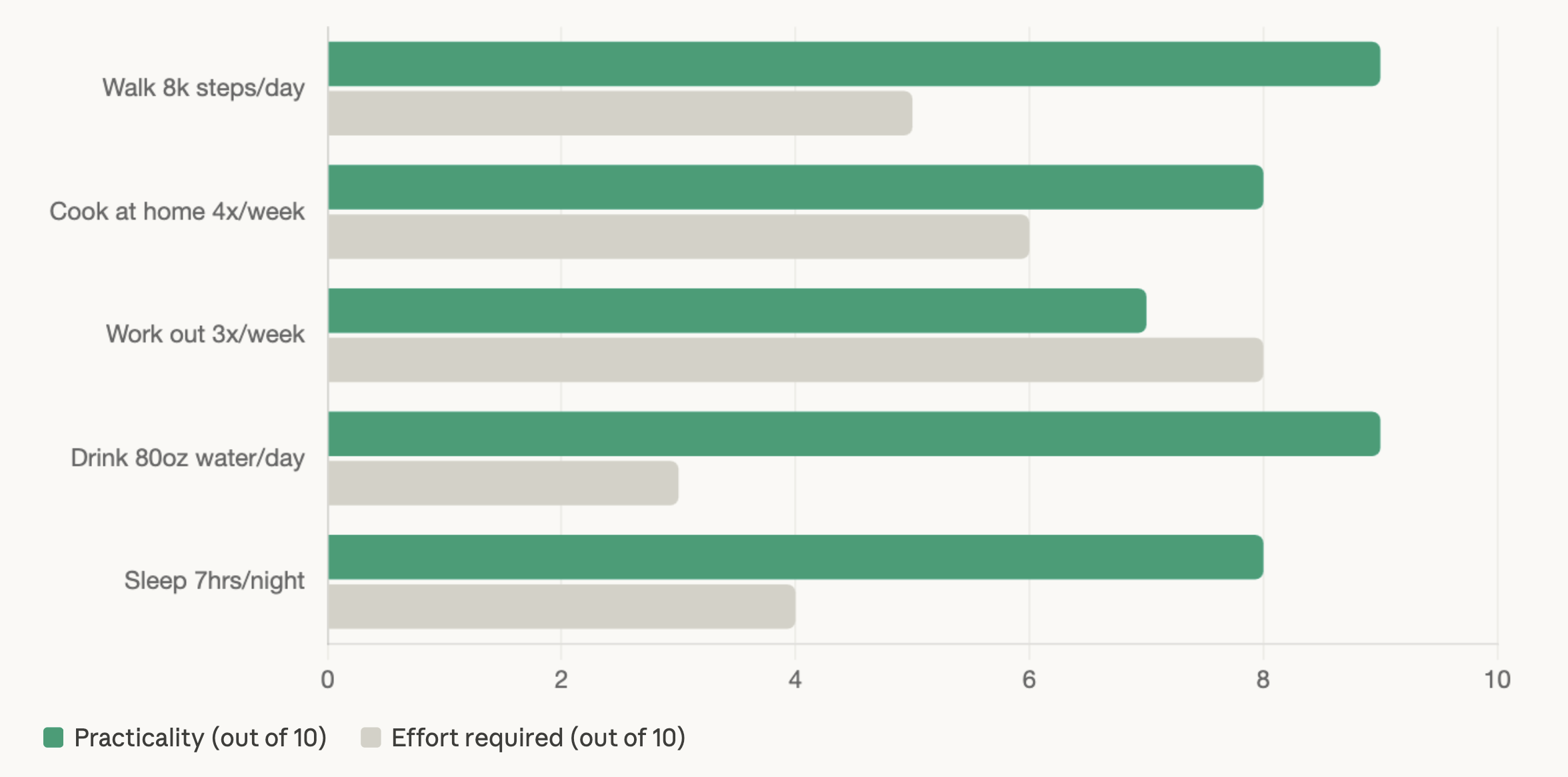
What I like about these is that they’re not extreme. They’re realistic enough to fit into everyday life, which is exactly what makes them effective.
The “Bad Goal vs SMART Goal” Reality Check
This is something I wish someone had shown me earlier. Sometimes we think we’re setting goals, but we’re actually just making vague promises to ourselves.
Here’s how that usually plays out:
- “I’m going to eat healthier”
→ “I’ll meal prep lunch at home 4 days a week for the next 6 weeks” - “I need to exercise more”
→ “I’ll go to the gym every Monday, Wednesday, and Friday at 6 pm for the next 8 weeks” - “I want to lose weight fast”
→ “I’ll lose 6 pounds in 10 weeks by maintaining a moderate calorie deficit and tracking my meals daily”
See how the second version removes all the guesswork? Clarity is what turns intention into action.
Why Smaller Goals Work Better Than Big Ones
I used to think I needed one big, impressive goal to stay motivated—something like “lose 30 pounds.” But here’s the thing: big goals can feel overwhelming, especially at the beginning.
What worked better for me was breaking that into smaller chunks. Instead of focusing on 30 pounds, I focused on the first 5. Then the next 5.
For example:
- First goal: Lose 5 pounds in 6 weeks
- Next goal: Improve strength by lifting weights 3x per week
- Next goal: Increase daily steps from 5,000 to 8,000
Each small win builds momentum. And once you start seeing progress, it becomes addictive in a good way.
Progress creates motivation—not the other way around.
Habit-Based Goals vs Outcome-Based Goals
This is a shift that completely changed how I approach weight loss.
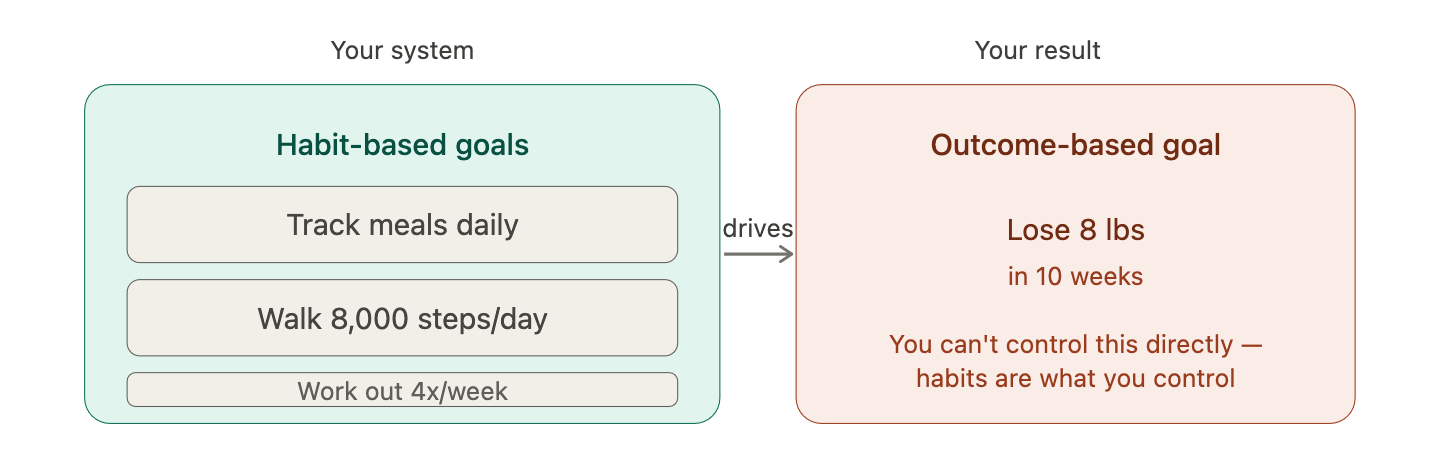
Outcome-based goals focus on results:
- “Lose 10 pounds”
Habit-based goals focus on actions:
- “Track meals daily”
- “Walk 8,000 steps every day”
- “Cook dinner at home 4 times a week”
The truth is, you can’t always control the outcome perfectly. Weight fluctuates, life happens, and sometimes progress slows down. But you can control your habits.
That’s why I always try to combine both:
- Outcome: Lose 8 pounds in 10 weeks
- Habits: Work out 4x/week, track meals, hit protein targets daily
Your habits are the system—your results are the byproduct.
Making Your Goals Fit Your Lifestyle
One mistake I see a lot (and definitely made myself) is copying someone else’s routine. You see a fitness influencer waking up at 5 am, doing two workouts a day, and suddenly you think, “That’s what I need to do.”
But if that doesn’t fit your life, it won’t last.
If you work long hours or have a family, your goals might look like:
- 30-minute home workouts instead of long gym sessions
- Walking during lunch breaks
- Simple meal prep instead of complicated recipes
And that’s perfectly fine. The best plan isn’t the most intense one—it’s the one you can stick to.
Tips for Setting and Sticking to SMART Goals
Even the best goals won’t mean much if you don’t stick to them. And yeah, that’s the hard part. I’ve had weeks where I was completely on track—and others where everything fell apart.
What helped me wasn’t just setting better goals, but learning how to actually follow through on them. Because at the end of the day, consistency beats perfection every single time.
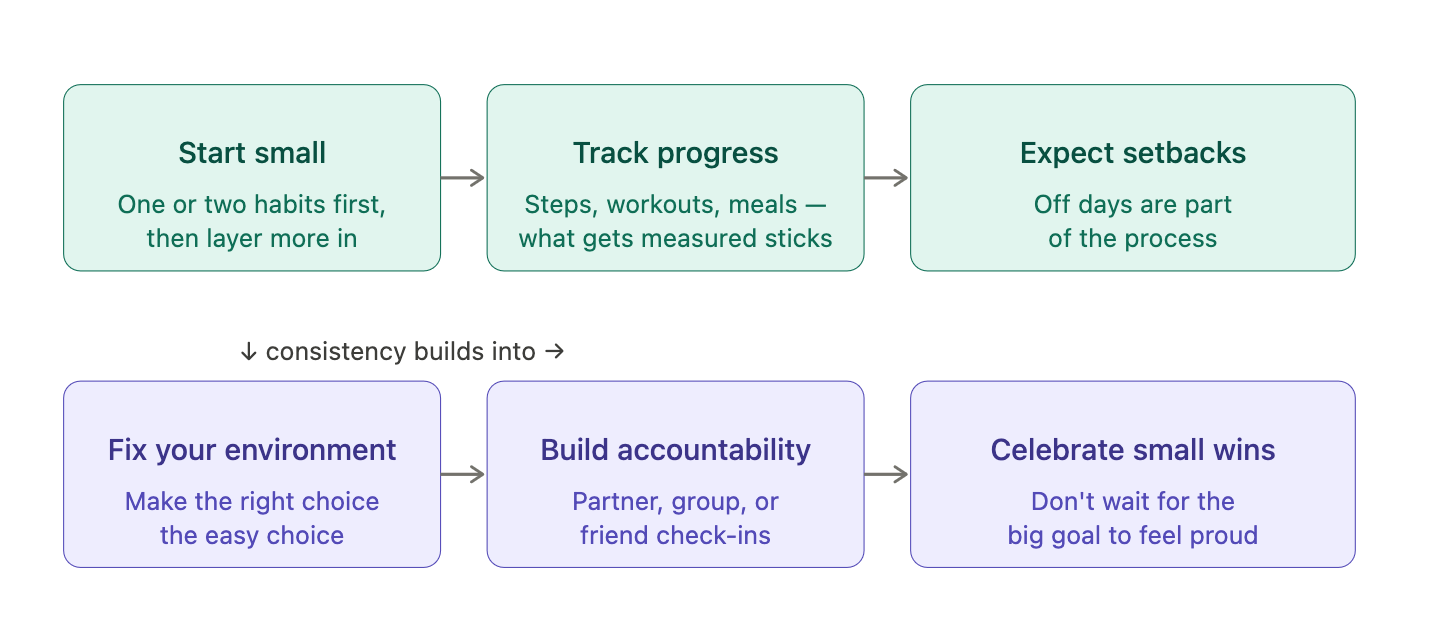
Start Small and Build Momentum
One of the biggest mistakes I made early on was trying to change everything at once—diet, workouts, sleep, water intake… all in the same week. It didn’t last.
Now, I start small.
Instead of overhauling my entire routine, I’ll pick one or two habits:
- Walk daily
- Drink more water
- Add one healthy meal per day
Once that feels natural, I layer in more.
It might feel slow at first, but it works. And more importantly, it sticks.
Track Your Progress (Even When It Feels Boring)
I used to skip tracking because it felt tedious. But once I started, I realized how powerful it is.
Tracking doesn’t have to be complicated:
- Use a notes app for workouts
- Track steps on your phone
- Log meals in a simple app
- Take weekly progress photos
What gets measured gets managed. And sometimes, tracking reveals progress you wouldn’t notice otherwise—like improved energy, better sleep, or increased strength.
Expect Setbacks (They’re Part of the Process)
This is something no one talks about enough. You will have off days. Maybe even off weeks.
And that doesn’t mean you’ve failed.
I used to treat setbacks like the end of the road. Now I see them as part of the process. If I miss a workout or overeat one day, I just get back on track the next day.
No guilt, no overcorrection.
Consistency isn’t about being perfect—it’s about not giving up.
Make Your Environment Work for You
This one is underrated. Your environment can either support your goals or sabotage them.
For example:
- Keep healthy snacks visible and easy to grab
- Prep meals in advance so you’re not relying on takeout
- Lay out workout clothes the night before
- Remove temptations that make things harder
I’ve noticed that when my environment is set up right, I don’t have to rely on willpower as much. And that makes everything easier.
Build Accountability (It Helps More Than You Think)
There’s something powerful about knowing someone else is aware of your goals.
This could be:
- A workout partner
- A friend you check in with weekly
- An online fitness group
- Even just sharing your goals with someone you trust
I’ve personally found that even a simple message like, “Hey, did you get your workout in today?” can make a huge difference.
Accountability turns intention into action.
Celebrate Small Wins Along the Way
We often wait until we hit the big goal to feel proud. But that can take weeks or months.
Instead, I’ve learned to celebrate the small stuff:
- Completing a full week of workouts
- Choosing a healthy meal when it was easier not to
- Hitting a step goal consistently
These wins matter. They’re proof that you’re showing up.
And honestly, that’s what this is really about—showing up for yourself, again and again.
Before You Leave
If there’s one thing I’ve learned through all of this, it’s that weight loss isn’t about doing everything perfectly—it’s about doing the right things consistently. SMART goals just give you a clear path to follow.
Start simple. Make it realistic. And most importantly, make it yours.