Greek Salad
Greek Salad is one of the easiest salads you can make, which makes it perfect for students who want something fresh, healthy, and quick. It doesn’t require any cooking, complicated techniques, or expensive ingredients. You just chop a few vegetables, add olives, olive oil, oregano, and finish it with feta cheese on top.
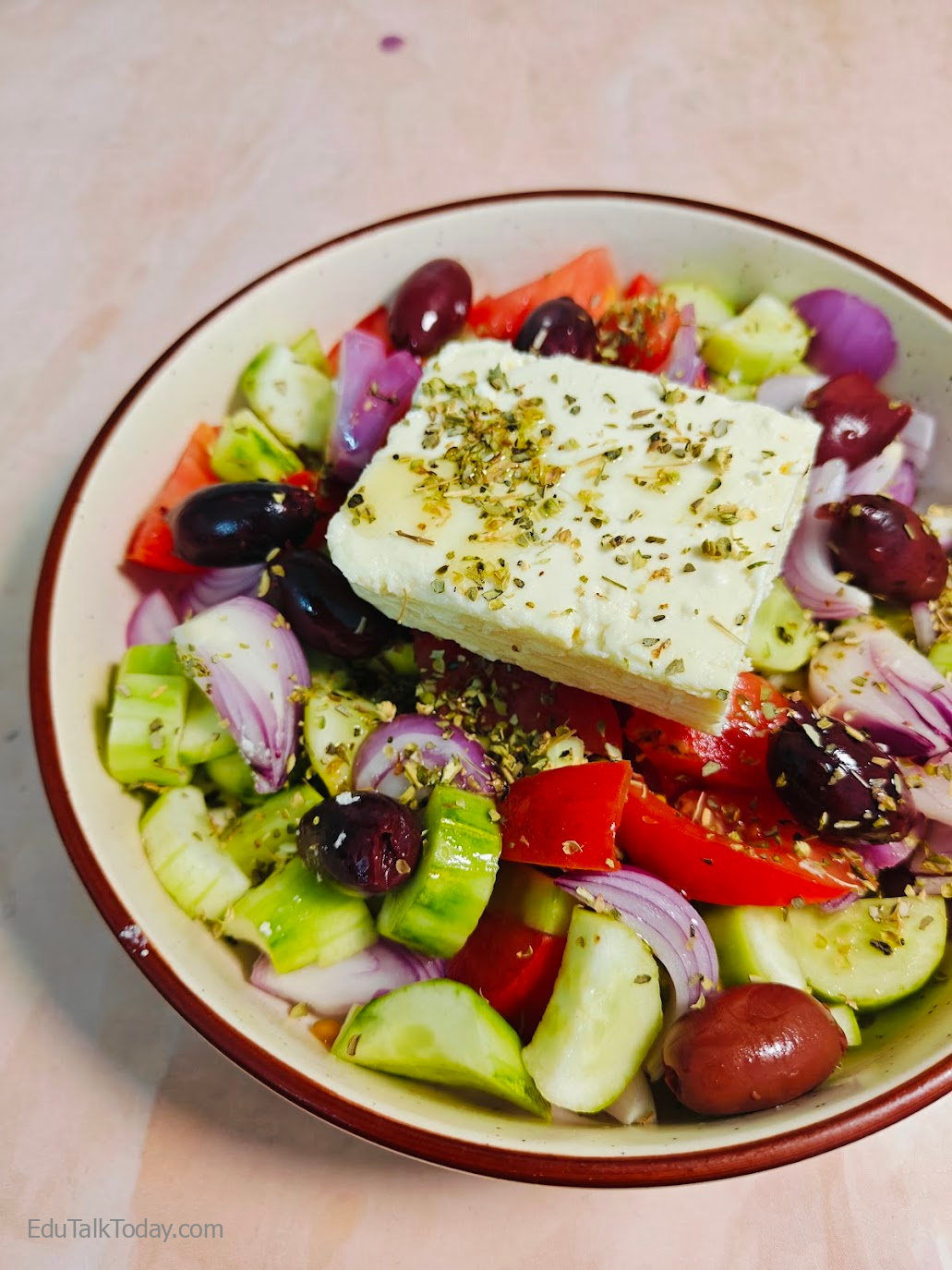
This recipe is great for students living in hostels, dorms, or shared apartments because it takes only a few minutes to prepare and uses simple ingredients that are easy to find. It can be a light meal, a side dish, or even something you throw together when you don’t feel like cooking but still want to eat something good.
Check the recipe out below.
Ingredients
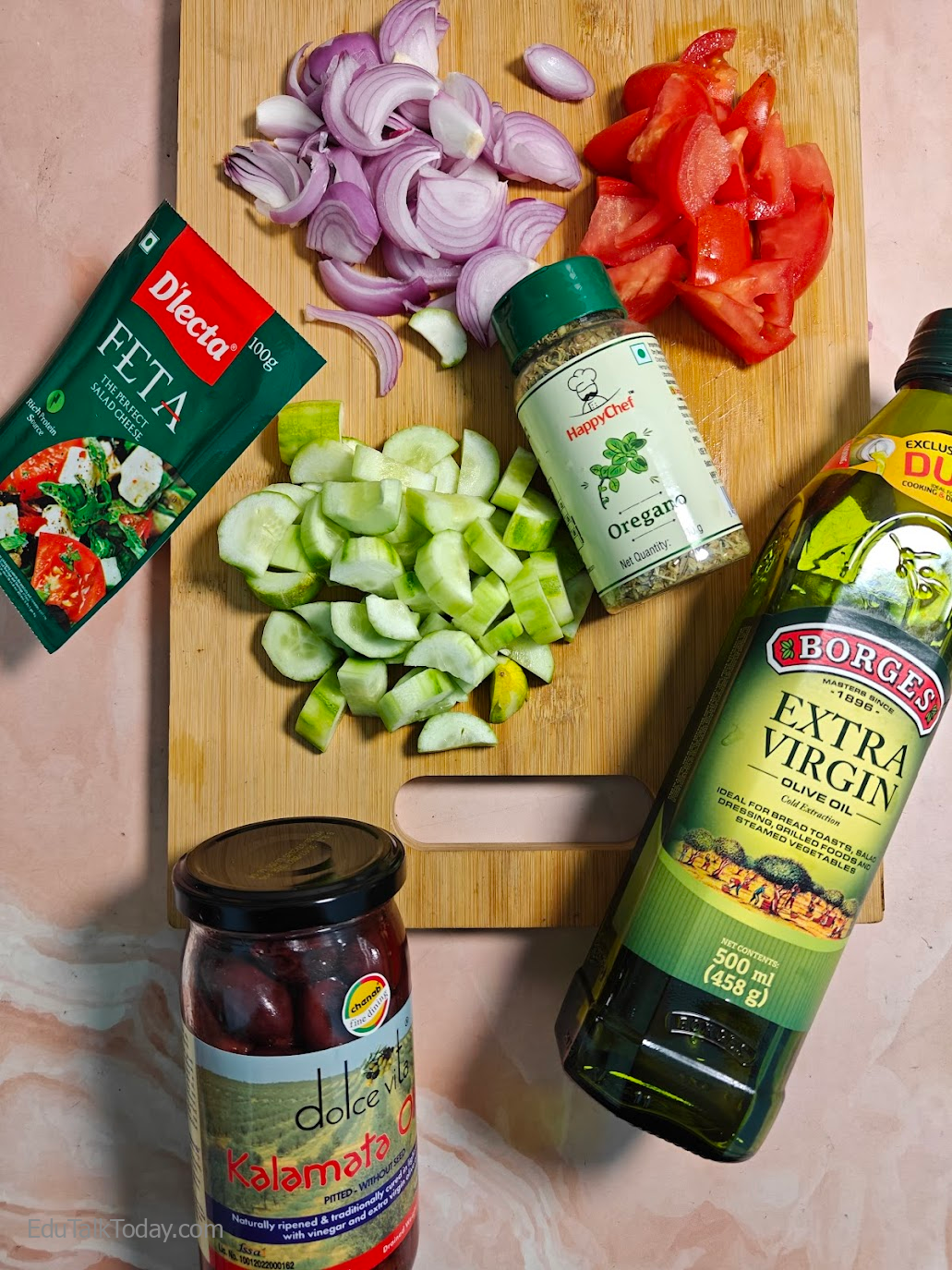
- Tomatoes – Provide juiciness, natural sweetness, and acidity that form the fresh base of the salad.
- Cucumber – Adds crunch and freshness, balancing the acidity of the tomatoes and giving the salad a light, hydrating texture.
- Red Onions – Contribute sharpness and a mild spicy bite that enhances the overall flavor complexity.
- Kalamata Olives – Bring a salty, briny, slightly fruity flavor that gives the salad its characteristic Mediterranean taste.
- Extra Virgin Olive Oil – Acts as the dressing, coating the ingredients, adding richness, and carrying the flavors of the herbs and vegetables.
- Oregano – Provides a warm, earthy herbal aroma that is essential to the classic Greek flavor profile.
- Feta Cheese – Adds creamy texture and a tangy, salty taste that contrasts with the fresh vegetables and ties the salad together.
How To Make Greek Salad?
1. Prepare and Cut the Vegetables
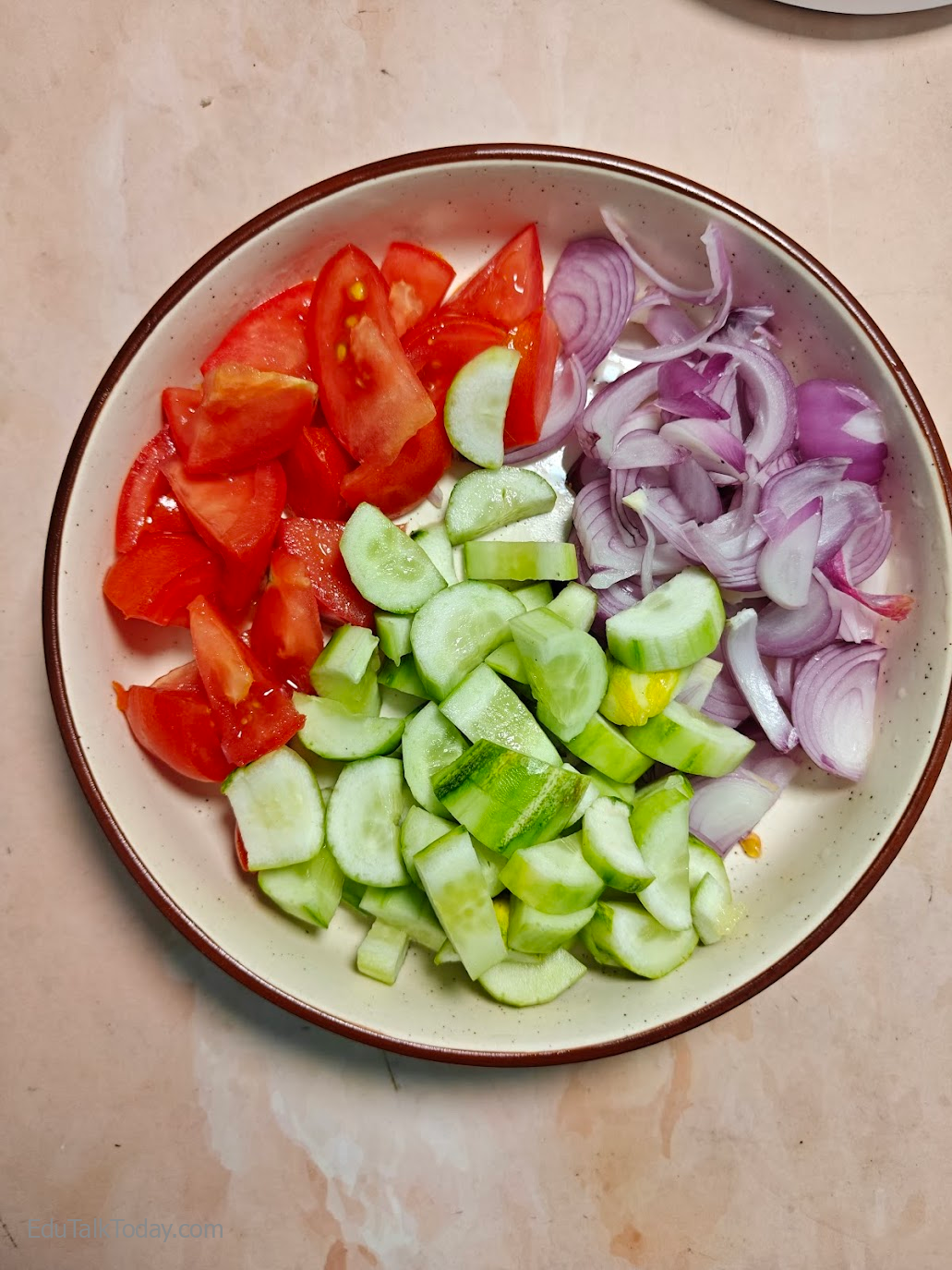
Start by thoroughly washing the tomatoes and cucumber under running water to remove any dirt or residue. Once cleaned, place the cucumber on a cutting board and slice it lengthwise, then cut it across into half-moon shaped pieces that are thick enough to hold their crunch.
Next, take the tomatoes and cut them into medium-sized wedges so they keep their juicy texture and shape in the salad. For the red onion, peel off the outer layer and slice it into very thin strips.
Thin slices are important because they give the salad a sharp flavor without overpowering the other ingredients. If you enjoy bell peppers, you may also slice some into thin strips and add them at this stage, though they are optional.
2. Combine the Fresh Ingredients
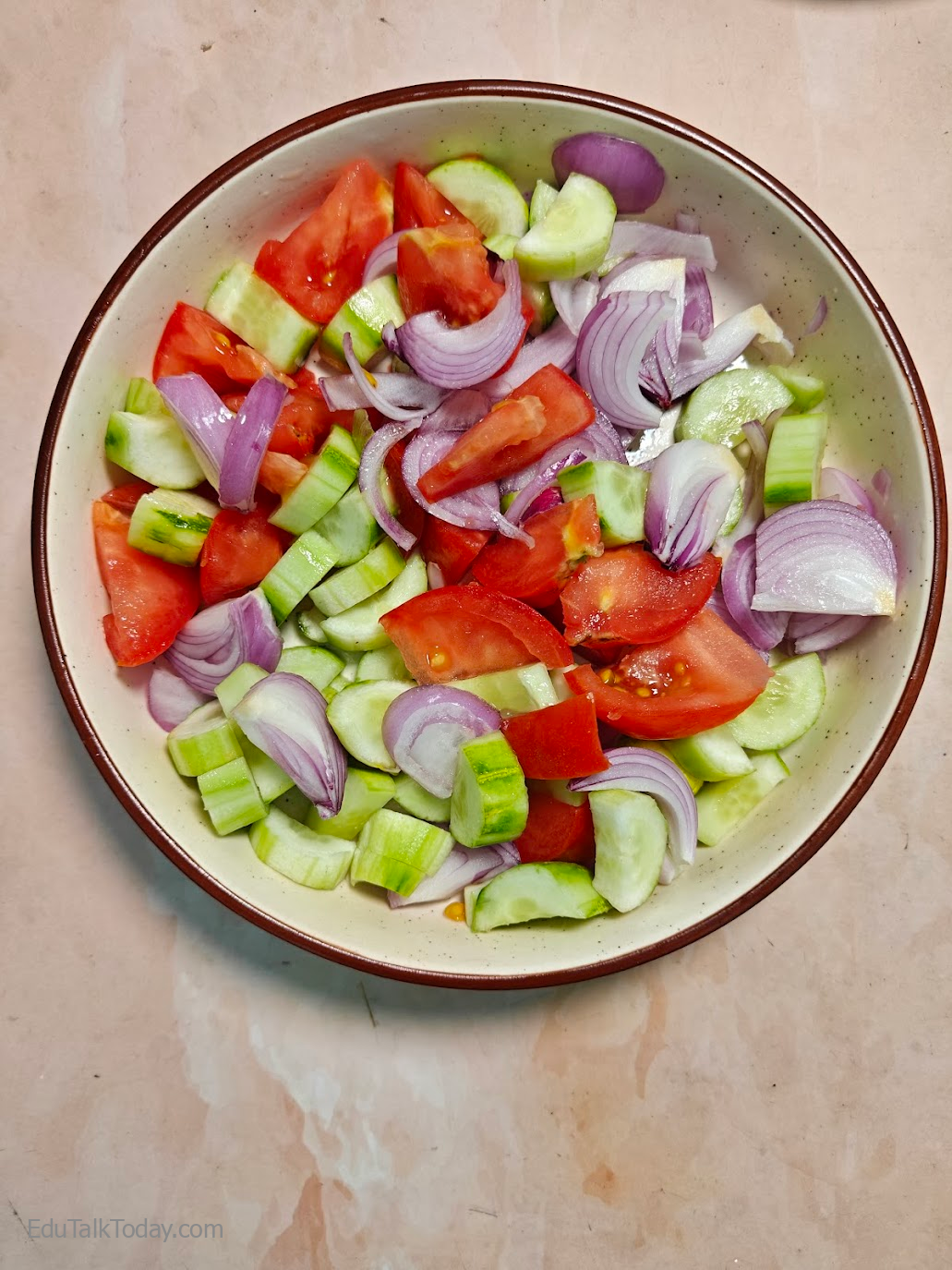
Place all the prepared vegetables — cucumber, tomato wedges, and sliced red onions — into a large mixing bowl. Using a spoon or clean hands, gently mix the vegetables together so they are evenly distributed.
The goal is to blend the flavors without crushing the tomatoes or making the vegetables watery. This step creates the fresh and colorful base of the Greek salad, allowing each ingredient to contribute its own texture and taste.
3. Add the Kalamata Olives
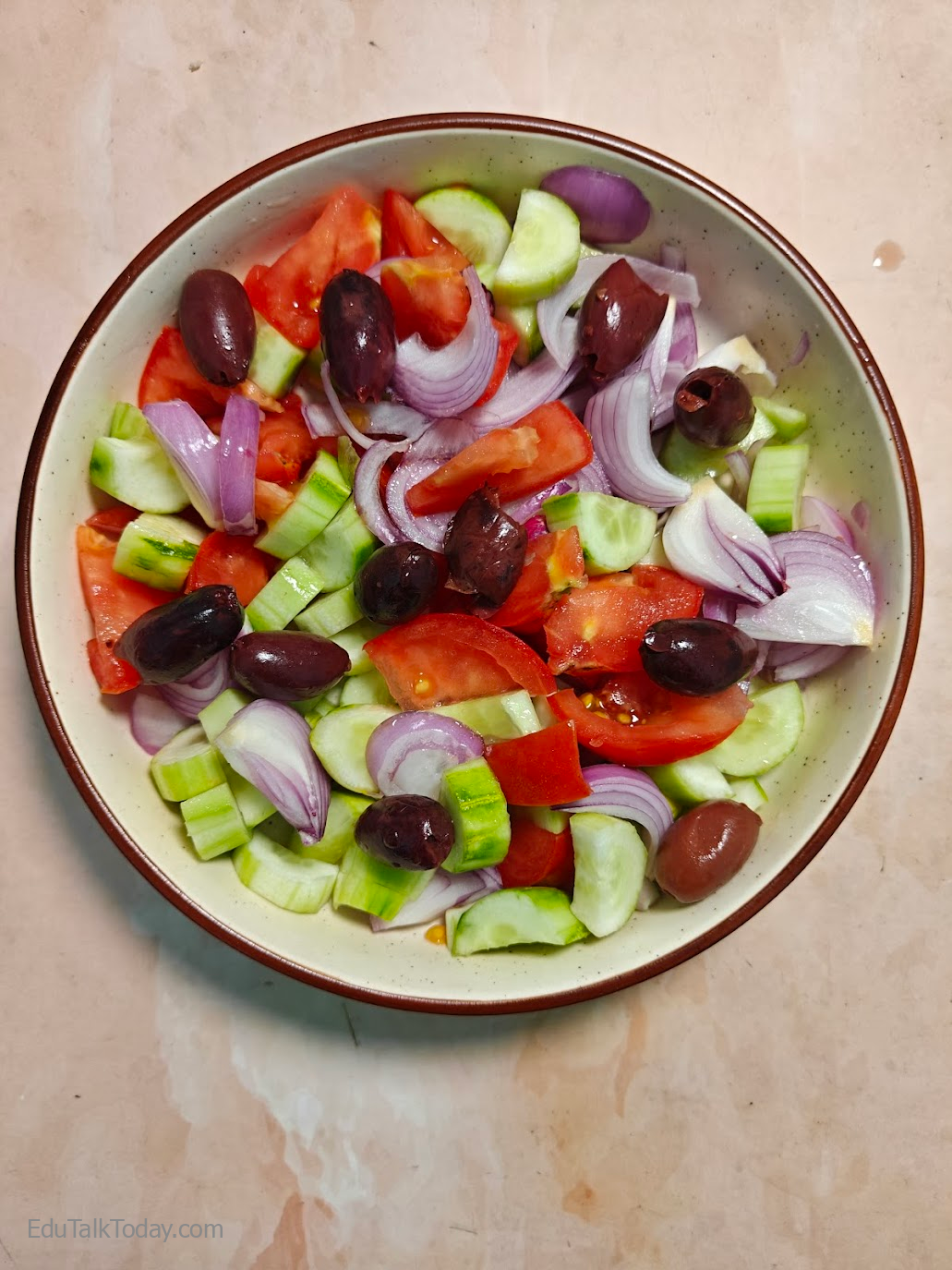
Next, add a generous handful of Kalamata olives to the bowl. These olives are a key ingredient because they bring a rich, slightly salty and briny flavor that balances the freshness of the vegetables.
Scatter them evenly throughout the salad so that every serving contains some olives. Their deep purple color also adds a beautiful contrast to the bright reds and greens of the vegetables.
4. Season the Salad
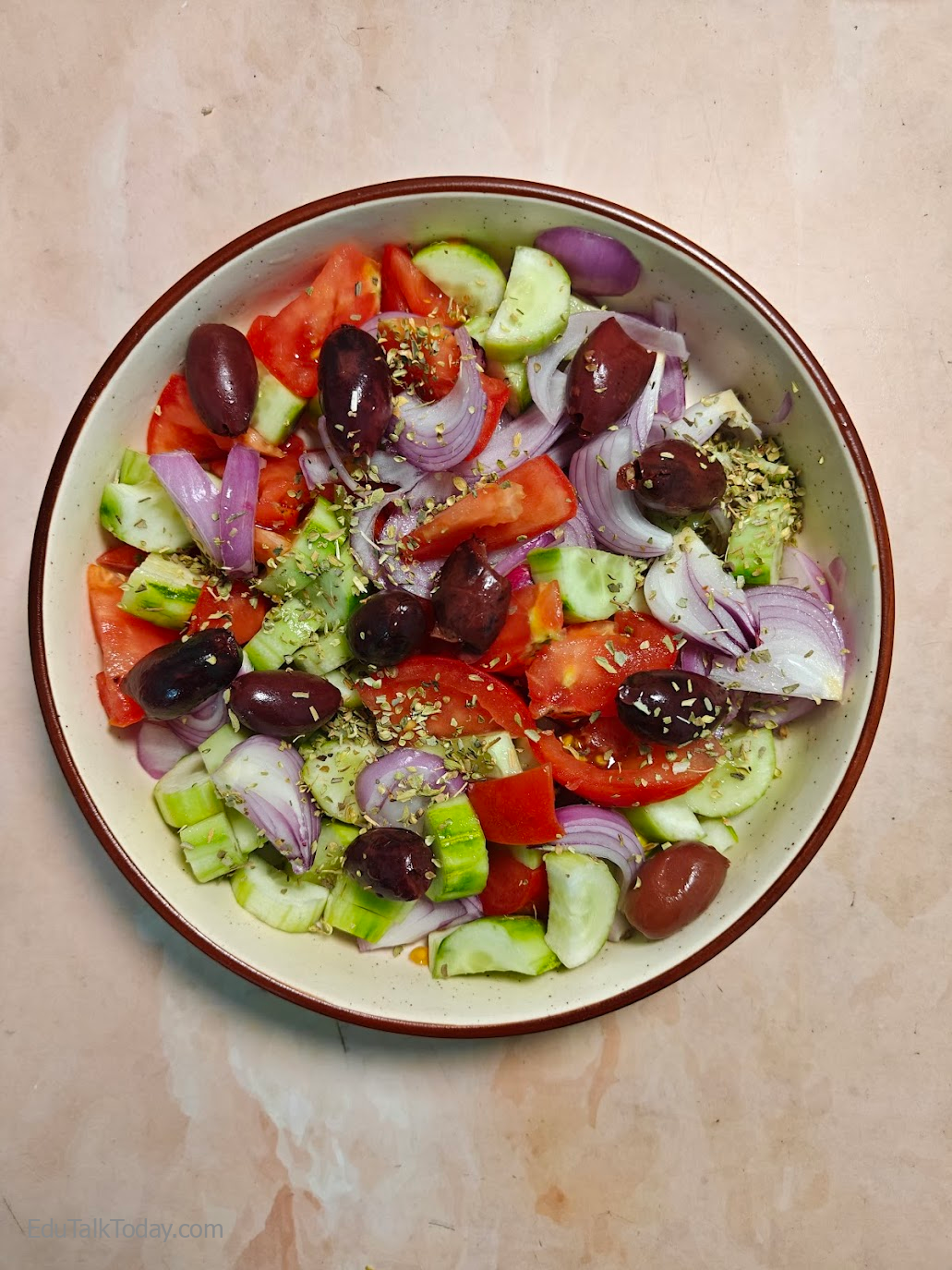
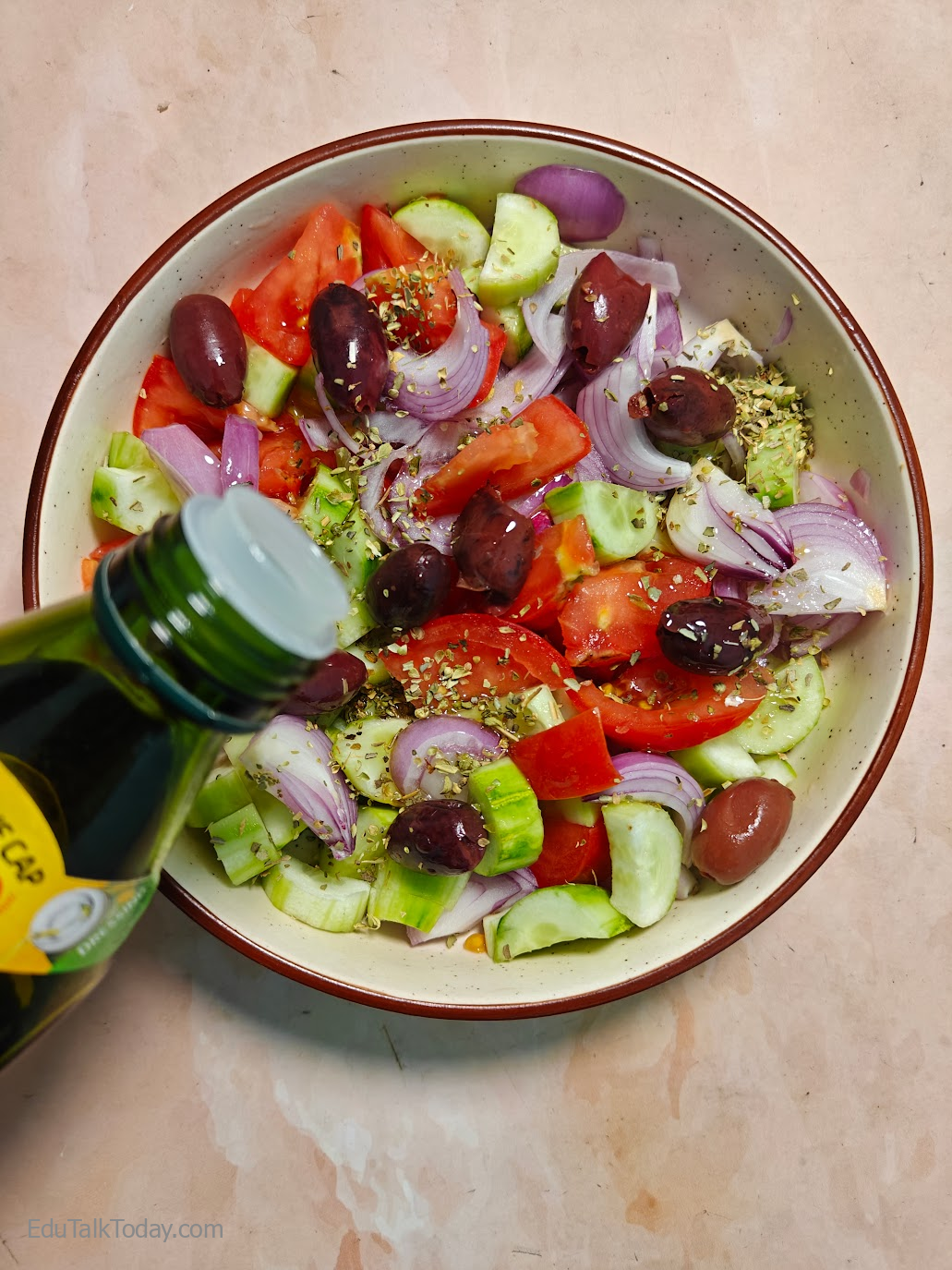
Once the olives are added, sprinkle dried oregano over the salad. Oregano is one of the signature herbs in Greek cuisine and gives the dish its distinct Mediterranean aroma.
After adding the oregano, drizzle extra virgin olive oil over the entire mixture. The olive oil coats the vegetables and acts as a light dressing, enhancing the natural flavors rather than overpowering them.
At this point, you can gently toss the salad again so the seasoning spreads evenly.
5. Add the Feta Cheese on Top
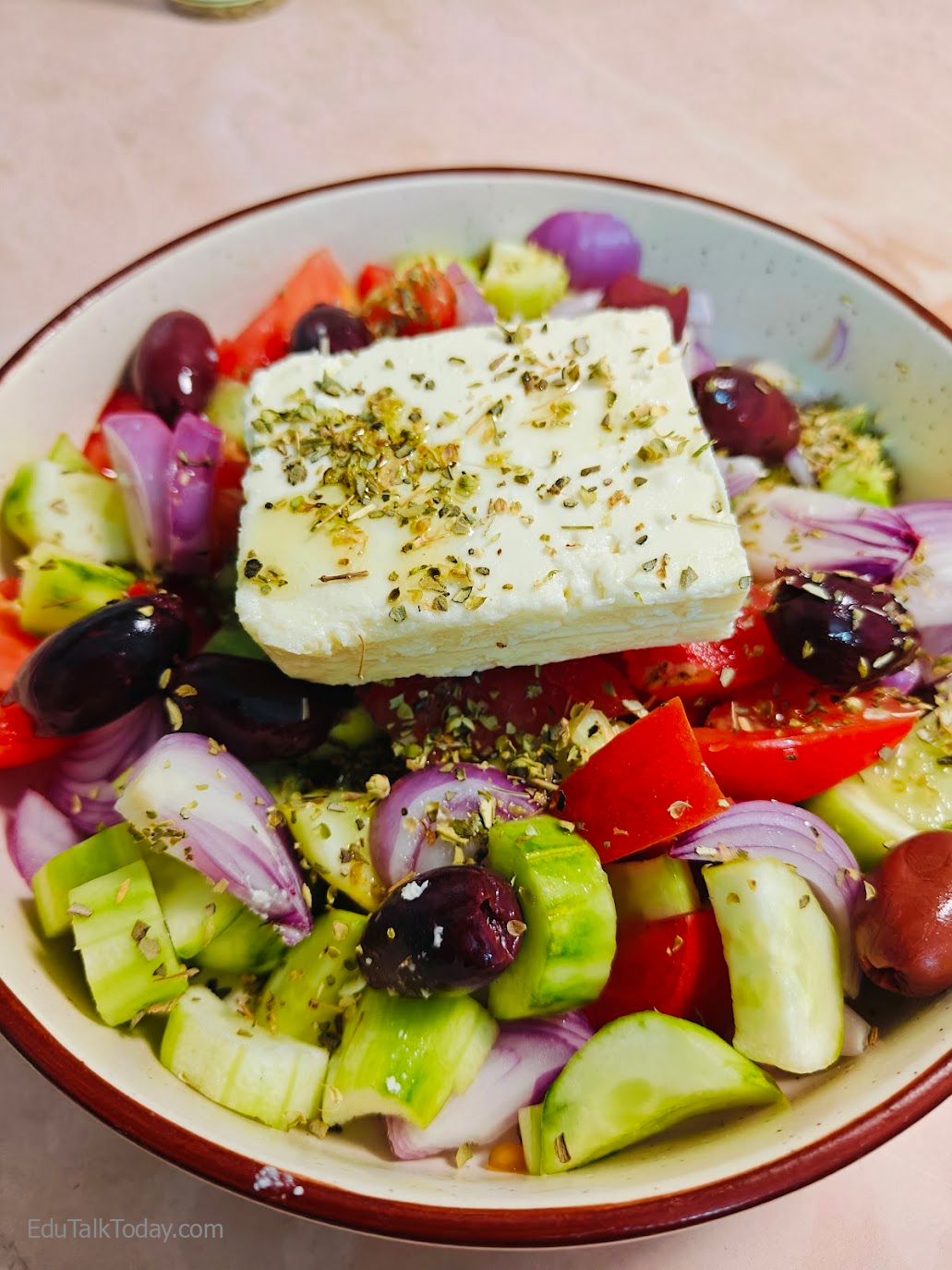
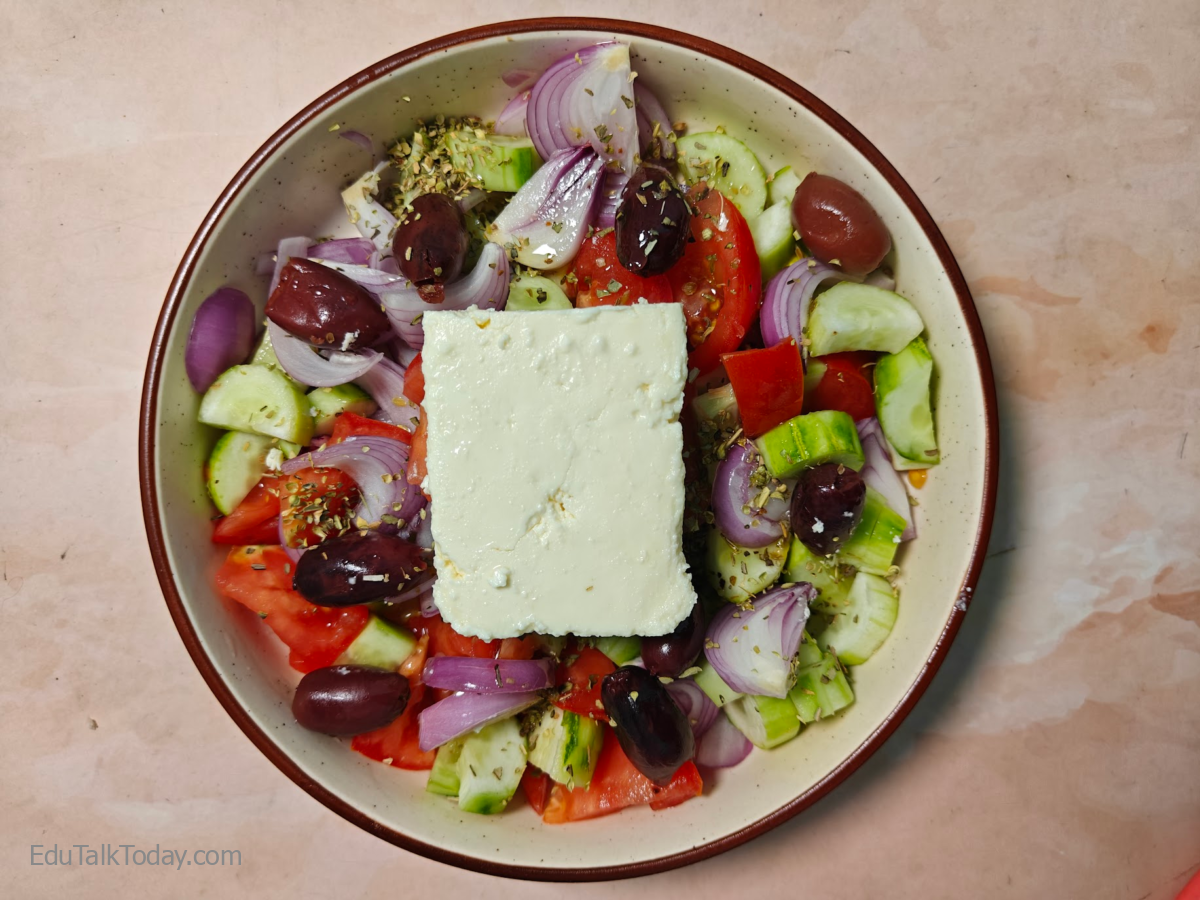
Now take a large block of feta cheese and place it directly on top of the salad instead of crumbling it.
This traditional presentation allows the cheese to slowly mix with the vegetables as you eat, giving each bite a creamy and salty contrast to the fresh ingredients below. The feta also serves as the visual centerpiece of the dish.
6. Finish and Serve
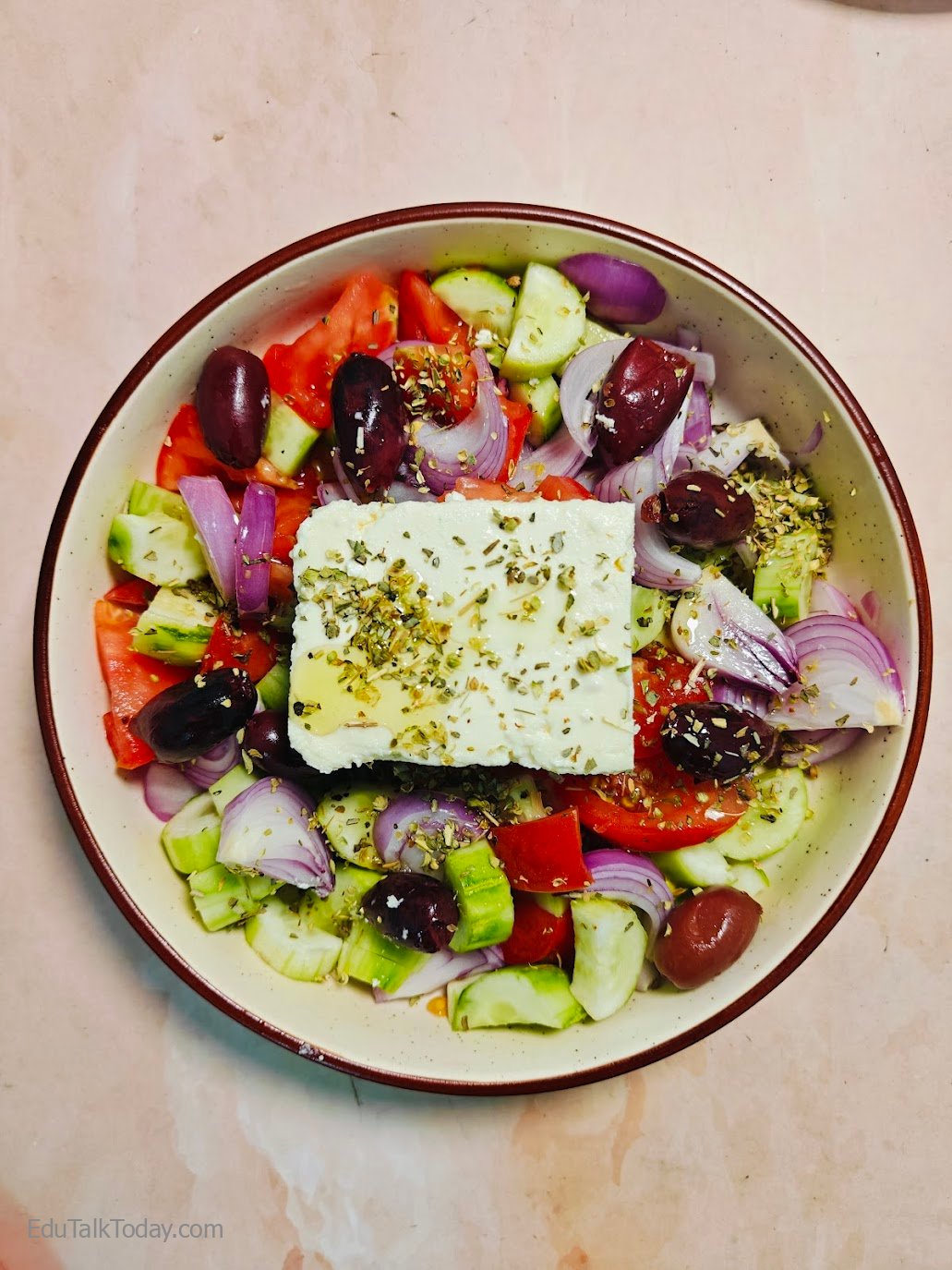
To finish the salad, sprinkle a little more oregano over the block of feta cheese and add a light drizzle of extra virgin olive oil on top. This final touch enhances the flavor of the cheese and ties all the ingredients together. Once completed, the salad is ready to serve immediately.
Greek salad is best enjoyed fresh and slightly chilled, making it a refreshing and simple Mediterranean dish perfect for warm days.
FAQs
1. Can I add other vegetables to a Greek salad?
Yes, some variations include bell peppers or capers. However, the traditional version usually focuses on tomatoes, cucumber, onions, olives, and feta.
2. Can I crumble the feta cheese instead of using a block?
Yes, you can crumble it if you prefer. Traditionally, Greek salad is served with a large block of feta placed on top so diners can break it themselves.
3. What type of olives work best for Greek salad?
Kalamata olives are the most authentic choice because of their rich, briny flavor. Other olives can be used, but they may slightly change the taste.
4. Do I need to add vinegar or lemon juice?
Traditional Greek salad often relies only on high-quality extra virgin olive oil and the natural acidity of the tomatoes. Some people add a splash of red wine vinegar or lemon juice for extra tang.
5. Can I make Greek salad ahead of time?
It’s best served fresh. You can chop the vegetables in advance, but add the olive oil, oregano, and feta just before serving to keep the salad crisp and flavorful.
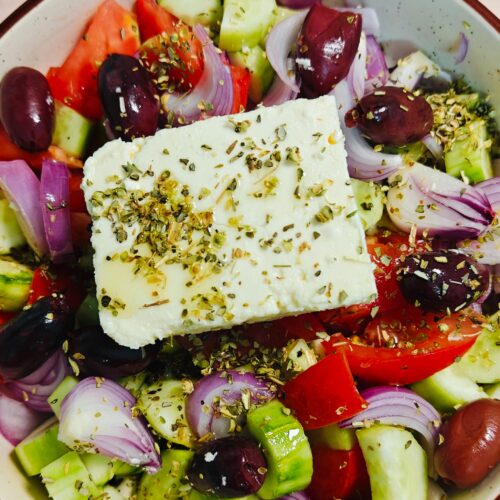
Greek Salad
Equipment
- 1 Cutting Board
- 1 Chef's Knife
- 1 Mixing Bowl
- 1 Serving Bowl
Ingredients
- 2 cups tomatoes cut into wedges
- 1 large cucumber sliced into half moons
- ½ medium red onion thinly sliced
- ½ cup Kalamata olives
- 2 tablespoons extra virgin olive oil plus more for topping
- 1 teaspoon dried oregano plus more for topping
- 150 g feta cheese in one large block
Instructions
- Cut the cucumber into half moons, tomatoes into wedges, and the red onion into thin slices.
- Add the cucumber, tomatoes, and onion to a large mixing bowl.
- Toss the vegetables gently until evenly combined.
- Add the Kalamata olives to the bowl.
- Sprinkle the oregano over the vegetables and drizzle with olive oil. Toss lightly to combine.
- Transfer the salad to a serving bowl.
- Place the large block of feta cheese on top of the salad.
- Sprinkle a little more oregano over the feta and drizzle with additional olive oil.
- Serve immediately.
Notes
Notes
- You can add sliced bell peppers if you enjoy them raw.
- Use high-quality extra virgin olive oil for the best flavor.
- Traditionally, the feta is served as a large block rather than crumbled.
- Fat: 17 g
- Carbohydrates: 8 g
- Protein: 6 g
- Fiber: 2 g