Balanced Diet for Beginners – A Complete Guide
If you’ve ever felt confused about what “eating healthy” actually means, you’re definitely not alone. I used to think a balanced diet meant cutting out all my favorite foods and surviving on salads. Turns out, that’s not even close. A balanced diet isn’t about restriction—it’s about giving your body what it actually needs to function well.
When I started paying attention to what I was eating, I noticed something interesting: my energy levels improved, my mood felt more stable, and I wasn’t constantly craving junk. That’s the power of balance. In this guide, I’ll walk you through the basics in a way that actually makes sense—no complicated jargon, just practical, real-life insights you can use right away.
Understanding the Basics of a Balanced Diet
Macronutrients: The Building Blocks of Your Meals
Let’s start with the big players—macronutrients. These are the nutrients your body needs in larger amounts: carbohydrates, proteins, and fats. And no, none of them are the enemy.
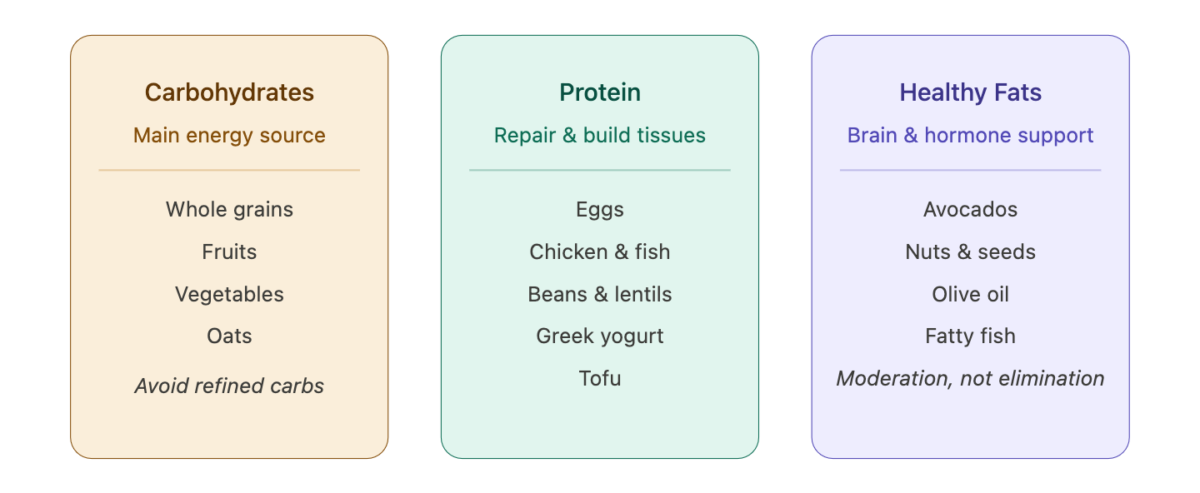
Carbs often get a bad reputation, but honestly, they’re your body’s main source of energy. Think about it—when you skip carbs completely, you feel sluggish, right? That’s because your body is running low on fuel. Foods like whole grains, fruits, and vegetables provide complex carbohydrates, which release energy slowly and keep you going longer. Compare that to a sugary donut, which gives you a quick spike and then a crash. I’ve been there, and that crash is real.
Protein is what helps your body repair and build tissues. If you work out, protein becomes even more important because it supports muscle recovery. But even if you don’t, your body still needs it daily. For example, adding eggs to your breakfast or including grilled chicken or beans in your lunch can make a huge difference in how full and satisfied you feel.
Then there are fats—yes, fats. For a long time, I avoided them completely, thinking they’d make me gain weight. But the truth is, healthy fats are essential for brain function, hormone balance, and even absorbing certain vitamins. Foods like avocados, nuts, and olive oil are actually great additions to your diet. The key is moderation, not elimination.
Micronutrients: Small but Mighty
Now let’s talk about micronutrients—vitamins and minerals. These might be needed in smaller amounts, but they play a huge role in keeping your body running smoothly.
For example, calcium helps keep your bones strong, iron supports oxygen transport in your blood, and vitamin C boosts your immune system. Ever notice how you’re more likely to catch a cold when your diet isn’t great? That’s not a coincidence.
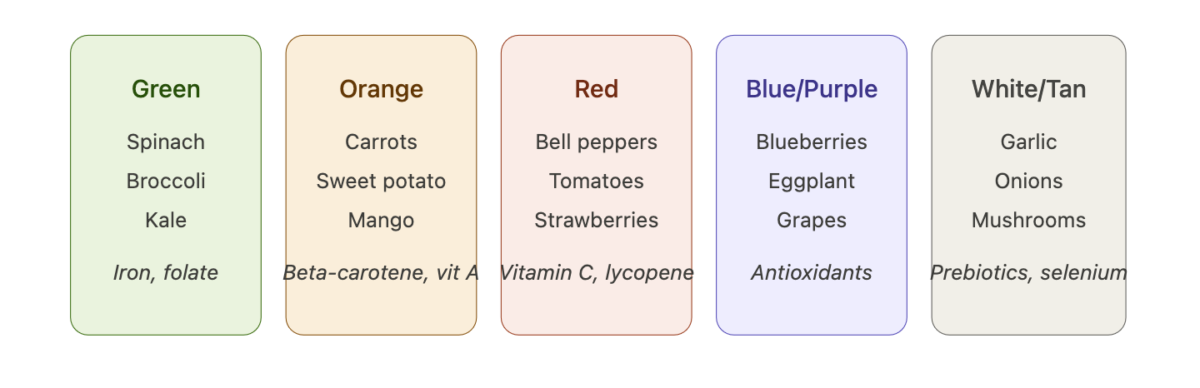
One of the easiest ways to get a variety of micronutrients is by eating colorful foods. I like to think of my plate as a rainbow—spinach (green), carrots (orange), blueberries (blue), bell peppers (red).
Each color usually represents different nutrients. It’s a simple trick, but it works.
Hydration: The Overlooked Essential
This one’s easy to ignore, but it’s a game changer. Water is just as important as food, if not more. Your body relies on it for digestion, circulation, temperature regulation—you name it.
I used to mistake thirst for hunger all the time. I’d reach for a snack when all I really needed was a glass of water. Once I started staying properly hydrated, I noticed fewer random cravings and better focus throughout the day.
A good rule of thumb? Keep a water bottle nearby and sip throughout the day. You don’t need to overcomplicate it.
How Food Groups Work Together
Here’s something I didn’t fully understand at first: it’s not just about individual nutrients—it’s about how they work together.
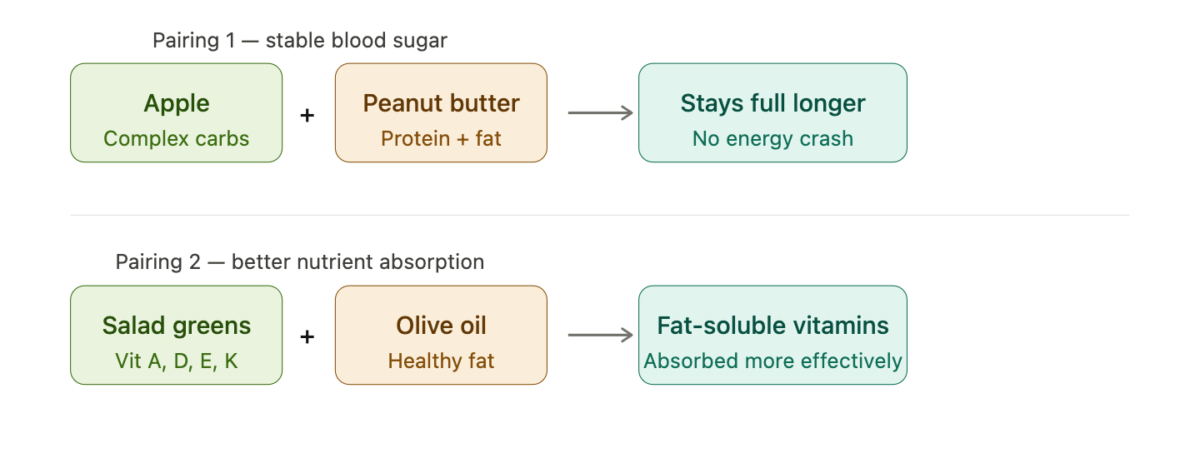
For example, pairing carbs with protein can help stabilize your blood sugar and keep you full longer. Think about having an apple with peanut butter instead of just the apple. The difference in how long you stay satisfied is pretty noticeable.
Another example is combining healthy fats with vegetables. Certain vitamins, like vitamins A, D, E, and K, are fat-soluble, which means your body absorbs them better when you eat them with fat. So adding a drizzle of olive oil to your salad isn’t just for taste—it actually helps your body use those nutrients more effectively.
Portion Control and Calorie Balance
Now let’s talk about something that often gets misunderstood: portion control. This isn’t about eating tiny meals or constantly feeling hungry. It’s about eating the right amount for your body’s needs.
I learned this the hard way. Even healthy foods can lead to weight gain if you’re eating way more than your body requires. For instance, nuts are incredibly nutritious, but it’s easy to overeat them if you’re not paying attention.
A simple approach is to listen to your body. Eat when you’re hungry, stop when you’re comfortably full—not stuffed. It sounds basic, but it takes practice, especially if you’re used to eating out of habit or boredom.
Also, keep in mind that calorie balance matters over time, not just in one meal. You don’t need to stress about every bite. What matters is your overall pattern—what you eat most of the time, not occasionally.
Once you start understanding these basics, everything else becomes a lot less confusing. You’re not just following rules—you actually know why you’re making certain choices. And that makes all the difference.
Essential Food Groups to Include Daily
If there’s one thing I wish someone had told me earlier, it’s this: you don’t need a “perfect” diet—you just need a balanced one. And the easiest way to get there is by making sure your meals include a mix of essential food groups. Think of it less like strict rules and more like building a plate that actually supports your body.
Fruits & Vegetables
Let’s start with the obvious—but also the most ignored. Fruits and vegetables are loaded with fiber, vitamins, minerals, and antioxidants. Basically, they help your body do everything better.
I used to underestimate how much these mattered until I started adding them consistently. Something as simple as tossing spinach into my eggs or grabbing an apple as a snack made a noticeable difference in how I felt. More energy, better digestion, fewer random cravings—it all adds up.
If you’re not a big fan, don’t force yourself to eat plain salads. Roast your veggies with a little olive oil and seasoning, blend fruits into smoothies, or add them into dishes you already like. The goal is consistency, not perfection.
Whole Grains
Carbs are not the problem—refined carbs are. Whole grains like brown rice, oats, quinoa, and whole wheat bread are packed with fiber and nutrients that keep you full and energized.
For example, switching from white bread to whole grain bread might seem like a small change, but it keeps your blood sugar more stable. That means fewer energy crashes and less snacking later.
I personally noticed that when I eat oatmeal for breakfast instead of sugary cereal, I’m not starving an hour later. That’s the power of choosing the right kind of carbs.
Protein Sources
Protein is your best friend when it comes to staying full and maintaining muscle. And no, you don’t need to live on chicken and protein shakes.
You’ve got options—eggs, fish, chicken, beans, lentils, tofu, Greek yogurt. I like to mix it up depending on my mood. Some days it’s a veggie-packed omelet, other days it’s a simple bowl of rice and lentils.
The key is to include some form of protein in every meal. It helps control hunger and supports your body’s repair process, especially if you’re active.
Healthy Fats
Fats used to scare me, but now I see them as essential. Healthy fats support brain health, hormone function, and even keep your skin looking better.
Think nuts, seeds, avocados, olive oil. Adding a handful of almonds to your snack or slicing avocado onto your toast can make your meal more satisfying.
One thing I’ve learned is that fats help slow digestion, which keeps you fuller longer. So instead of avoiding them, include them wisely.
Dairy or Alternatives
Dairy products like milk, yogurt, and cheese are great sources of calcium and protein. If you’re lactose intolerant or prefer plant-based options, there are plenty of alternatives like almond milk, soy milk, or oat milk.
I personally enjoy Greek yogurt—it’s quick, high in protein, and works as both a snack and a breakfast option. Add some fruit and nuts, and you’ve got a balanced mini-meal.
Hydration
We talked about this earlier, but it deserves a spot here too. Water isn’t just an add-on—it’s part of your daily nutrition.
If plain water feels boring, try adding lemon, cucumber, or even a splash of juice. Herbal teas are also a great option. The goal is to stay consistently hydrated throughout the day, not just when you feel thirsty.
Practical Tips to Build a Balanced Diet
Knowing what to eat is one thing—actually doing it every day is another. I’ve been through the phase of being motivated for a week and then falling back into old habits. So let’s talk about how to make this sustainable.
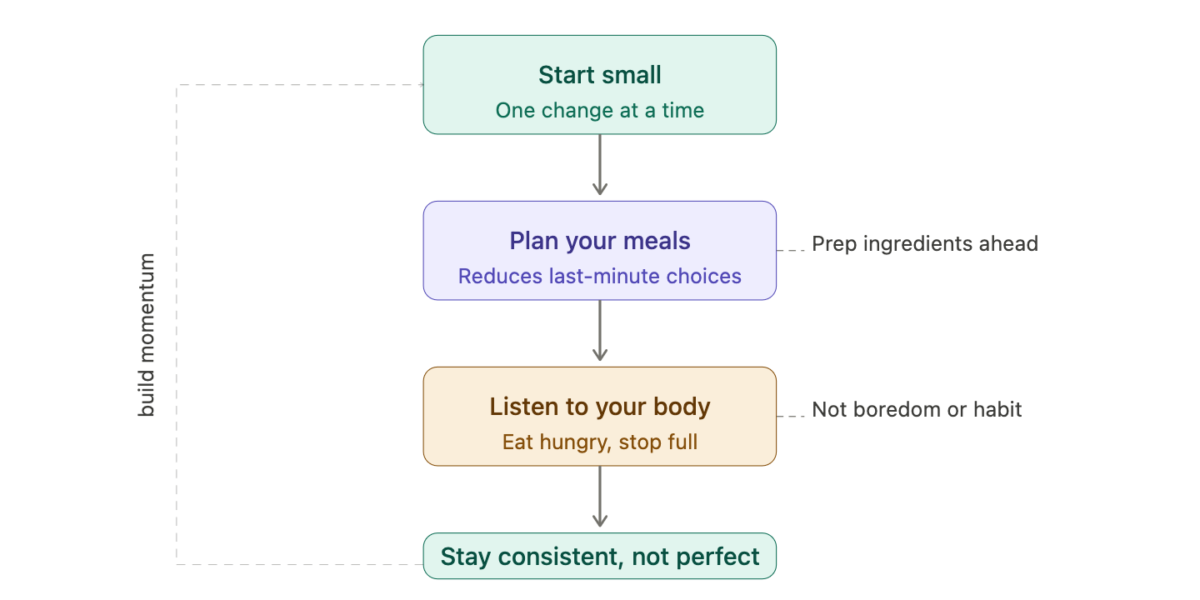
Start Small and Build Consistency
One mistake I made early on was trying to change everything at once. New diet, new routine, cutting out all “unhealthy” foods—it didn’t last.
What worked better was starting small. Maybe it’s adding one serving of vegetables to your meals or swapping soda for water a few times a week. Small changes are easier to stick with, and they build momentum over time.
Meal Planning Makes Life Easier
I used to think meal planning was only for super organized people, but honestly, it’s a lifesaver.
When you plan your meals, you’re less likely to grab fast food or skip meals altogether. Even something simple like deciding what you’ll eat for lunch the next day can make a big difference.
For example, if I know I have grilled chicken and veggies ready in the fridge, I’m way less tempted to order takeout.
Listen to Your Body
This might sound basic, but it’s something most of us ignore. Your body gives you signals—you just have to pay attention.
Eat when you’re actually hungry, not just because it’s “time” or because you’re bored. And stop when you’re full, not when your plate is empty.
It took me a while to get this right, but once I did, eating felt a lot more natural and less stressful.
Simple Habits That Make a Big Difference
Here are some practical habits that have genuinely helped me stay on track:
- Plan your meals ahead of time so you’re not making last-minute decisions
- Don’t skip meals, especially breakfast—it often leads to overeating later
- Limit processed and sugary foods, but don’t completely eliminate them
- Include variety in your diet so you don’t get bored
- Practice mindful eating—slow down, chew properly, and enjoy your food
Don’t Aim for Perfection
This is probably the most important tip. You don’t have to eat perfectly every single day.
There will be days when you have pizza, dessert, or skip a workout—and that’s okay. What matters is your overall pattern. Consistency beats perfection every time.
I’ve found that when I allow myself flexibility, I actually stick to my healthy habits longer. It’s when I try to be too strict that things fall apart.
Make It Fit Your Lifestyle
Your diet should work for you, not the other way around. If you’re busy, keep things simple. Quick meals, easy snacks, minimal prep.
For example, a balanced meal doesn’t have to be complicated. It could be as simple as grilled chicken, rice, and veggies. Or a smoothie with fruit, protein, and healthy fats.
The goal is to create a system that fits your daily life so it becomes something you can maintain—not just for a week, but long term.
Before You Leave
If there’s one thing I hope you take away from this, it’s that a balanced diet isn’t about strict rules or giving up everything you love. It’s about understanding your body, making smarter choices, and building habits that actually stick.
Start small, stay consistent, and be kind to yourself along the way. You don’t need to be perfect—you just need to keep going.